The company has partnered with COREnergy, the retail electricity supplier of Vivant Energy, to support the participation of 36 restaurants in Cebu and Negros Island under the government's Retail Aggregation Program (RAP) and Retail Competition and Open Access (RCOA).
Lower costs
The initial rollout covers 32 restaurants under RAP—16 each in Cebu and Negros Occidental—while four other stores will transition individually through RCOA.
Through the arrangement, participating restaurants are expected to reduce electricity costs by an average of about 10 percent while benefiting from fixed electricity rates for the next two years. Around 10 to 15 percent of the electricity supplied will also come from solar energy.
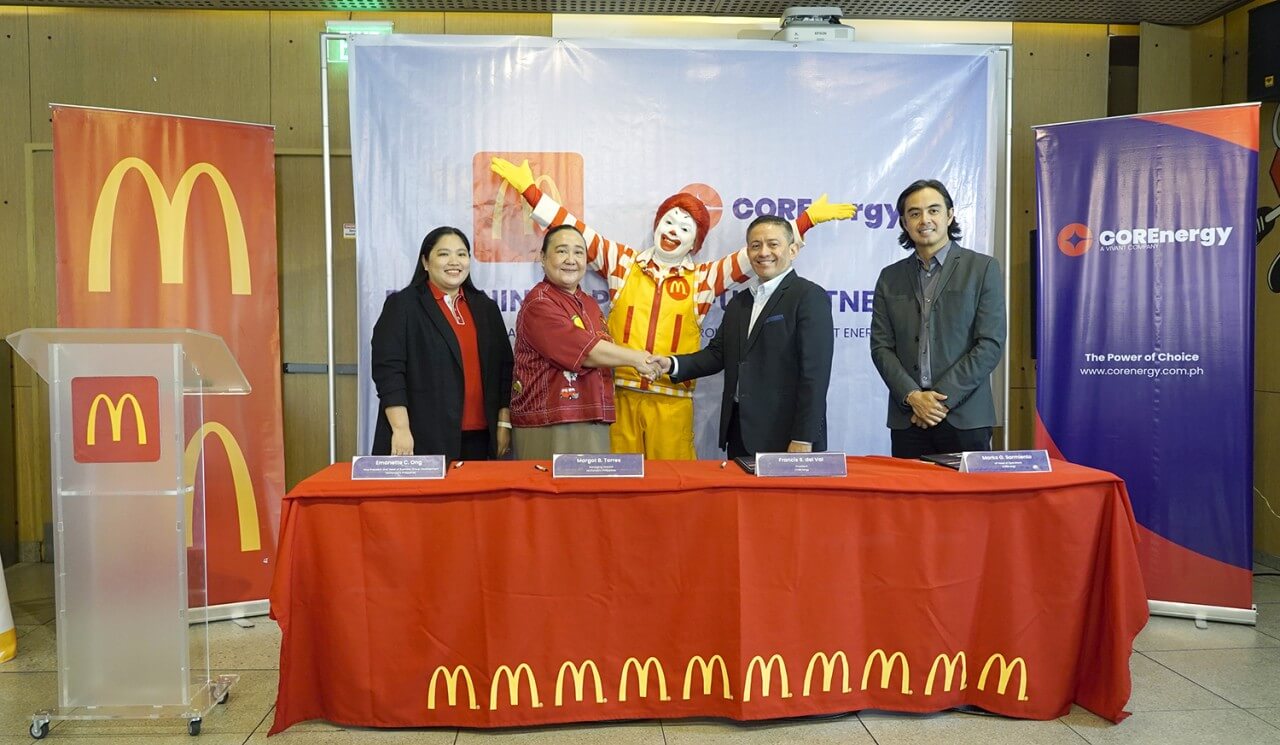
"As we continue to grow in the Visayas, we're equally focused on improving how our restaurants operate," McDonald's Philippines managing director Margot Torres said in a statement.
"Electricity is one of the largest operating costs in our business. By working with COREnergy, we can better manage this expense and build more energy-efficient restaurants as we grow," she added.
Regional growth
The partnership comes as both companies expand their presence in the Visayas. McDonald's has identified Cebu and Negros Island as key growth markets, with seven new restaurants opening in Cebu this year alone.
For businesses with significant electricity demand, RAP and RCOA allow qualified consumers to choose licensed retail electricity suppliers, enabling them to negotiate more competitive rates and tailor power supply arrangements to their operational needs.
Collaboration
COREnergy president Francis del Val said businesses are seeking greater flexibility as energy markets evolve.
"Businesses continue to navigate a changing energy environment, making greater choice and cost predictability increasingly important," he said.
"Through RAP and RCOA, we are helping McDonald's access energy solutions that respond to the needs of its growing restaurant network."
The collaboration forms part of McDonald's broader push to improve energy efficiency nationwide.
By the end of 2026, the company expects about 64 percent of its restaurant portfolio to operate under RAP, helping improve cost predictability while supporting its long-term sustainability goals. —Ed: Corrie S. Narisma