
San Miguel Aerocity Inc. said the airport is being built for conditions created by the province’s low elevation, limited river capacity, upstream water flows, land subsidence, heavier rainfall and rising seas.
“NMIA did not cause Bulacan’s flooding. This is a problem the province has had to contend with for many generations,” the company said in a statement on Thursday.
SMAI issued the statement after online posts blamed the airport for recent flooding without presenting supporting data, technical analysis or expert findings.
Years of study
According to SMAI, Danish specialist DHI began studying the site in 2018, examining surrounding rivers, coastal waters, historical typhoons, storm surges and land subsidence.
Its models measured how raising and developing the airport site could affect drainage and flood levels in nearby and upstream communities.
A broader Bulacan flood assessment completed in 2019 identified the need for an engineered channel to improve water flow.
UK-based Mott MacDonald consolidated DHI’s models and baseline data in 2021 to align the project with international lending standards.
Building for future risks
The studies determined that the airport platform must be raised to between 3.85 and 5.50 meters above mean sea level.
“Our responsibility is to make sure the airport is built for these conditions, and that its development does not make flooding in the province worse,” SMAI said.
Dutch marine engineering firm Boskalis and DHI later developed an alternative to extensive river widening.
Three rivers, one system
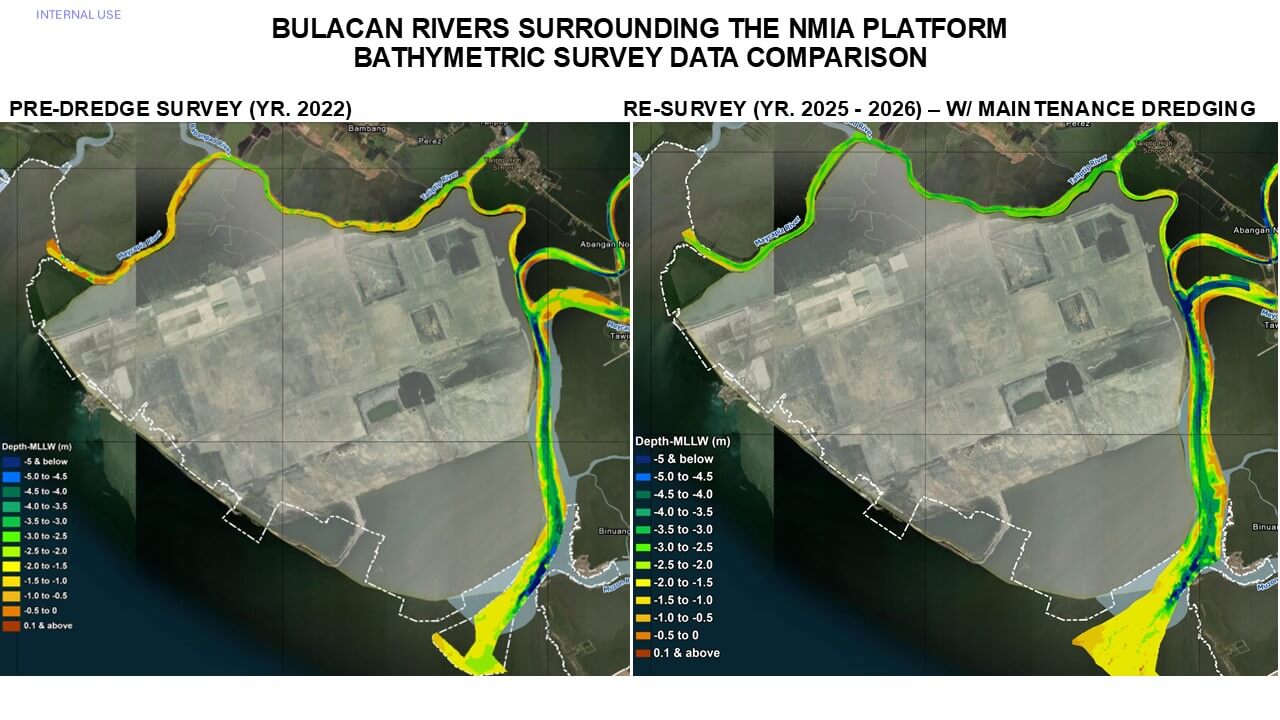
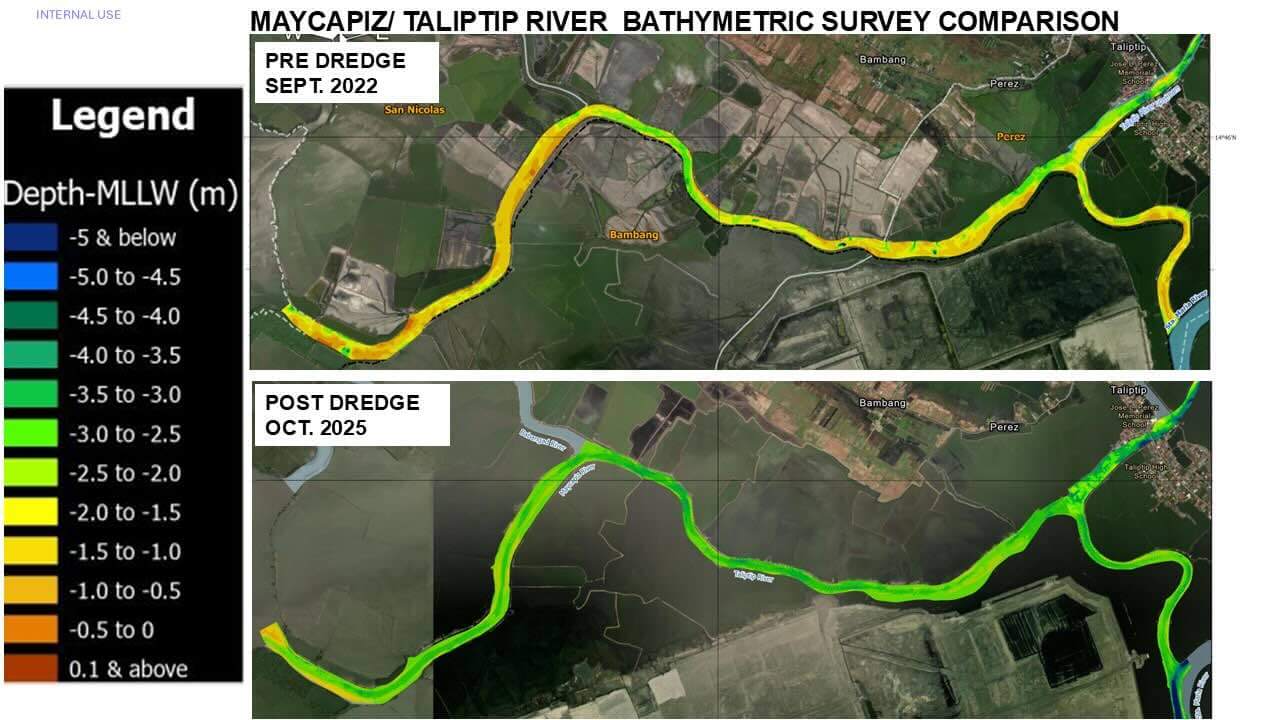
The design calls for deepening the riverbeds while narrowing their bottom width to achieve target flows.
The proposal was applied to the Maycapiz-Taliptip, Santa Maria and Meycauayan rivers.
SMAI said the approach addresses land constraints and avoids affecting mangrove areas. The river works form part of NMIA’s long-term flood-mitigation measures for the airport and surrounding communities.
SMC has also expanded its river-dredging and cleanup program across Bulacan as part of its corporate social responsibility efforts.
As of Aug. 18, 2026, the company had removed more than 4.3 million metric tons of silt and waste from waterways in Bulakan, Bocaue, Guiguinto, Balagtas, Malolos, Obando, Meycauayan and Marilao, as well as the Labangan-Angat River.
—Edited by Miguel R. Camus