Insider Spotlight
According to the H1 2026 Southeast Asian Startup Funding Report by Kickstart Ventures and DealStreetAsia, funding increased from $33 million in the previous semester, while transactions declined from nine to their lowest level since 2019.
Why it matters
The divergence suggests investors are writing larger checks for fewer startups, making access to customers, distribution networks, and strategic partners increasingly critical.
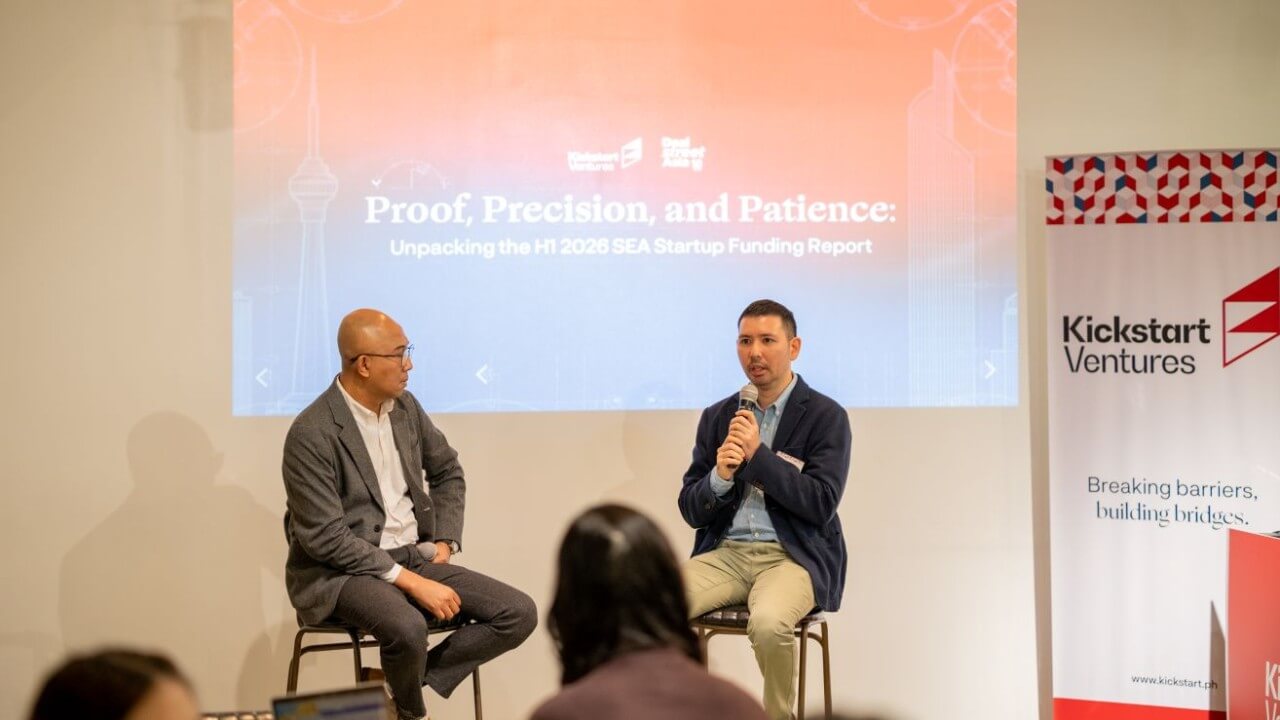
“We’re seeing this as a commercial opportunity as much as a capital one. One of the reasons startups stall is that they can’t reach the customers that would prove the business, and those doors open through relationships they haven’t had time to build,” Kickstart Ventures partner Jecky Pelaez said in a statement.
Kickstart, which advises the Ayala Corporation Technology Innovation (ACTIVE) Fund, supports startups through commercial partnerships with Globe and Ayala.
Beyond venture capital
With about $242 million in assets under management, Kickstart has invested in 71 startups across nine countries, backing more than 140 founders.
Its investments primarily target seed-to-Series A companies, particularly those developing telecommunications, business-to-business, and AI-enabled technologies.
The firm also connects portfolio companies with corporate customers, industry networks, and regional markets.
The bigger picture
Southeast Asian startup funding reached $7.25 billion across 217 transactions, its strongest funding performance since the first half of 2022.
The Philippines accounted for 3.2 percent of regional deals and 1.1 percent of funding value.
Fintech dominated domestic fundraising, attracting $61 million, while healthcare recorded the country's first late-stage investment since the second half of 2024.
What’s next
With sovereign funds, private equity, and corporations increasingly participating alongside venture capital, Kickstart sees opportunities for Philippine conglomerates to accelerate startup growth through pilot projects and commercial partnerships.
The challenge remains translating early-stage innovation into sustainable businesses capable of attracting larger investments. —Ramon C. Nocon | Ed: Corrie S. Narisma