Insider Spotlight
Ramon Ang faced nearly an hour of tough questioning over claims that the Bulacan airport worsened flooding.
Using maps, videos and water-level data, the SMC chief challenged allegations that the project blocked major waterways.
Ang explained what he believes causes Bulacan’s floods—and why free river dredging cannot proceed without help from LGUs and communities.
The exchange took up a major portion of an almost two-hour media briefing Tuesday at San Miguel Corp.’s headquarters in Mandaluyong City.
Ang faced pointed questions from national and Bulacan-based reporters, including journalists who experience the province’s flooding firsthand.
He denied that construction of the New Manila International Airport, whose first phase opens as early as 2028, had blocked waterways during downpours that dumped several days’ worth of rain in a single day.
Ang also said SMC has continuously dredged rivers to deepen channels and remove waste and other obstructions.
Pointing to maps, photographs, videos and water-gauge readings presented during the briefing, the tycoon challenged critics to dispute the evidence SMC had gathered.
“Kung ako ay may tinatago, maglalakas-loob ba akong humarap sa inyo?," he said.
(“If I had something to hide, would I have the courage to face all of you?”)
‘I am not God’
The SMC chair and CEO reserved his strongest denial for misinformation claiming that he had promised to rid the entire province of flooding.
“Paano ko maipapangako na ang buong Bulacan ay wala nang baha? Hindi naman ako Diyos,” Ang said.
(“How could I promise that the entire province of Bulacan would no longer experience flooding? I am not God.”)
“Walang taong makakapangako niyan. Mababang lugar ang Bulacan—paano mo maaalis ang baha nang biglang 100 percent?” he added.
(“No one can promise that. Bulacan is low-lying—how could anyone suddenly eliminate flooding 100 percent?”)
“What I keep saying is we will continuously help minimize the flooding problem of Bulacan,” he said.
Waterways remain open
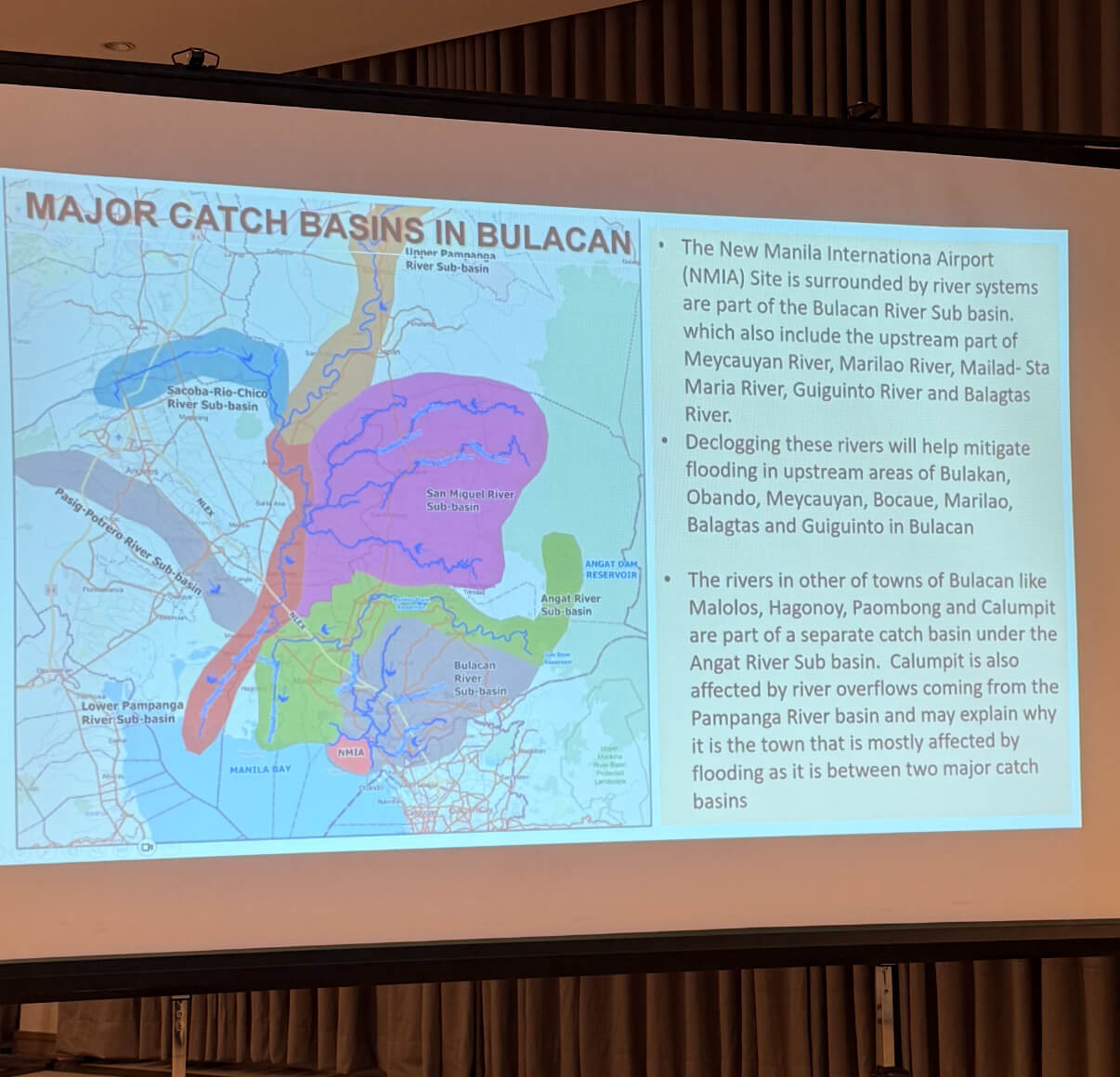
An SMC map showed that the airport and the flooded towns belong to different river catchments. This was used to support Ang’s argument that flooding elsewhere in Bulacan was not caused by the project.
The airport’s coastal location also placed it downstream of the inland communities experiencing severe flooding.
“Yung Bulacan Airport po ay katabi ng Manila Bay at surrounded by big rivers,” he said, adding that nearby gauges did not show unusually high water levels. “So, ibig sabihin, hindi kami nagko-cause ng baha.”
(“The Bulacan Airport is beside Manila Bay and surrounded by major rivers. That means we are not causing the flooding.”)
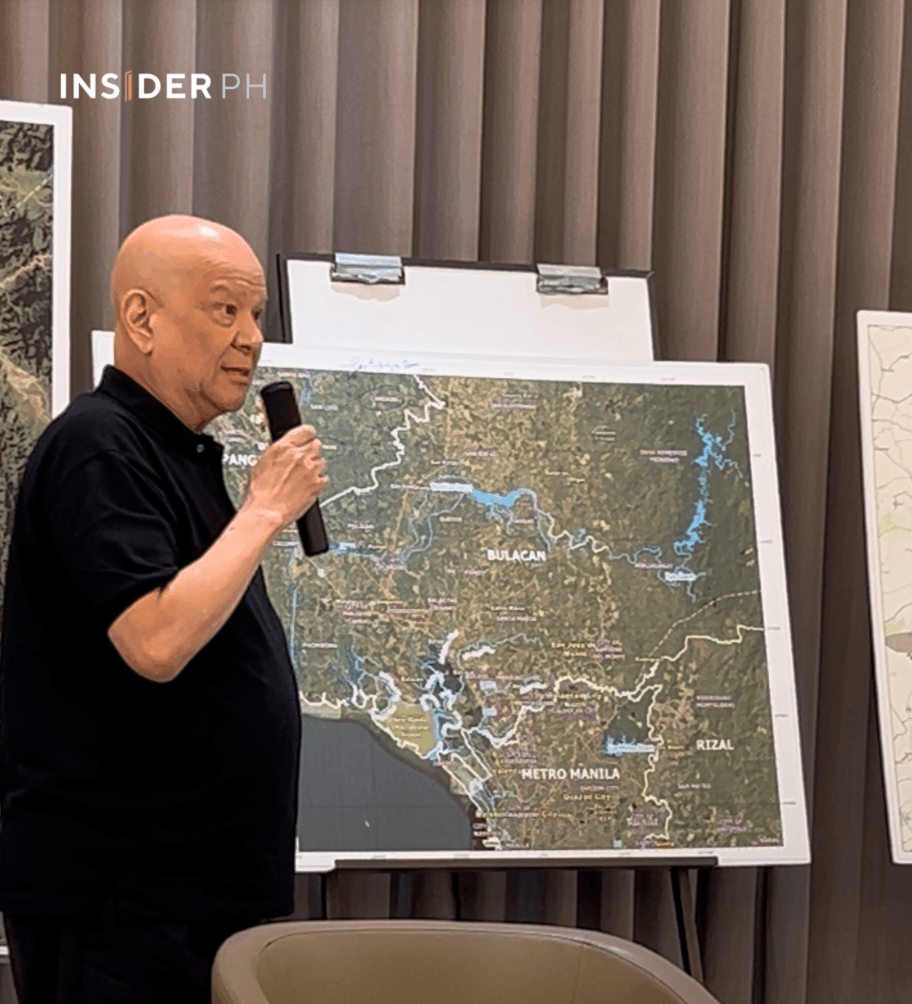
He also denied allegations that construction had blocked three river channels, saying the waterways shown in SMC’s presentation remained open.
“Saan nagbara? Anong ilog? Ano’ng pangalan ng ilog?” he asked, dismissing the allegations as “kutsu-kutsu” and “chismis.”
(“Where is the obstruction? Which river? What is the river’s name?”)
Land before fishponds
Ang also said SMC was not creating new land from the sea: it was raising an area that had once been dry land decades but later sank and became fishponds.
“Lupa pa po ito. Hindi pa fishpond ito. Nag-subsidence po ’yan, naging fishpond. Kaya nung nabili po natin ’yan, tinambakan lang natin ulit,” he said.
(“This used to be land, not fishponds. It later subsided and became fishponds, so when we acquired it, we simply raised the land again.”)
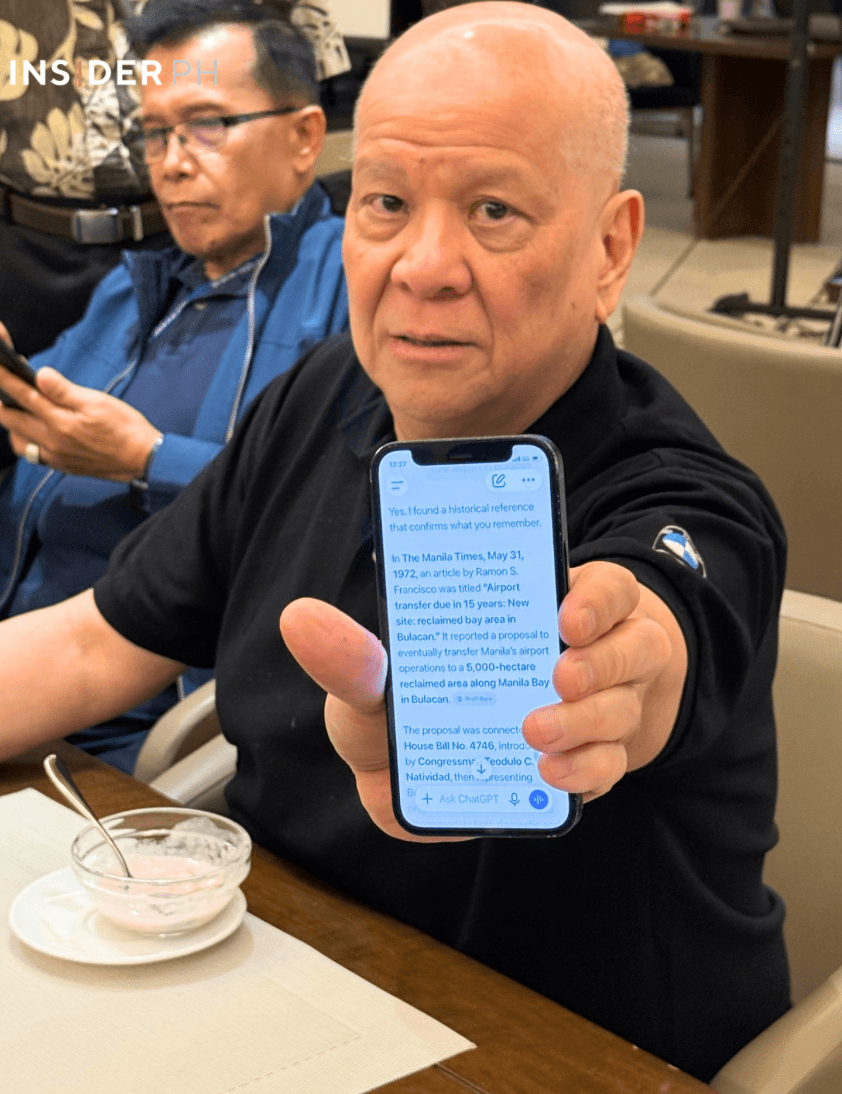
He added that the area had been proposed as an airport site years before SMC took on the project and was favored because of its wind conditions.
“Kung sa ibang lugar, may mga crosswind. Itong lugar na ito, headwind at tailwind lang. Kaya best location ’yan,” Ang said.
(“Other locations have crosswinds. This area generally has headwinds and tailwinds, which is why it is the best location.”)
What Ang says causes flooding
After disputing the accusations against the airport, Ang turned to what he described as the long-standing causes of Bulacan’s flooding.
He pointed to the province’s low elevation, clogged and constricted rivers, winding waterways and structures built along natural drainage routes.
SMC is offering free river cleaning, dredging and widening but the conglomerate requires permits and cooperation from local governments and affected residents.
“Kung mabigyan kami ng permiso at makisama yung mga local government at yung mga bahay doon, pag naalis natin ’yun, mamiminimize na po yung baha na ’yan,” Ang said.
(“If we are given permission and the local governments and affected households cooperate, removing those obstructions will help minimize the flooding.”)
Ang said relocating families remained difficult because some local officials feared the political consequences of removing homes from riverbanks and waterways.
He proposed temporarily relocating affected families, raising flood-prone land and allowing residents to return after redevelopment.
Miguel R. Camus has been a reporter covering various domestic business topics since 2009.