This was the challenge posed by Pacific Asia Travel Association (PATA) chief executive Noor Ahmad Hamid said in his speech in the Governor’s Conference on Sept. 3, part of the 19th East Asia Inter-Regional Tourism Federation (EATOF) General Assembly at the Mactan Expo Center in Mactan Newtown, Lapu-Lapu City.
Hamid said greater cooperation and collaboration among EATOF’s 10 member destinations could help them capture a larger share of the growing Asia-Pacific travel market.
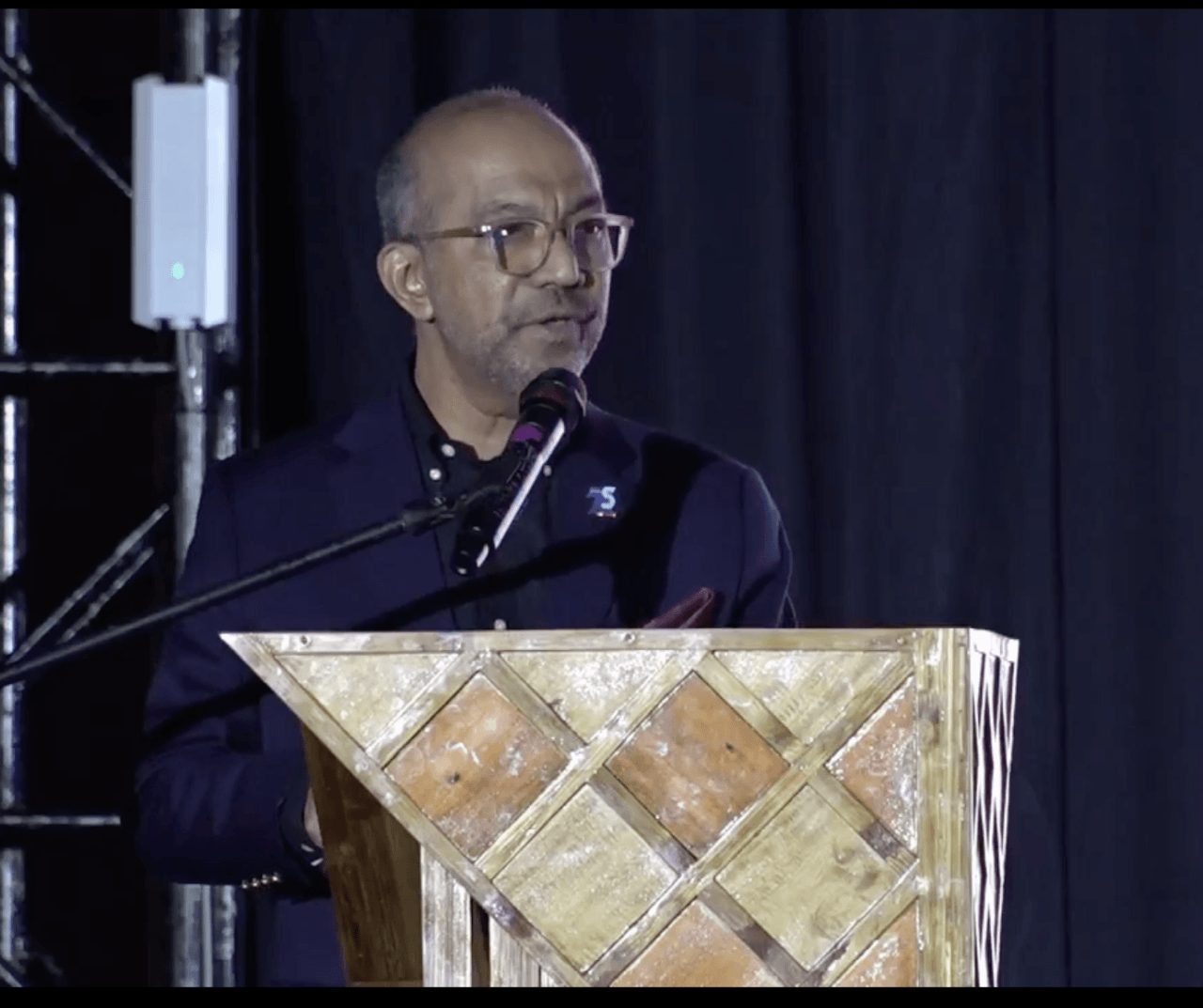
Hamid said greater cooperation and collaboration among EATOF’s 10 member destinations could help them capture a larger share of the growing Asia-Pacific travel market.
“What if destinations stopped competing for the same visitors and started growing the market together? Instead of fighting over a bigger slice of the same cake, what if we work together to make the cake bigger?” he said.
Hamid proposed positioning EATOF’s members as the “Super 10”—10 destinations using their collective strengths to share tourism intelligence, link tourism products, undertake joint promotions, learn from one another and grow together.
“Cooperation where we must, but collaboration where we can. This is where I believe the secret power of EATOF [lies], what I call today the ‘Super 10,’” he added.
Growing market
EATOF is an association of provincial and regional governments in East Asia established in 2000 to promote tourism cooperation, cultural exchange, policy coordination and sustainable regional development.
There are at present 10 member-countries: Cebu Province, Philippines; Gangwon State, Republic of Korea; Tottori Prefecture, Japan; Jilin Province, China; Töv Province, Mongolia; Sarawak, Malaysia; Quang Ninh Province, Vietnam; Luang Prabang Province, Laos; and Siem Reap Province, Cambodia.
PATA, a nonprofit organization that promotes the responsible and sustainable development of tourism in the Asia-Pacific region, forecasts international visitor arrivals in the Asia-Pacific region to reach 761.2 million by 2028.
Hamid said the region’s population of about 4.8 billion also presented a substantial market for intra-regional travel.
He challenged destinations to move away from tourism’s traditional “zero-sum game,” in which governments spend millions competing for the same visitors, airline capacity, international events, media coverage and trade opportunities.
Hamid said travelers do not view destinations according to political or administrative borders. Instead, they see East Asia as a region offering a variety of cultures, landscapes and experiences that can be combined into multi-destination journeys.
Extraordinary journey
Under this approach, EATOF members could jointly market complementary attractions rather than treat one another as competitors.
Hamid cited the possibility of connecting the temples of Siem Reap with Cebu’s beaches, Yogyakarta’s culture, Sarawak’s landscapes, Luang Prabang’s heritage, Gangwon’s mountains and Tottori’s sand dunes.
“These are not competing experiences,” he said. “They can become an extraordinary journey for visitors.”
As Super 10, EATOF members could collaborate together without surrendering their
individual identities. Instead, their differences could make a regional tourism offering more attractive and competitive.
“Gangwon must remain Gangwon. Sarawak must remain Sarawak. Luang Prabang must remain Luang Prabang,” he said. “Your differences are your strength. You become even more powerful together than as individual destinations.”
Joint promotions would also allow members to pool resources, produce stronger digital content, organize common media programs and pursue business-to-business initiatives in markets that may be difficult or costly for a single destination to reach.
Hamid said cooperation should extend beyond promotions to include market intelligence, product development, global storytelling, capacity-building and common tourism standards.
“If one destination solves a problem, the other nine should not have to start from ground zero,” he said. “One destination’s experience can become another destination’s solution.”
Travelers’ experience not borders
Greater coordination could also help members improve regional connectivity, which remains a barrier to multi-destination travel.
Hamid cited the experience of a Sarawak official whose return trip from Cebu to Sarawak’s capital, Kuching, would take nearly 20 hours because of limited flight connections.
“He can go to Europe easily,” Hamid said. “That means we have issues with connectivity within our region.”
He also pointed out that visa facilitation also remained a challenge.
“Seamless arrival and visitor management at airports, mobility for our guests when they arrive at our destination—these are some of the key issues. Visitors do not see our borders the way we do. They see the experience that we can deliver,” he added.
The need for cooperation has become more urgent as the industry confronts geopolitical tensions, climate change, changes in traveler behavior, air-service disruptions and the rapid development of artificial intelligence and other technologies, Hamid said.
“No destination can manage all of these alone,” Hamid said. “But a connected network or alliance such as EATOF can respond faster, share intelligence, share solutions and share resources.”
He urged EATOF to evolve from an organization whose members meet periodically into an alliance that continuously produces economic value for tourism enterprises, communities and other stakeholders.
EATOF will mark its 20th anniversary in Gangwon next year. Hamid said its next phase should be measured by what its members can share, connect and create collectively.
“What can the 10 of you achieve together that none of you could achieve alone?” he asked. —Ed: Corrie S. Narisma

Contributor