This was underscored in a study by the Philippine Institute for Development Studies (PIDS) titled “Philippine Tourism Sectoral Review (2000 to 2025): From Promise to Power,” released in December 2025.
The study, which was part of a 25-year performance audit of the country’s tourism industry, showed that the Philippines is well-positioned for reinvention, with regions actively pioneering innovations aligned with the National Tourism Development Plan 2023-2028 agenda.
“By accelerating digital transformation, nurturing community-centered and sustainability-focused tourism, and investing in the strengths of people and places across all island groups, the country can build a tourism future that is confident, competitive, and opportunity-rich,” according to the study.
“This is a future where progress is shared, benefits reach communities at the grassroots, and every Filipino can proudly say: we are part of what makes the Philippines worth traveling for,” it added.
The NTDP 2023-2028 agenda aims to transform the Philippines into a "tourism powerhouse" in Asia which is anchored on sustainability, competitiveness and inclusion.
Local initiatives
The study showed that the country has yet to return to its pre-pandemic trajectory, as growth in visitor spending, value added, and sectoral investments remained tempered.
Regions, however, have begun taking the initiative to attract more tourists.
“These developments demonstrate that while national-level data may show slower-than-expected improvement, local initiatives and product diversification are accelerating in many parts of the country,” the study said.
It pointed out that stakeholders in Luzon strengthened their eco-adventure and heritage corridors, while those in the Visayas developed wellness, experiential, and education tourism clusters, while stakeholders in Mindanao advanced agro-cultural, faith-based, and indigenous wellness products.
The study also identified Central Visayas as a “premier tourism hub” with the highest concentration of foreign visitors in the country at 31.5 million and favored a destination for returning Filipinos at 299,000 from 2000 to 2024.
During the same period, it was also the second most visited region by domestic tourists after Calabarzon at 60.1 million.
Region 7 is anchored by Cebu which serves as a primary international gateway and hub for diving and cultural sites.
To compete with ASEAN neighbors like Thailand and Vietnam, the PIDS study said that the Philippines must expand its portfolio beyond "sun and beach" offerings to capture high-value markets.
Central Visayas – Cebu in particular – has successfully done this when it transitioned from “sun-and-beach” to specialized, high-value experiential markets.
Cebu, for instance, has established a reputation as a global learning destination through Filipino Martial Arts tourism, specifically arnis or eskrima, which has attracted international practitioners.
It is also known for its English as a Second Language (ESL) programs that cater to students from Asia, Africa, and the Middle East. The region is likewise home to national models for Community-Based Ecotourism (CBET).
Tourism circuits
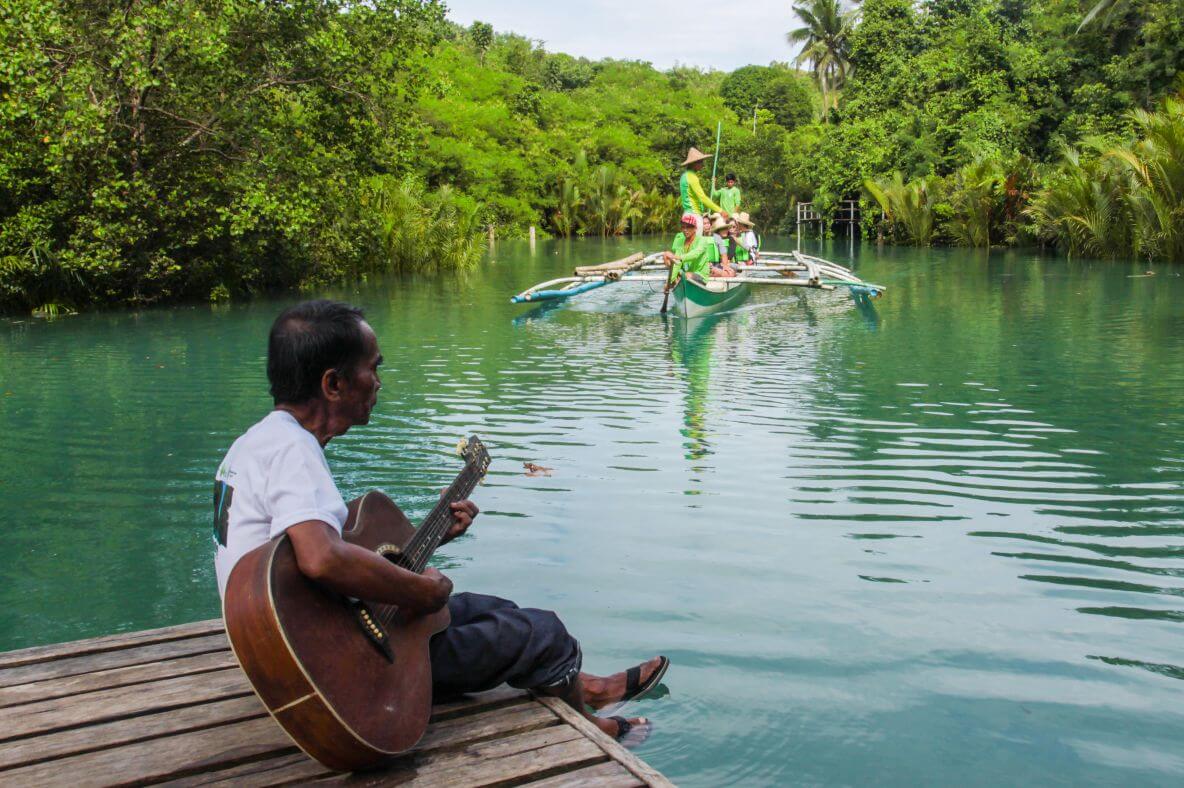
The Bojo River Cruise in Aloguinsan, Cebu was cited as best practice for linking environmental education, mangrove preservation, and livelihood generation.
Aside from capitalizing globally recognized sites, the country can develop “living heritage” experiences by promoting indigenous weaving such as the T’nalak in South Cotabato, and culinary heritage in places like in Iloilo, a UNESCO Creative City of Gastronomy.
Another high-value niche is the development of specialized markets such as medical and wellness tourism, leveraging the Filipino brand of care, as well as farm tourism that links agriculture with leisure, such as the strawberry farms of Benguet.
The study suggested creating inter-regional routes or tourism circuits that provide integrated, theme-based travel experiences connecting destinations within and across regions.
These circuits would transform fragmented attractions into cohesive journeys that reflect shared ecological, cultural, or market identities.
Challenges
These circuits, however, require seamless physical and digital connectivity. Priorities should include upgrading secondary airports, improving last-mile road access, and ensuring reliable inter-island transport.
The study recommended modernization priorities, including upgrades to digital and physical infrastructure and improved connectivity, noting that the country continues to face inadequate transport systems and weak interconnectivity among tourism circuits.
This results in logistics costs and inconvenient travel experiences, particularly for island destinations dependent on intermodal transfers.
The study also stressed the need for stronger inter-agency coordination and clearer communication mechanisms, citing overlapping mandates among the Department of Tourism (DOT), Department of Environment and Natural Resources (DENR), and local government units (LGUs).
The sector suffers from a fragmented digital landscape with non-interoperable booking systems and a lack of reliable, real-time data for planning.
Many MSMEs lack the digital skills to participate in the global digital economy.
High-density destinations also faced environmental degradation, waste management issues, and water scarcity.
There was often weak enforcement of carrying-capacity limits, leading to “overtourism” in flagship sites, while other areas remained underdeveloped.

Contributor