
Insider Spotlight
Speaking at the PHINMA Center in Makati City on Feb. 18, 2026, the DepEd chief framed public-private partnerships not as optional tools but as structural solutions to systemic constraints.
“Our education landscape is confronted with structural and systemic challenges that constrain our ability to deliver with speed and excellence,” he said.

Race against time
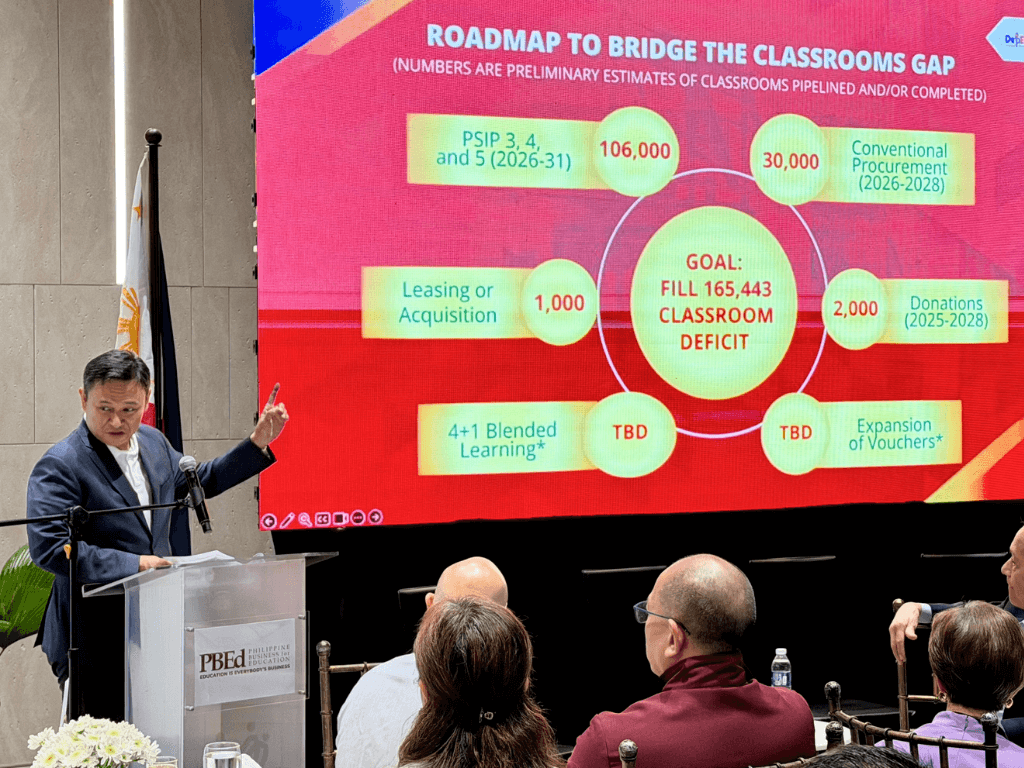
Angara described the reform push as a “race against time,” unveiling a seven-channel roadmap to eliminate the classroom backlog.
At the center is the Public-Private Partnership for School Infrastructure Project (PSIP) covering PSIP 3, 4, and 5, which together aim to deliver 106,000 classrooms nationwide. The first 16,000 classrooms under PSIP 3 were approved by the Economy and Development Council last month.
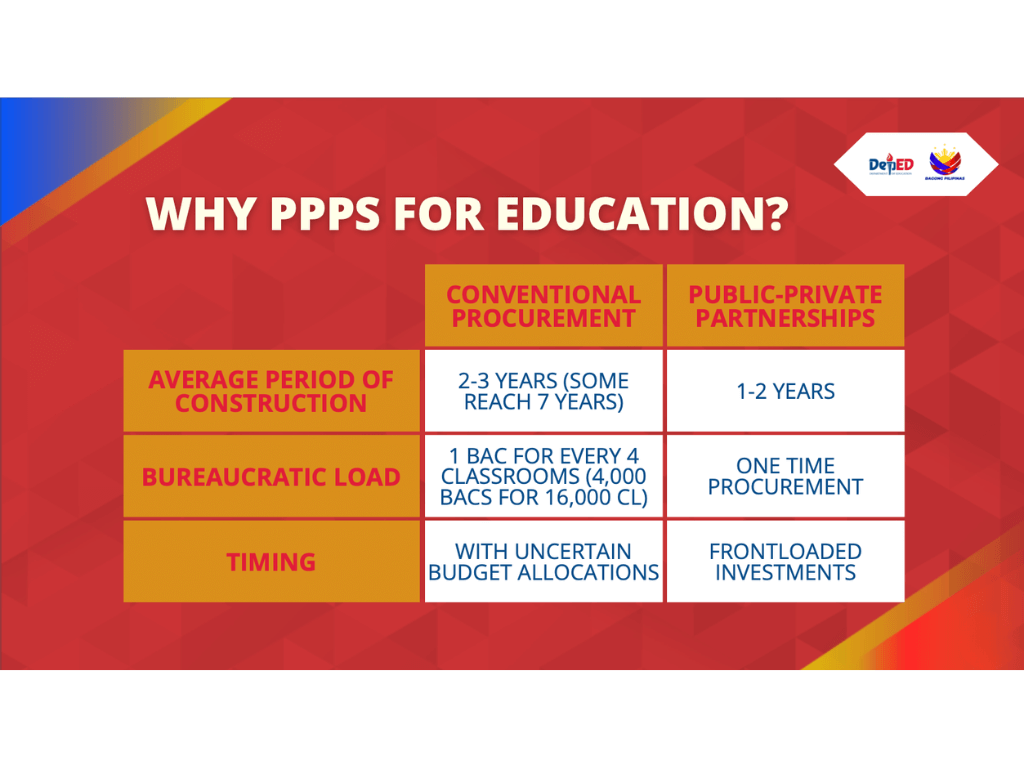
He contrasted PPPs with conventional procurement, which often takes two to three years and in some cases up to seven.
“For example, PSIP III’s 16,000 classrooms under conventional procurement would require around 4,000 BAC (bids and awards committee) processes. A PPP structure requires a single procurement process,” Angara said.
“Efficiency is not optional. It is a moral imperative,” he added.
Economic reform
Angara positioned education reform as an economic strategy.
Based on projections presented during his speech, PSIP 3 alone would reduce Luzon’s classroom shortage by 18 percent, improve the student-to-classroom ratio from 1:50 to 1:39, transition 890,042 learners to single-shift schedules, and generate approximately 250,000 jobs.
The project is also projected to deliver an 11.47 percent economic return relative to cost.
“This is what we mean when we say education reform is economic reform,” he said.
Digital leap
Beyond physical classrooms, Angara outlined PSIP Connect, a nationwide PPP initiative designed to provide devices, connectivity, and reliable power to public schools.
“It will provide devices, nationwide connectivity, and reliable power solutions,” he said.
The education chief stressed that artificial intelligence is no longer aspirational but operational, signaling DepEd’s intent to embed technology into the core of the system.
He cited the partnership with Khan Academy, now supporting 2,803 schools nationwide, where 89.5 percent of students improved in math and teachers save 3.2 hours weekly in lesson preparation.
Shared investment
Angara closed with a direct appeal to business leaders: “Education has always been a shared responsibility. But today, it must also be a shared investment. This is not charity. This is a nation-building strategy.”
“The question before us is simple: Will we build classrooms fast enough to meet the dreams inside them?” he said.
— Edited by Daxim L. Lucas