Insider Spotlight
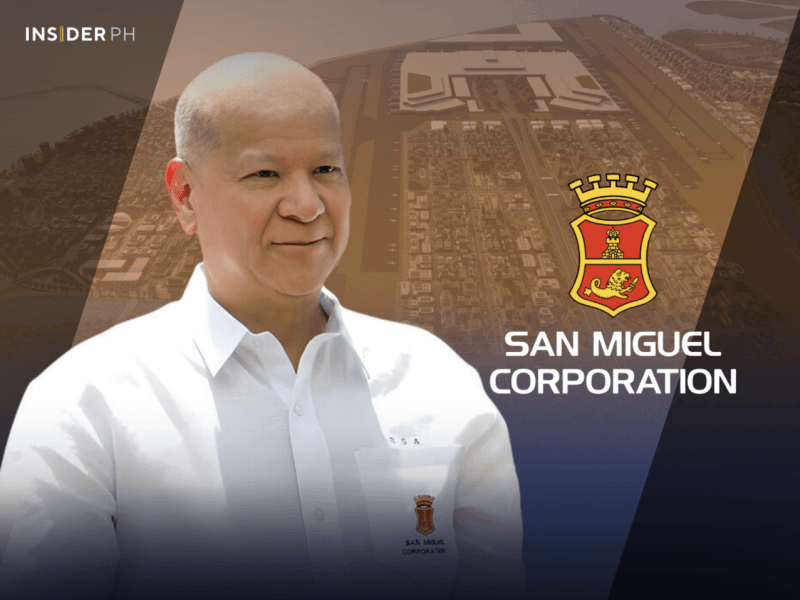
The P740-billion Bulacan airport, billed as the largest investment ever undertaken by a private Philippine company, is the centerpiece of that gamble.
Success could bring more tourists and millions of potential jobs while giving Ang-led San Miguel Corp. decades of earnings from the airport and surrounding aerotropolis that is being developed by the conglomerate.
During a recent meeting with reporters from national and Bulacan-based media outlets, the tycoon also made clear that failure was not an option.
“If this fails, San Miguel could fall, as all its money would go toward paying its debts,” Ang said.
“If we can bring in 40 million to 50 million foreign tourists, that can create one or two jobs [per tourist]. It would solve problems for the next generation,” he added.
Thinking beyond the next quarter
Most corporations prepare for the future by looking several quarters or, at most, a few years ahead.
Ang is wagering that SMC’s biggest project will remain consequential decades from now, in a Philippine economy reshaped by tourism.
“Who else is thinking about [what we can do] for our children and grandchildren?” Ang asked.
Building for decades
The airport’s first runway is targeted for completion toward the end of 2028, with another potentially following each year until all four are ready by 2032, depending on demand.
Ang said each runway could handle about 35 million passengers annually, giving the new gateway room to absorb traffic beyond the limits of Ninoy Aquino International Airport, currently the country’s main gateway.
The surrounding aerotropolis is envisioned to extend that impact beyond aviation by attracting hotels, offices, logistics facilities and other businesses to Bulacan.
The engineering test
The project has drawn scrutiny over its coastal location, environmental impact and possible effect on flooding. This also places the burden on SMC to show that the engineering can match the ambition and keep the airport operating safely for generations.
SMC tapped Danish water specialist DHI to design the airport’s drainage system and Dutch engineering giant Boskalis to develop the land.
Ang said their work is subject to strict environmental and social standards required by international lenders.
For six years, SMC has also been dredging and clearing rivers across Bulacan to deepen waterways, remove blockages and improve the flow of floodwater toward Manila Bay.
As powerful monsoon rains again flooded Bulacan and nearby provinces, Ang vowed to keep working with communities, especially those near the airport to clear waste and pursue longer-term drainage solutions.
A different use for flood-control funds
Ang has proposed a larger role for private companies in cleaning and maintaining rivers, pointing to SMC’s roughly P2 billion in annual spending on dredging and clearing waterways.
He said this could allow the government to direct more of its flood-control budget toward families living in vulnerable communities.
“The flood-control budget could then be used to help our people. It could finance free housing, relocate families to higher ground, build more schools and provide medical treatment to people who are sick,” Ang said.
“I think those are more important: school buildings, medical support and job creation. Hopefully, we will no longer need flood-control funds,” he added.
Closing the tourism gap
That same focus on jobs and basic needs underpins Ang’s vision for the airport.
Recent declines in tourist arrivals—the most recent example is the staggering drop in tourists visiting Bohol—show the challenge facing the industry.
With agriculture no longer the economic engine it once was and the Philippines relying on imports to cover production shortfalls in basic food, Ang sees tourism as another source of jobs alongside overseas employment and the business process outsourcing industry.
Malaysia attracts over 40 million foreign visitors annually, Thailand 33 million and Vietnam 21 million, while the Philippines receives only 6.5 million, including many returning Filipinos, in 2025.
“Why am I doing this? It is my advocacy to create jobs for our fellow Filipinos,” Ang said.
—Edited by Miguel R. Camus