Insider Spotlight
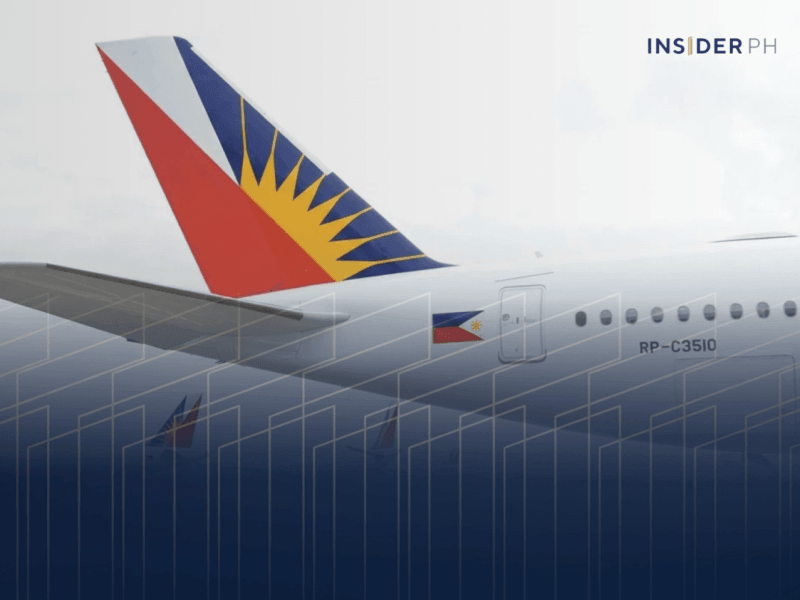
Its listed parent, PAL Holdings (PAL), disclosed that cash and short-term investments more than doubled to P55 billion as of September, from P25.4 billion at the end of 2025. The gain was supported by fresh financing and cash generated from operations, its latest quarterly reported showed.
PAL also has another $135 million (P8.5 billion) in available credit, bringing its total financial buffer to P63.5 billion, equivalent to 30 percent of its annual revenues and well above its minimum target of 15 percent.
“Management believes that this liquidity position provides the group with agility to absorb continued volatility in fuel prices,” PAL said in its quarterly report.
PAL shares jumped about 8 percent to P4.30 each, adding to gains of about 13 percent so far in 2026.

Building reserves amid uncertainty
The stronger cash position follows PAL's issuance of $350 million (P21.9 billion) in bonds in July and August, helping the airline prepare for further uncertainty caused by the Middle East conflict.
PAL reported a P9.74-billion net loss in the first nine months of 2026, reversing a P9.88-billion profit a year earlier, as fuel expenses jumped nearly 50 percent to P62.04 billion.
The airline has responded by raising fares and fuel surcharges while reducing flights on selected routes to contain costs.
Preparing for more turbulence
PAL said management was pursuing “fare and fuel surcharge adjustments, capacity and network optimization and cost management” to restore earnings while keeping debt under control.
Despite its stronger cash position, the airline faces higher borrowing costs and aircraft-related obligations as it continues expanding and modernizing its fleet.
PAL announced commitments in July for 15 Boeing 787-10 Dreamliners and nine additional Airbus A350-1000 aircraft, with options or purchase rights for 10 more jets, as part of a long-term fleet modernization program extending through 2036.
—Edited by Miguel R. Camus