Insider Spotlight
The budget carrier said first-half passenger traffic increased 4.3 percent from 13.9 million passengers a year earlier. Domestic passengers climbed 4.9 percent to 10.9 million, while international passengers rose 2.4 percent to 3.6 million. Seat capacity expanded 9.7 percent to 17.9 million seats, with an average seat load factor of 81.2 percent.
Why it matters
The latest traffic figures suggest Cebu Pacific continues to benefit from resilient domestic demand even as international operations remain in transition following earlier capacity adjustments.
Passenger traffic is a closely watched indicator for airline revenue growth and fleet utilization, particularly as carriers balance network expansion with profitability.
By the numbers
For June alone, Cebu Pacific flew 2.3 million passengers, up 2.5 percent year-on-year. Domestic passenger traffic increased 6.2 percent on a 17.7-percent rise in seat capacity, resulting in a domestic seat load factor of 83.1 percent.
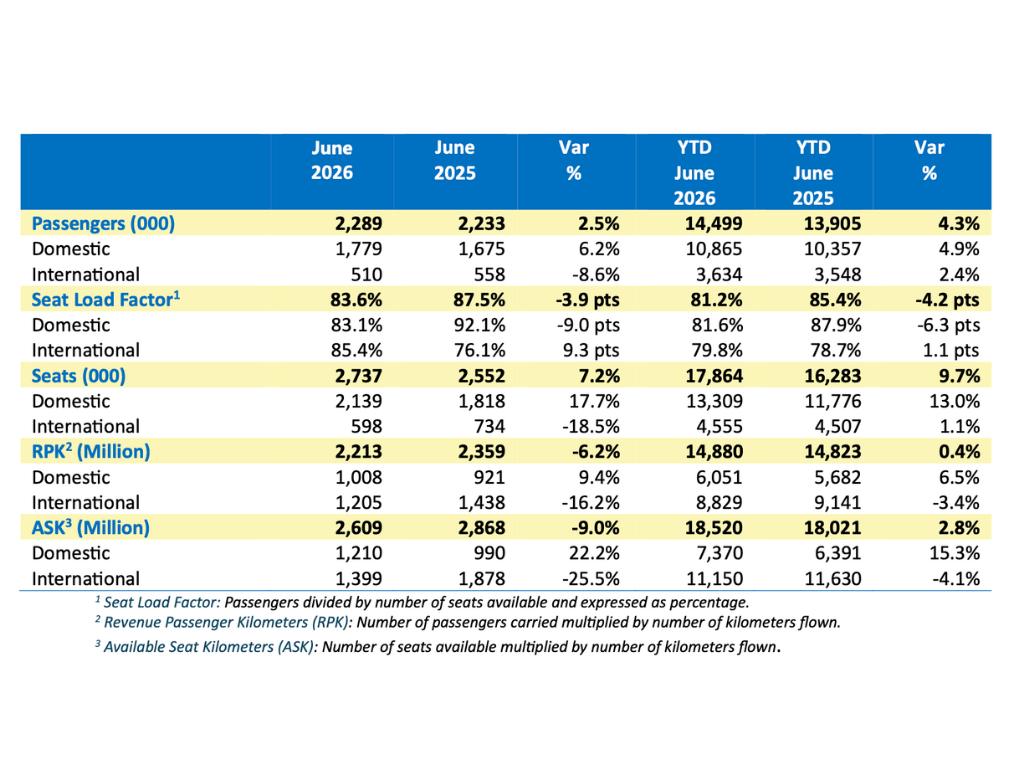
International passenger traffic declined 8.6 percent during the month as seat capacity fell 18.5 percent. However, the international seat load factor improved by 9.3 percentage points to 85.4 percent, indicating stronger utilization of available seats despite lower capacity. Overall June seat load factor stood at 83.6 percent, down from 87.5 percent a year earlier.
What they’re saying
“June marked a return to year-on-year passenger growth, driven by the continued strength of our domestic network even as we entered the traditional lean travel season. While international volumes remained below last year, this largely reflected previous capacity adjustments,” Cebu Pacific president and chief commercial officer Xander Lao said.
“With fuel prices having eased significantly and consumer sentiment improving, our market position continues to strengthen, and we expect a further recovery in operating performance through the second half of the year,” he said.
The airline currently serves 36 domestic and 24 international destinations with a fleet of 102 aircraft, maintaining one of the world’s youngest commercial fleets.
— Edited by Daxim L. Lucas