Less than three weeks after GCash's record-breaking initial public offering, the chair of the Philippines' most successful fintech company appeared perfectly at ease before an audience of about 80 venture capital investors and startup founders.
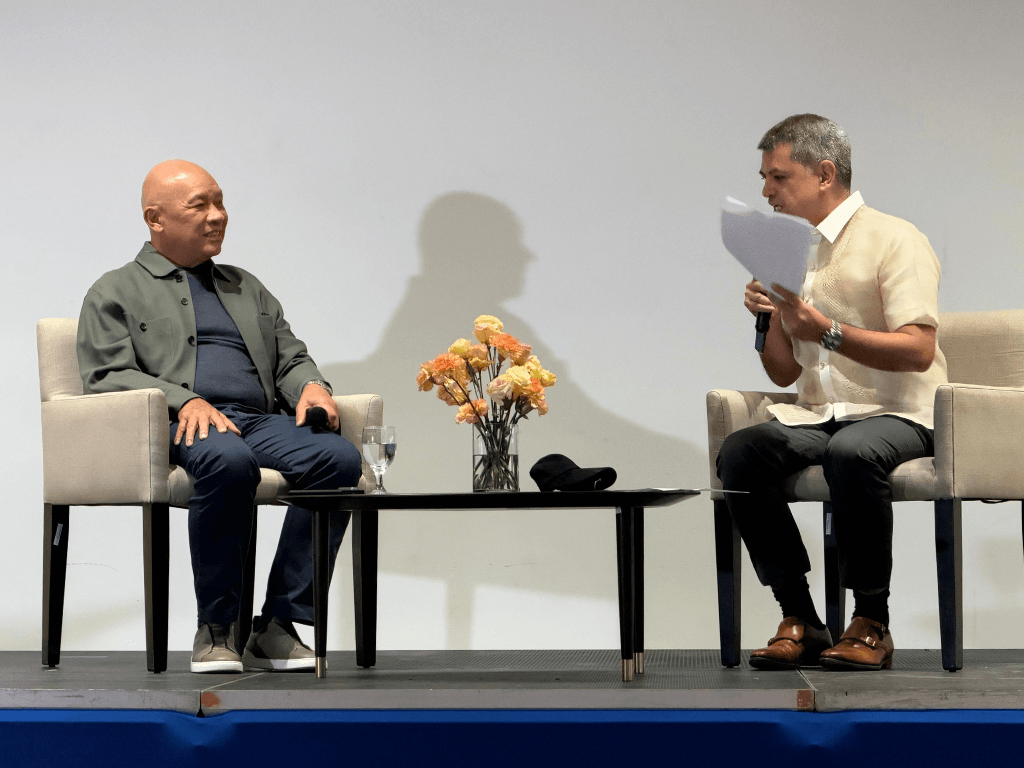
The occasion was Kaya Founders' annual LP Summit (for “limited partners”), held at a warehouse-style events venue in Makati City on the afternoon of Wednesday, Nov. 4, 2026.
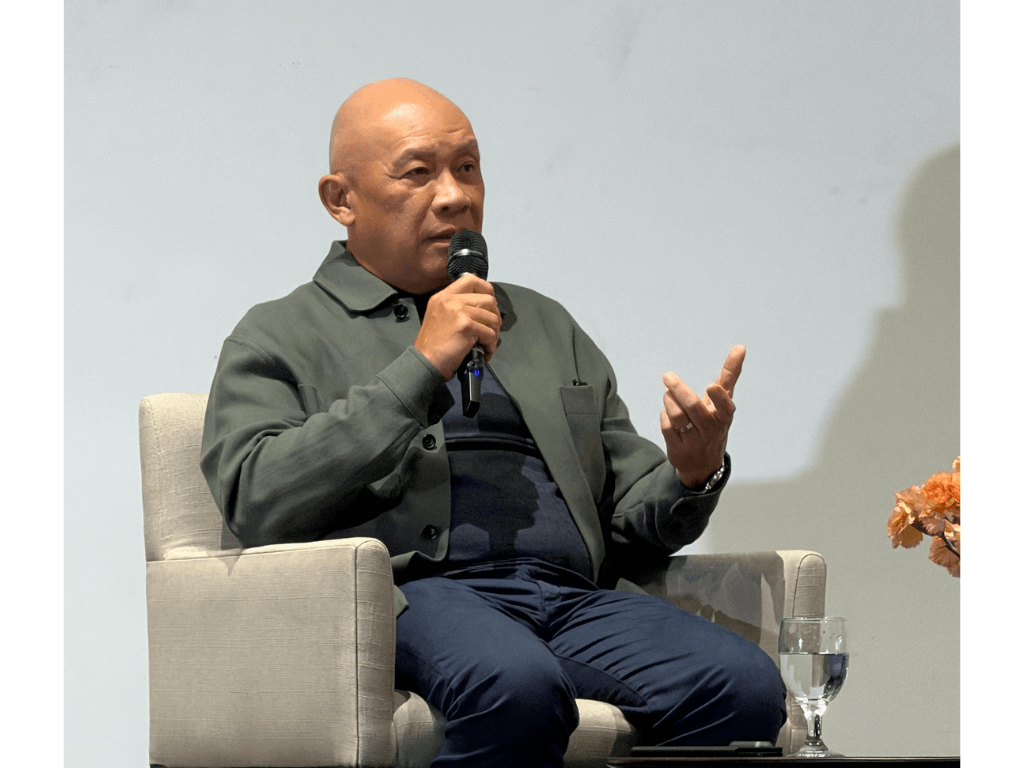
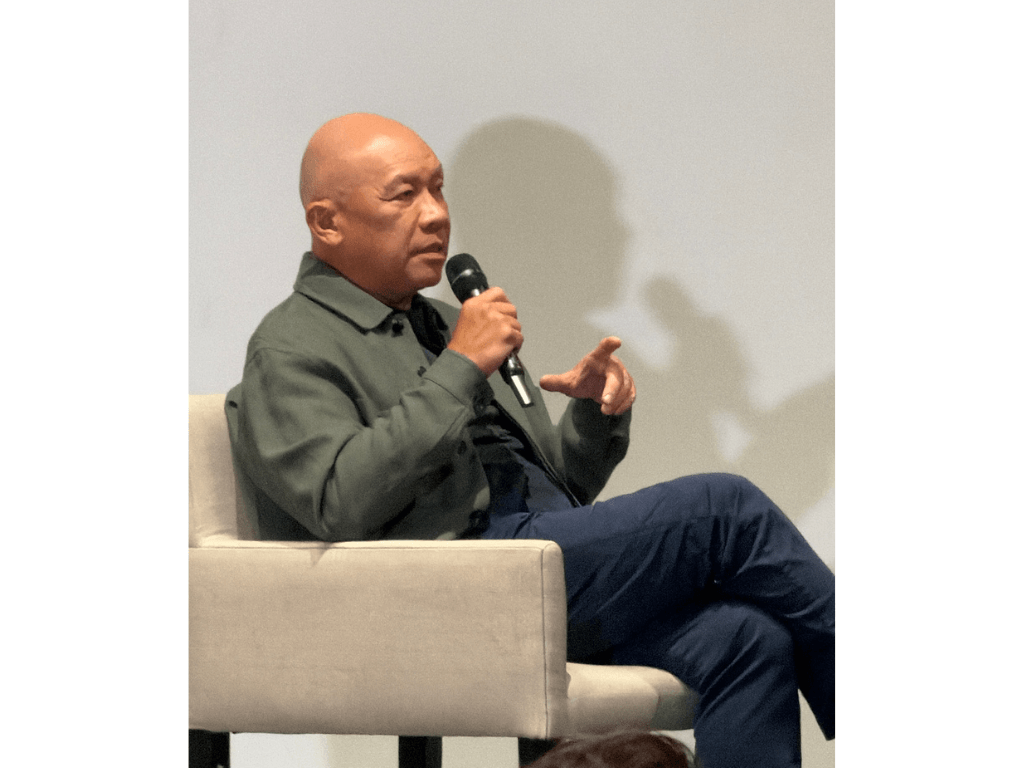
Cu was dressed casually in a shirt, jacket, comfortable trousers and loafers. Across from him sat Kaya Founders founding managing general partner Paolo Campos III, looking decidedly more formal in a short-sleeved Barong Tagalog.
It was an onstage fireside conversation between a man who had built a multibillion-dollar business and another whose business was finding entrepreneurs capable of doing the same.
Everyone in the room already knew the GCash story. But judging from the attention the conversation commanded, they wanted to hear it again—perhaps hoping to discover something that had escaped the press over the years.
What emerged was less a celebration of GCash's success than a surprisingly practical lesson about the value of restraint.
For all the talk in startup circles about disruption, exponential growth and conquering Southeast Asia, Cu's message was almost unfashionably conservative: Know your market. Solve a real problem. Make money. And resist the temptation to become something you're not.
The business nobody wanted
Cu recalled that when he arrived at Globe Telecom in 2009, GCash was already around (starting in 2004), although it operated through SMS and had little prospect of becoming the financial services giant it is today.
More revealing was GCash's peculiar place within Globe's corporate hierarchy.
According to Cu, it had effectively become a holding area for executives whom management wanted to try out—or perhaps give one final opportunity.
"GCash was a sort of a safe place in Globe to put people that you were trying out… because [within that unit] they could do no harm," he recalled. The business had limited capital expenditure, operated outside the telecommunications network, and could experiment without jeopardizing Globe's main operations.
So when Cu began transferring a different caliber of executives into GCash around 2015, some apparently wondered whether their careers were about to end. In truth, they were actually being prepared to build an independent company.
There is something instructive about this corporate backwater becoming one of the Philippines' most valuable businesses.
Successful companies are not always born in the divisions attracting the most attention—or receiving the largest budgets.
Sometimes, the opportunities are sitting in businesses that everyone else has stopped taking seriously.
Timing was everything
Cu understood the enormous market opportunity. Financial inclusion was low, banks were largely uninterested in customers conducting small transactions, and tens of millions of Filipinos remained underserved.
But he also understood something many entrepreneurs overlook: Having identified a problem does not necessarily mean the market is ready for your solution.
GCash needed smartphones, reliable mobile broadband and technology capable of handling massive transaction volumes.
Rather than force the issue prematurely, Cu waited until the necessary infrastructure was sufficiently developed.
And when the opportunity finally arrived, Globe did not attempt to build everything itself.
The telecommunications arm of the country’s oldest conglomerate turned to China’s Ant Financial, whose technology platform helped transform GCash into a scalable digital financial services business.
Globe supplied something equally important: distribution, customer knowledge, and people.
Cu described how Globe's sales personnel were assigned GCash targets alongside their telecommunications responsibilities. The company's distribution network became a mechanism for acquiring merchants and customers.
The lesson is that technology alone did not build GCash. An established corporate organization, deployed intelligently, helped turn the technology into a business.
For the entrepreneurs listening to Cu, that was an important point, since few startups have the distribution network, capital relationships or access to customer data that Globe could provide.
GCash's success, therefore, cannot simply be replicated by adopting the same technology or pursuing the same market.
The pandemic's uncomfortable arithmetic
The pandemic accelerated GCash's growth, but Cu revealed how that extraordinary expansion nearly exposed a fundamental weakness.
By the third quarter of 2020, the company was processing rapidly increasing transaction volumes, all while losing money on each peso moving through its system.
Its cash-in subsidies exceeded the revenue it generated from the transactions. The larger GCash became, the more money it stood to lose.

Cu understood the mathematics. He told his team that unless they could fix the unit economics, continuing to scale would make little sense.
The company immediately renegotiated pricing arrangements with partners and eventually resolved the problem.
This may have been the most important moment in the entire GCash story.
The spectacular user growth attracted the headlines. But the less glamorous decision to make every transaction economically sustainable arguably made the eventual IPO possible.
A company can survive slow growth. It cannot indefinitely survive a business model in which success merely accelerates its losses.
For an audience of startup investors accustomed to measuring traction, customer acquisition and market share, that was an important reminder that growth, per se, is not a business model. Profitability eventually has to enter the equation.
Why not conquer Southeast Asia?
Perhaps the most unconventional part of Cu's philosophy emerged when Campos asked about the future of Philippine entrepreneurship.
Cu argued that founders should stop assuming that success necessarily requires expanding into multiple countries.
GCash itself had received invitations to enter Thailand, Indonesia and Malaysia. But Cu kept returning to one question: What would GCash's unfair advantage be in those markets?
In the Philippines, it had Globe's distribution, customer information, management talent and deep understanding of Filipino consumers. Those advantages would not automatically travel overseas.
The same reasoning explains why GCash's international strategy focuses on Filipinos living and working abroad rather than trying to convert foreign populations into GCash users.
The Filipino diaspora remains an extension of the market the company already understands.

Cu also acknowledged the limits of ambition: "There's nothing wrong with being a single-country player in my mind."
Coming from the chair of a company now valued at roughly $7 billion, that statement carries considerable weight.
The conventional venture capital model often celebrates companies with regional or global ambitions. But Cu's argument challenges that assumption.
Why should a profitable, dominant business in a sufficiently large domestic market be considered less successful than a company operating in 10 countries and struggling to make money?
The more relevant measurement should be the value created for shareholders, not the number of national flags appearing on a company's investor presentation.
Life after the IPO
Of course, even Cu's carefully constructed success story contains some unresolved challenges.
The IPO has transformed GCash from a business answerable to a relatively small group of shareholders into one subject to the expectations of public market investors.
Cu acknowledged that the company must now consistently deliver its financial targets.
Its first post-listing earnings call is scheduled for November 10.
Meanwhile, GCash is moving beyond its original consumer payments stronghold toward merchant services, lending and international remittances.
Its lending portfolio already exceeds $1 billion, supported by transaction data that allow the company to assess borrowers.

But the competitive advantage that helped GCash make inroads in digital lending is becoming less exclusive as banks, digital lenders and technology companies develop their own credit-scoring capabilities.
There is also the question of trust.
When asked by a member of the audience what worried him most, Cu immediately identified the possibility of losing public confidence through cybersecurity problems or other failures.
For a financial platform handling more than 60 million transactions daily, that is no theoretical concern.
The paradox is that the very scale that makes GCash formidable also increases the consequences of operational mistakes, regulatory problems and misplaced strategic bets.
The hardest lesson
Toward the end of the conversation, Campos asked Cu what advice he would give the entrepreneurs in the room.
"Do not fall in love with the technology," Cu said.
His message was straightforward: Identify a problem, find the technology that solves it, concentrate on the market you understand, and never lose sight of profitability.
There was nothing particularly revolutionary about those principles. But what made them more compelling was the evidence sitting comfortably onstage. Cu had spent years applying them while competitors, investors and the wider technology industry pursued increasingly ambitious growth narratives.
And that raises an interesting question about the next generation of Philippine entrepreneurs.
Are they building businesses that can become profitable in their own right, or are they building companies whose principal attraction is the possibility that someone else will eventually pay a higher valuation for them?
The difference may have been easy to ignore when capital was abundant and investors rewarded growth almost regardless of cost. But it becomes nearly impossible to ignore when capital becomes scarce.
As the conversation ended, Cu still looked relaxed, his years of building GCash culminating in an IPO that many Philippine startup founders can only dream about.
But perhaps the most useful lesson from his journey was not how to build a $7-billion company. It was understanding how many tempting opportunities, unnecessary expansions and expensive distractions the leader of a startup must learn to reject along the way.
For all the technology industry's fascination with moving fast, Cu had demonstrated another route to success: Sometimes, the smartest way to build a bigger business is knowing precisely where to stop.
— Edited by Daxim L. Lucas