Carl Cruz knows exactly what some people thought when Globe Telecom named him chief executive: What does a man who spent three decades selling soap and shampoo know about running a telco? Quite a lot, as it turns out—and Cruz believes his consumer goods background may be precisely what Globe needs for its next act.
A year into the job, the former Unilever executive is pushing one of the Philippines’ largest telecommunications companies to become simpler, faster and more focused on execution. His bet is that Globe’s next phase of growth will depend not only on technology, but on understanding consumers better.
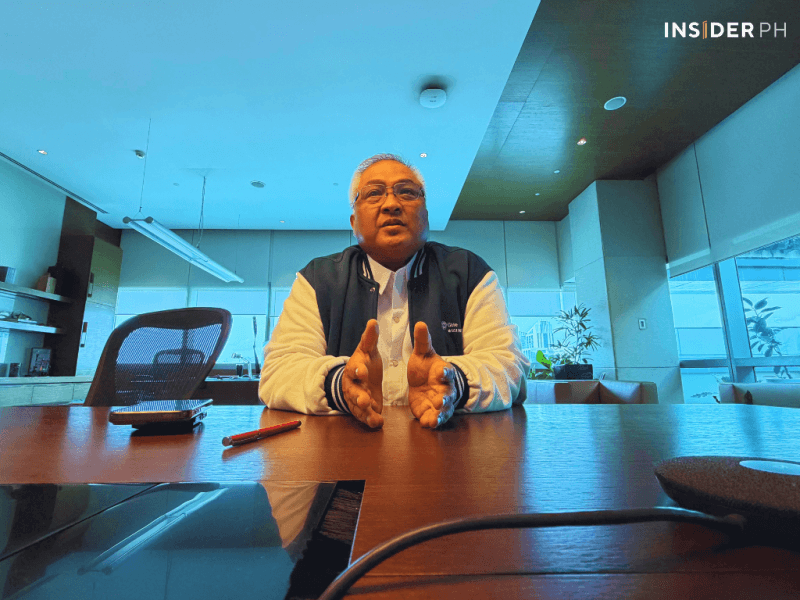
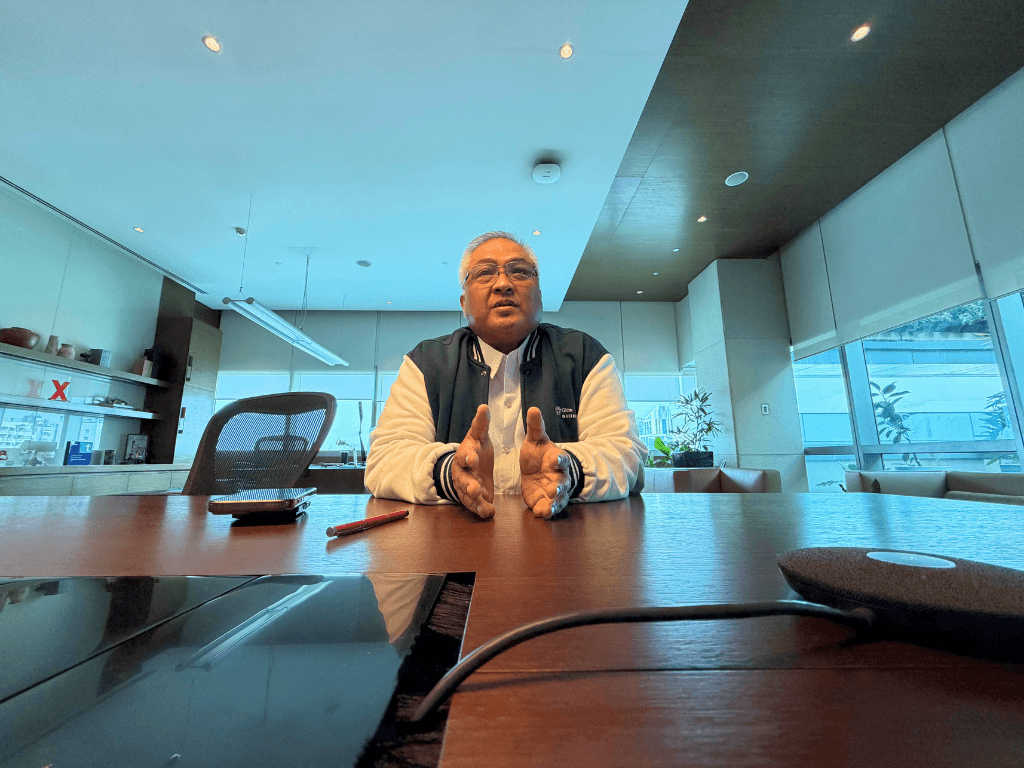
One side of Carl Cruz's office opens onto a rooftop terrace. Inside, the room feels noticeably restrained—almost austere—especially for the office of the chief executive of one of the country's largest telecommunications companies. It is a different room from the one his predecessor, Ernest Cu, occupied only a year ago.
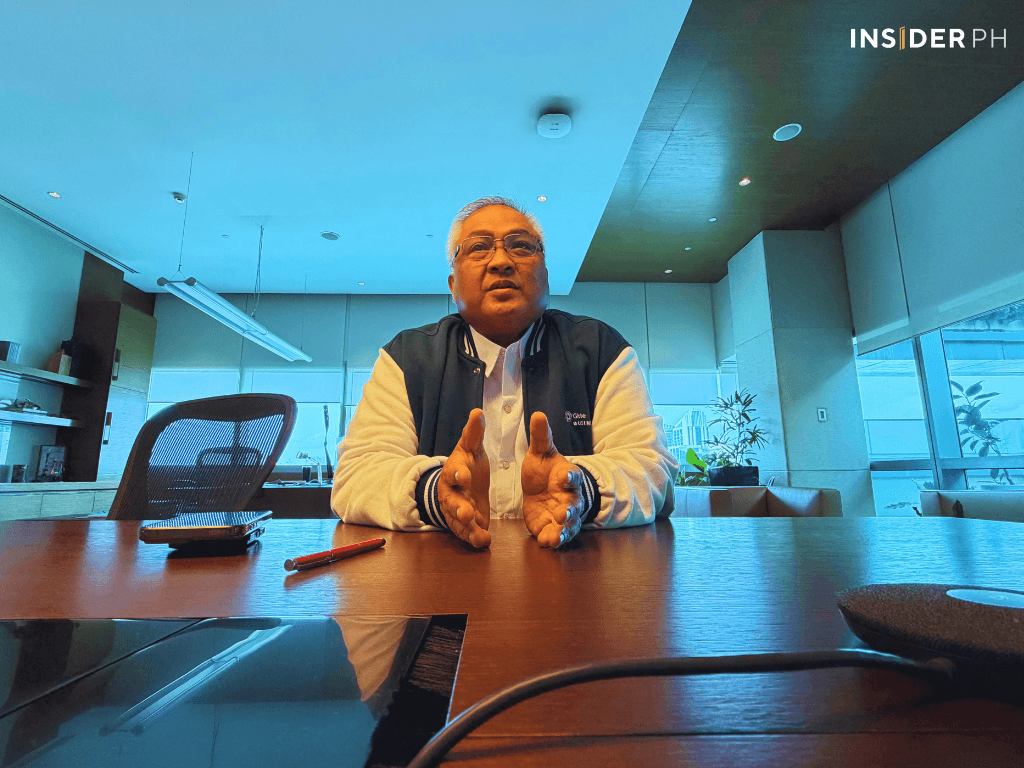
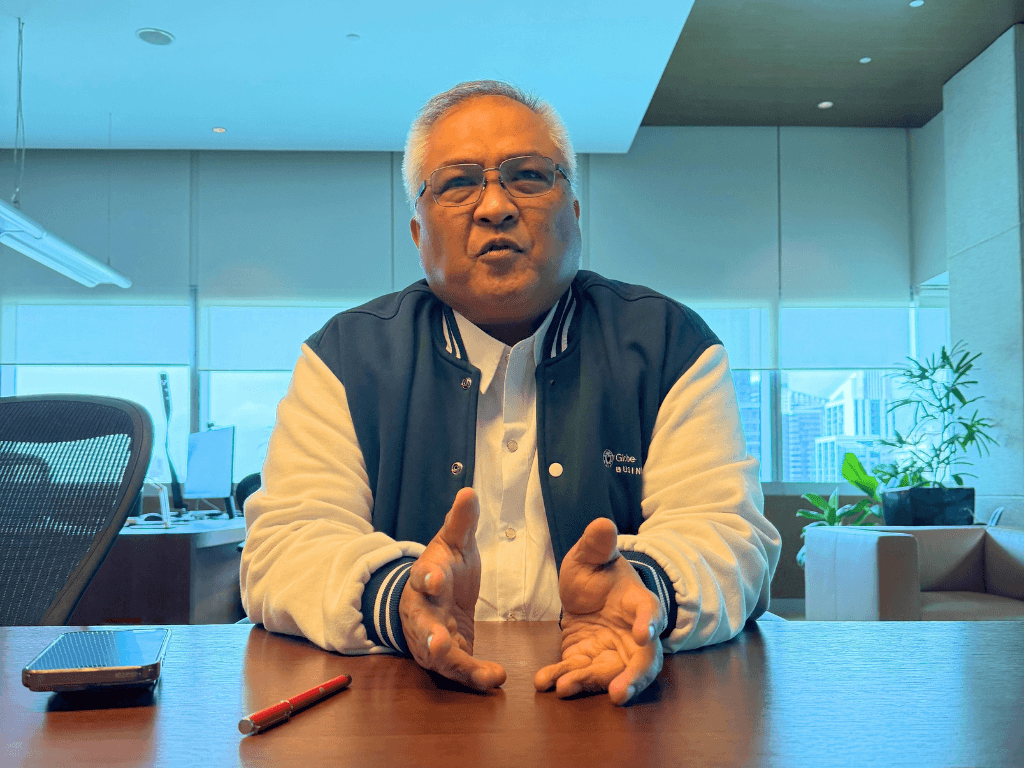
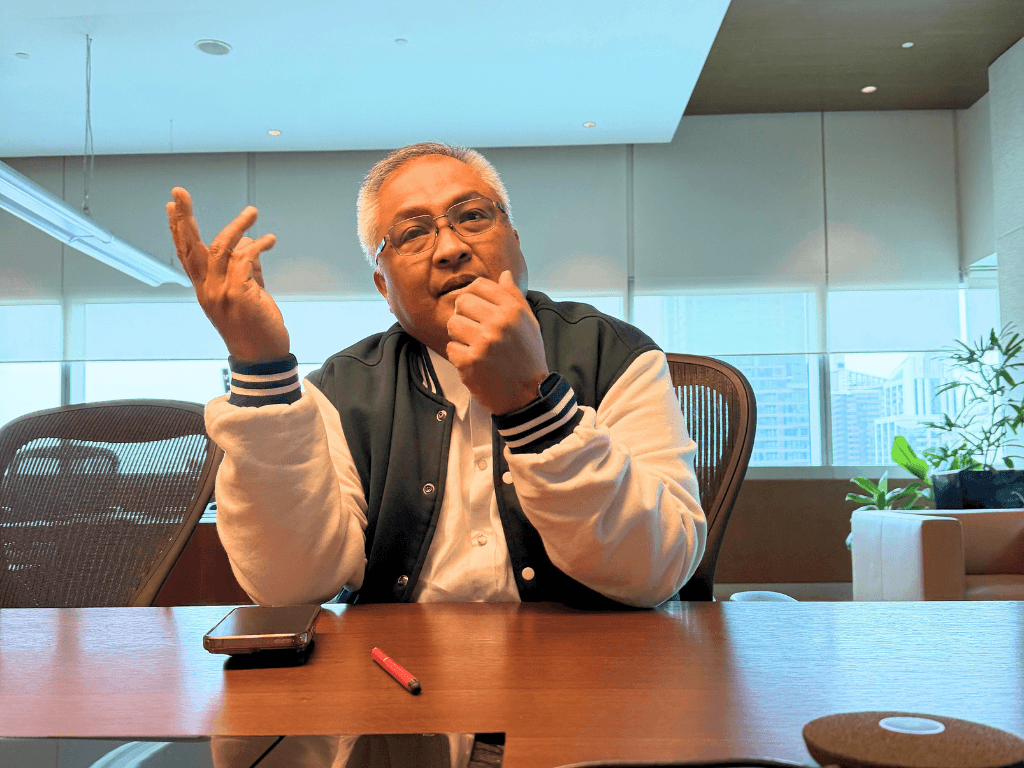
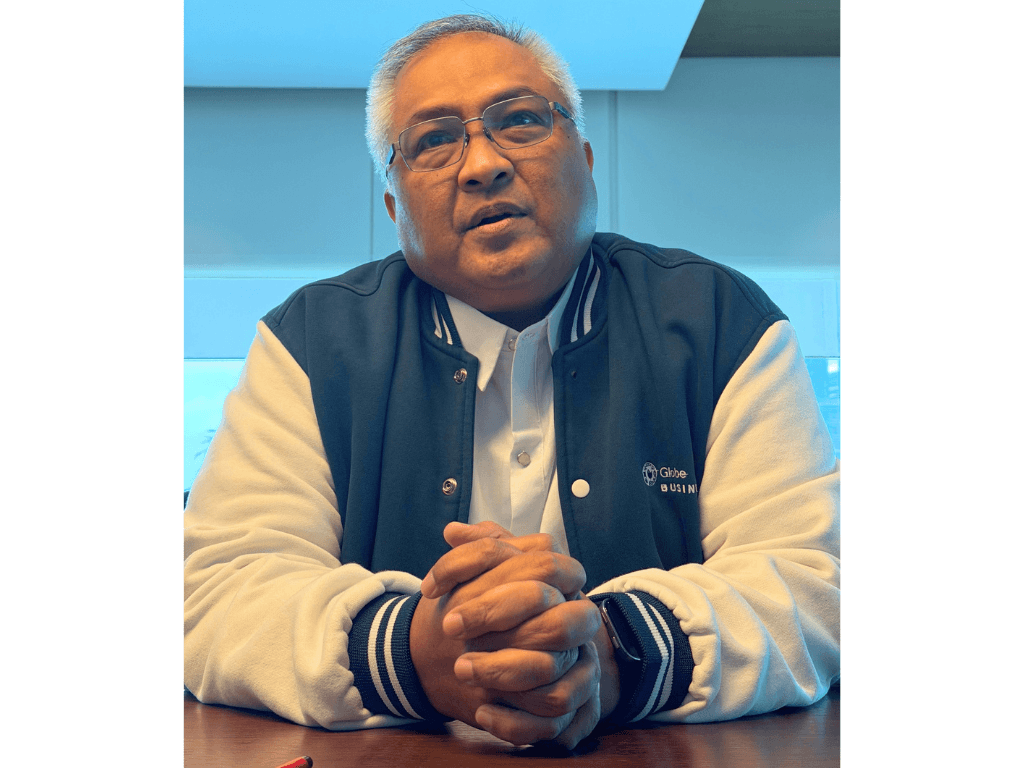
Cruz walks in wearing a navy blue-and-white varsity jacket. Globe colors. He talks the way seasoned consumer goods executives often do: leaning forward, hands constantly sketching invisible diagrams in the air to make a point.
Someone offers Starbucks. I decline as I'm already carrying my own.
And then we get right down to it: The criticism that has followed Cruz since he took over the Ayala conglomerate’s telecommunications unit is that he is, at heart, still an FMCG man. “FMCG” is business shorthand for “fast moving consumer goods,” in reference to his long and successful career selling soap and shampoo — a very different industry from telecommunications.
And the surprising thing is that he agrees.
The FMCG man
When Globe announced that a three-decade Unilever veteran would succeed Cu, many assumed the appointment was about discipline. Telecom, after all, is an engineering business. Networks, spectrum, capital expenditure and regulation do not sound like natural terrain for someone who spent most of his career selling soap and shampoo.
Cruz sees the comparison differently.
“I've been wanting to make this move for the longest time,” he tells me. “I really see telcos as the intersection between great FMCG marketing and distribution and technology.”
Then comes the line that may explain his entire strategy: “The comment that this is an FMCG approach? It's actually right.”
That is not defensiveness but, instead, his operating philosophy.
The obvious story is that Globe hired an outsider, but the more interesting narrative is that the outsider doesn't think the Ayala-controlled firm’s biggest opportunity lies in technology. He thinks it lies in simplification.
The simplification bet
Listen carefully and Cruz returns repeatedly to the same themes: fewer approval layers, faster decisions, simpler customer journeys, clearer priorities, better field execution.
None of those require another billion pesos worth of spectrum. What they do require is management.
He cites one example in Globe's enterprise business which, he says, accommodates 11 different billing cycles because it has tried to satisfy every customer's preference. In theory, that sounds customer-centric. But in practice, it introduces enormous complexity into billing, reconciliation and back-office operations. Two billing cycles—15 days and 30 days—would have probably sufficed.
“We wanted to satisfy all the customer requirements,” Cruz says. “But that has introduced a lot of complexity into the organization.”
It is an observation that could have come straight from a consumer goods company obsessed with stock-keeping units and supply chains.
He makes his point that customer-centricity and operational simplicity are not always the same thing. Sometimes, trying to please everyone makes the experience worse for everyone. And this is where Cruz's FMCG background stops looking like a liability.
Consumer goods companies spend decades squeezing unnecessary complexity out of enormous organizations because complexity is expensive. Telecommunications firms, meanwhile, have accumulated plenty of their own.
Get out of the office
Cruz believes Globe still moves too slowly. Approval systems take weeks. Projects compete with one another because “everything is priority.” Managers spend too much time inside conference rooms and too little time talking to customers.
“If I have to be in the office,” he says, “I go around the executive floor. If someone's there, I tell them, 'Why are you here? You should go out.'”
Sounding a lot like a Unilever executive, he says execution will make or break the company.
Perhaps the biggest surprise during our conversation is that Cruz does not believe Globe is operating in a mature industry.
Room to grow
Conventional wisdom says Philippine telecommunications industry has largely run out of room to grow. Mobile penetration exceeds the population. Voice has become a commodity. Competition has intensified.
But Cruz sees something different, pointing to the country's infrastructure deficit.
Thailand, with roughly two-thirds of the Philippines' population, has around 90,000 towers. The Philippines has fewer than half that number. Every new tower Globe builds, he says, immediately serves congested sectors already waiting for additional capacity.
Then there is data usage. Filipinos consume roughly 17 gigabytes per user each month, according to Cruz. India is approaching 30.
In his view, there remains considerable room for growth even within Globe's core connectivity business. The challenge is no longer simply building more infrastructure but to monetize that infrastructure better.
And that may explain another phrase that initially puzzled business journalists and investors when Cruz first used it publicly. He wanted Globe to “go back to being a utility.”
Some interpreted it as a retreat, but he insists it was the exact opposite.
Back to being a utility
Inside Globe, he says, there had been murmurs that traditional telecom had become “a dead duck in the water.” Management needed to restore confidence that getting the fundamentals right—network quality, reliability and consistency—remain the foundation for future growth. Only then can Globe aspire to something larger.
His vision extends well beyond mobile subscriptions. He talks about data centers, subsea cables, APIs, digital platforms, enterprise software and artificial intelligence with the same enthusiasm that earlier generations of telecom executives reserved for cell sites.
The ambition is to become what he calls the country's “premier digital ecosystem.”
That is a familiar aspiration across the telecommunications industry and practically every player aims for that. Cruz’ predecessor certainly made that the company’s goal, with success skewed significantly on the fintech side of the business.
From building to integrating
To his credit, Cruz resists the temptation to diminish Ernest Cu's legacy. He repeatedly credits his predecessor for making difficult strategic bets—from the migration to 4G to the long, patient investment in GCash, and the creation of Globe's portfolio of digital businesses.
His own task, Cruz says, is different. He’s not here to build the ecosystem, but to extract more value from it.
It also helps explain why Globe's board may have wanted someone whose instinct is operational discipline rather than entrepreneurial expansion: because there comes a point in every company's life when building becomes less difficult than integrating.
Toward the end of our conversation, Cruz explains something that stays with me. The dream of every consumer goods executive, he says, is always to receive customer data as fast as possible, saying with excitement that in his job at Globe today, that previous information is “available instantaneously.”
For someone who spent decades waiting weeks or months to understand consumer behavior through market research, Globe offers something extraordinary: millions of customer signals arriving in real time.
The outsider’s advantage
Perhaps that is why the FMCG executive wanted the telecom job all along.
The irony is that Carl Cruz may turn out to be exactly the kind of outsider Globe needed—not because he understands telecommunications differently, but because he refuses to believe it is a telecommunications company first.
He looks at Globe and sees what consumer goods executives have always seen: a consumer business whose greatest competitive advantage may not come from another tower, but from making an already successful company simpler, faster and less complicated than it was yesterday.
Senior Reporter