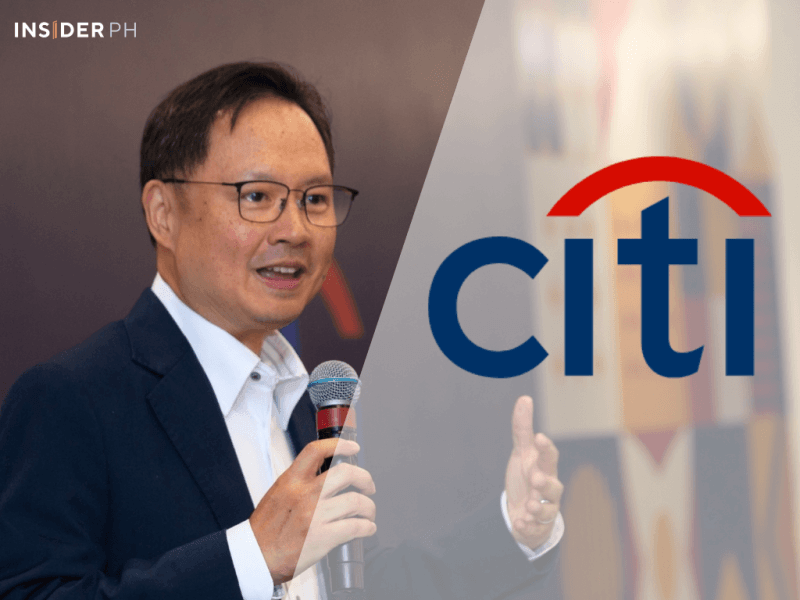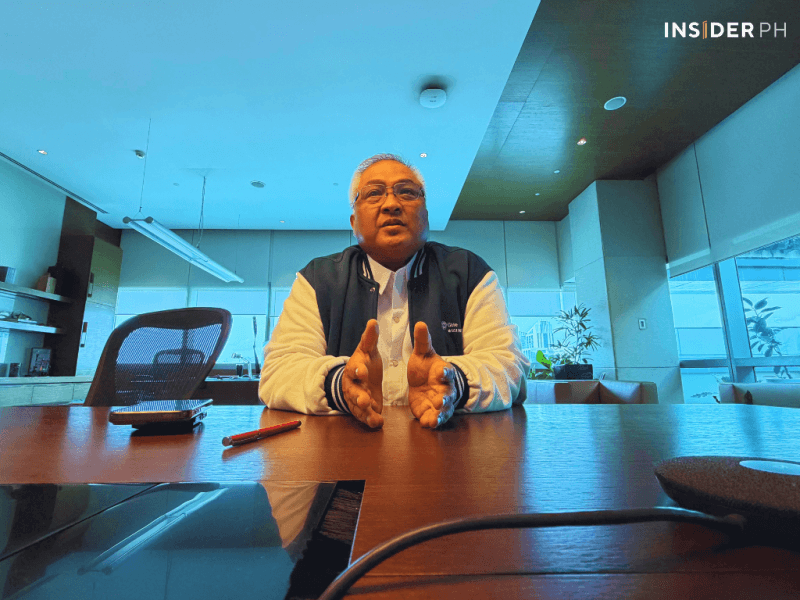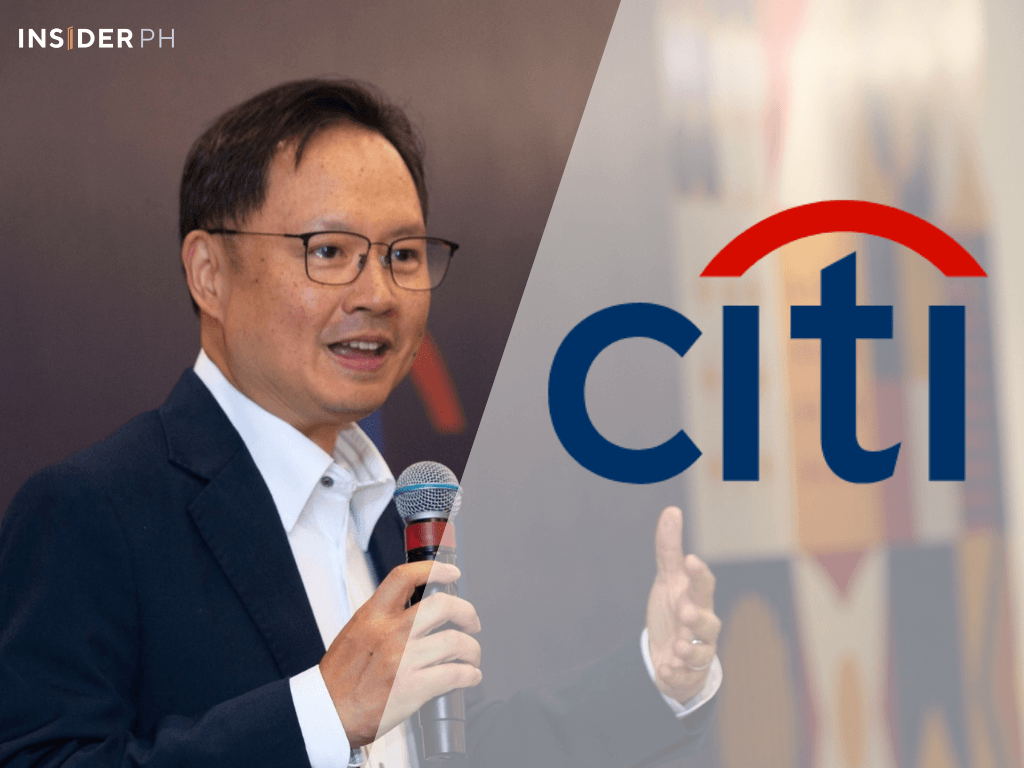
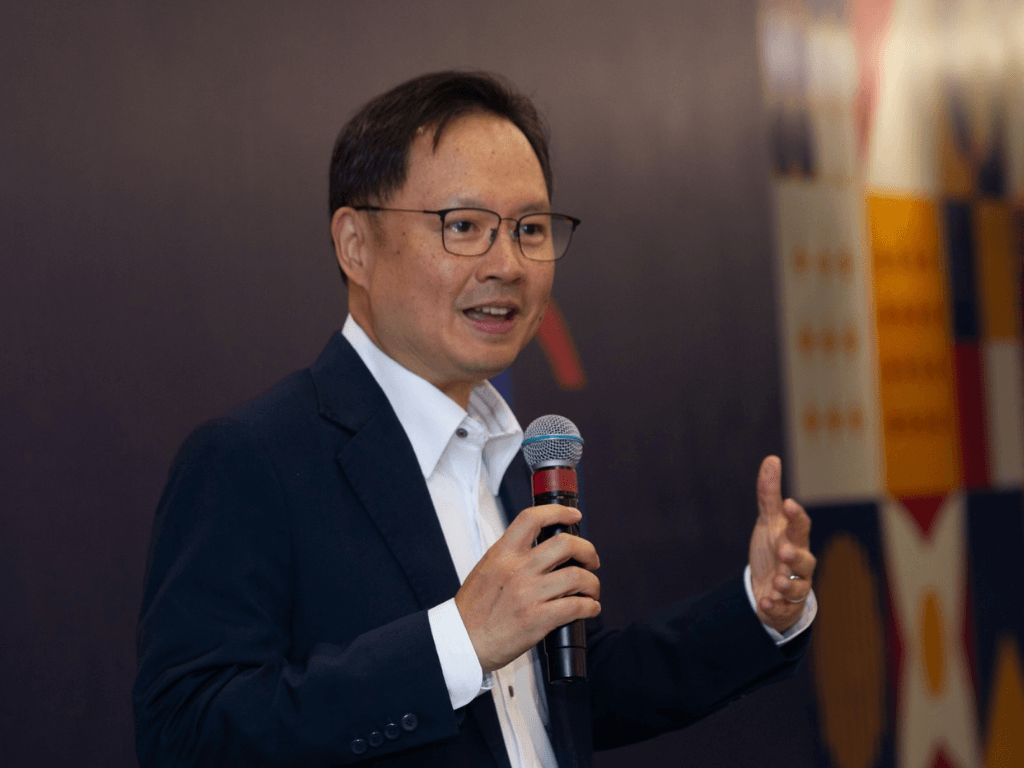
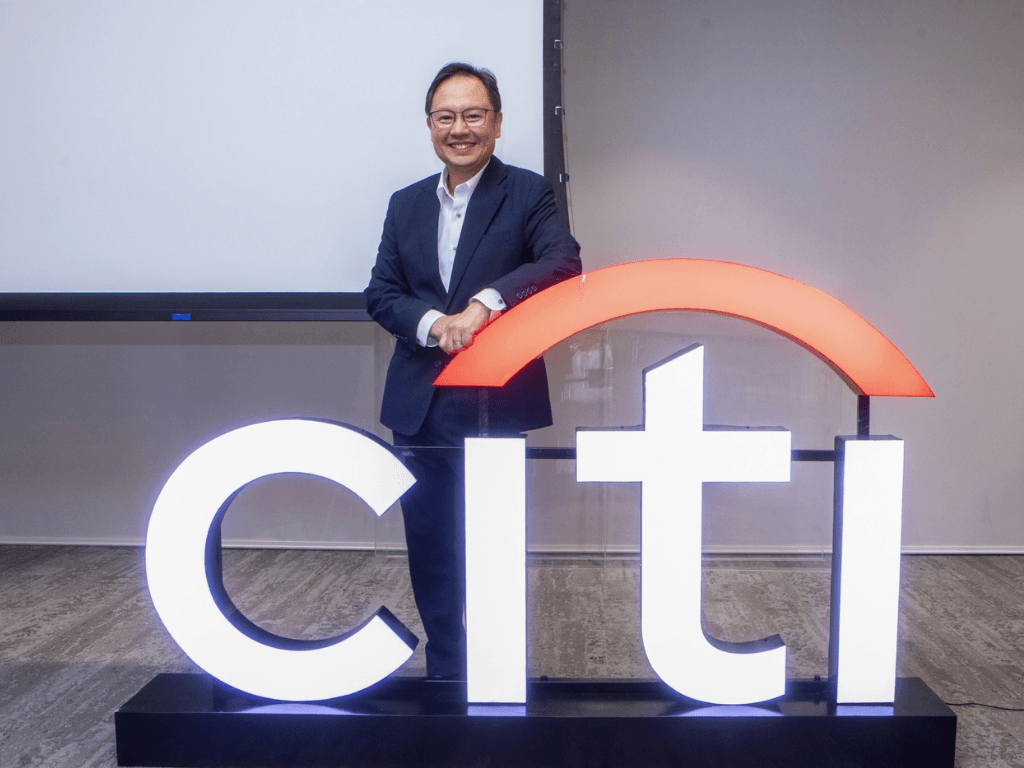
Over Peking duck at Grand Hyatt Manila recently, InsiderPH senior reporter Dax Lucas sat down for lunch with Citi Philippines chief Paul Favila to talk about a bank—and a banker—reinventing themselves. The hotel sits just minutes from Citi’s BGC headquarters, an appropriate setting for a conversation about what comes next for one of the country’s oldest foreign banks. Citi has shed the consumer business that made it a household name, while Favila has spent decades building an identity distinct from his father, former Trade Secretary Peter Favila. Their stories have something in common: formidable legacies, followed by reinvention.
Over lunch, I was about to tell Paul that his habit of trying to understand both sides of an argument—especially when dealing with regulators—sounded very Peter Favila.
Then I thought better of it.
The son of Peter
“Does it bother you that people are saying, oh, ‘Peter this’ and ‘Peter that,’ and then ‘you're like him’ or ‘you're not like him’?” I asked.
“It has bothered me since I was a kid,” he replied candidly.
And there, unexpectedly, was perhaps the best way of understanding both the banker and the bank he now runs.
“I wouldn't say I hate it,” Favila said of the comparisons. “But it was always a challenge to get away from my father's shoes.”
Entering the same industry made that unavoidable.
“I don't want to just be recognized as the son of Peter,” he said. “How do I become my own person?”
Three decades later, he jokes that people now occasionally identify his father instead as “the father of Paul.”
The son has finally acquired a shadow of his own.
Citi without the credit card
There is a parallel with Citi itself.
For generations of Filipinos, Citibank meant consumer banking. My first credit card was issued by Citibank in the 1990s.
That brand recognition was precisely what made Citi's decision to sell its Philippine consumer business so striking. A bank synonymous with credit cards was walking away from them.
Favila says the explanation becomes clearer when Citi's history is viewed over a much longer period.
“The global consumer bank of Citi is actually relatively new,” he said, noting that its international expansion came largely from the 1970s onward.
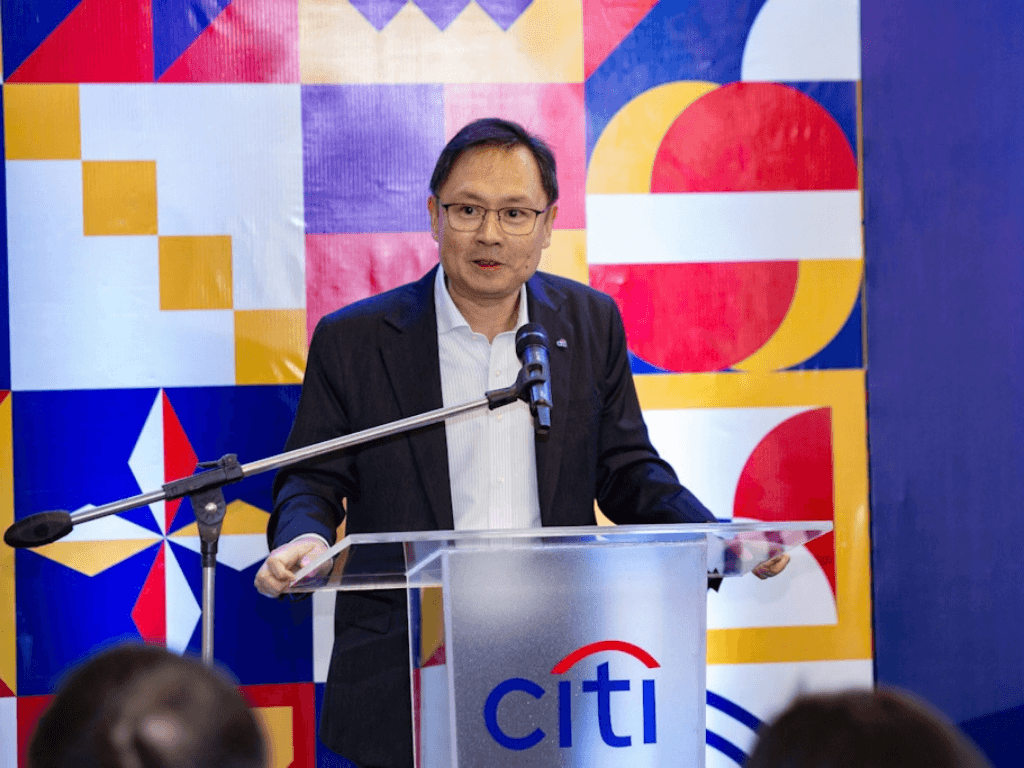
Citi's deeper roots were elsewhere.
“We [first] came [to the Philippines] as a trade bank,” he said, referring to its corporate predecessor’s first Manila branch in 1902. “We came here then for what we are doing right now.”
So while outsiders viewed the sale of the consumer franchise as a retreat, Favila sees what came afterward as a return to Citi's original business.
“Back to your roots, in a sense?” I asked.
“It's really going back to our roots,” he replied.
The challenge is communicating that after roughly half a century in which Citi's public identity in the Philippines was dominated by the credit card.
The bank that got smaller
There is no point pretending Citi's journey was entirely smooth.
Globally, the institution went through years when it seemed a diminished version of the financial colossus it had once been. In the Philippines, selling the consumer business made that contraction particularly visible.
I asked Favila about it directly.
He was running a bank whose stature, I told him, “used to be a lot bigger, larger than life.” Then came years of what looked like a decline. The sale of the consumer banking business in 2022 appeared to mark the bottom.
Where was Citi now on that curve?
“We're definitely way past” the bottom, Favila said. “We're actually, let's say, on the way up to regaining what belongs to Citi.”
“What belongs to Citi?” I asked.
“Being the best,” he replied.
That's a big claim.
More interesting was what he said next.
A client recently told him: “We're happy you guys are back.”
Favila's response was that Citi had never left.
But the client's next observation was more revealing: while Citi had been “kind of absent,” nobody had taken its place.
What Citi still has
That exchange gets to the heart of Favila's bet.
Citi may no longer have millions of Philippine retail customers carrying its cards, but it still possesses something harder to recreate: an institutional franchise connecting Philippine companies to global markets.
It also remains, Favila points out, the country's largest foreign bank, with P355 billion in assets as of mid-2026.
Its relevance now depends less on how many Filipinos have Citi plastic in their wallets and more on whether corporations, financial institutions and investors need the international network and financial-market expertise it provides.
That is a narrower business than the Citi Filipinos once knew, but it may also be a more focused one.
Favila describes consumer banking as highly complicated, involving millions of customers and many moving parts. Corporate banking is almost the opposite: each client can be treated individually, transactions structured around specific needs and capital allocated more precisely.
“Very bespoke,” he called it. And more capital-efficient.
The banker's bank
This also explains why Favila becomes particularly animated when the conversation turns to the plumbing of Philippine finance.
He worries that parts of the country's financial markets have barely progressed since the 1990s.
"We could not get an options market running. The swap market has never been anywhere," he said.
The Philippines today has a much larger economy and far more comfortable foreign exchange reserves, yet remains heavily dependent on banks for capital.
The BSP wants to deepen the interest-rate swap market. Favila strongly supports the objective, but argues that regulators must first understand why such a market has struggled to develop.
"You can push it, but unless you have a real use case for it, it will fail."
His broader philosophy toward regulators is equally telling.
"You have to get them to see things from your perspective," he said. "It's all about credibility."
Don't begin by fighting the regulator, he argues. First understand what the regulator wants to achieve. Agree on the objective where possible. Then argue over the means.
"I'm not fighting your objectives," he said. "But maybe we'll disagree on the approach."
The Favila method
And that brought me back to Peter.
Because there is something amusing about Paul's determination to escape his father's shadow while describing a worldview shaped by decades spent around bankers, regulators and policymakers (the late Bangko Sentral ng Pilipinas Gov. Gabriel Singson was his granduncle).
Establish credibility first. Understand the other side. Know what you want. Don't pick unnecessary fights. And when you disagree, persuade rather than shout.
Paul has spent over three decades learning the Citi way of doing business, but before that, he grew up with another banking education at home.
Today, he is running Citi Philippines at perhaps the most interesting point in its recent history: after the retreat from consumer banking, but before the market has fully absorbed what Citi intends to become in its place.
There is a symmetry here that Favila himself may not entirely appreciate.
For years, people looked at Paul Favila and saw Peter's son. For years, Filipinos looked at Citi and saw a credit card company.
Both descriptions were true, but neither was complete.
Now Paul Favila has essentially the same task personally and professionally: proving that what came before may explain where you came from, but it doesn't have to define what comes next. — Daxim L. Lucas