During an online briefing for investors and analysts on Aug. 12, CLI said the upcoming projects would comprise more than 5,600 units across established and emerging growth markets, including Cebu and Mactan Island, Ormoc City in Leyte, Butuan City, Davao City, and Panglao Island in Bohol.
The pipeline will also mark CLI’s entry into Luzon, with the planned launch of its first projects in Pasig City and Cavite.

Challenging market
Jose Franco Soberano, CLI president and CEO, acknowledged that the first half had been challenging for the property market, citing the Middle East crisis and adverse weather conditions that caused construction delays.
Total revenues for the first half held nearly steady at P10.2 billion, down 1 percent year-on-year.
Real estate sales slipped 2 percent to P9.7 billion, mainly due to delays in the issuance of Licenses to Sell (LTS), which pushed planned project launches and the release of new inventory to the second half of the year.
LTS delays
Delays in the issuance of Licenses to Sell (LTS) have also affected about a year’s worth of project launches in the property market.
Based on data from Colliers Philippines, LTS issuances fell to a record low in the first half of the year. Only about 30,000 units were granted new licenses, compared with about 200,000 last year—a drop of roughly 82 percent.
While awaiting the issuance of the LTS, Soberano said his team took a proactive approach by preparing communication and marketing materials ahead of the launch of the new projects.
“I say this year, it's a challenging year, but it will reward those who are making most of the available opportunities,” said Soberano.
"We see the first half largely as a timing shift. As approvals come through and fresh inventory returns to the market, we are well positioned to carry this strong underlying demand into our next phase of growth,” he added.
Resilience
Despite the headwinds, CLI managed to maintain its margins, collect its receivables, cover its obligations and triple its land bank.
CLI ended the first half with total assets of P141.6 billion, up 6 percent from P134.2 billion at year-end 2025, reflecting continued investment across its development and recurring income portfolio.
“Our first-half results demonstrate the resilience of our core business. Despite the timing shift in new launches, revenues remained broadly stable, margins stayed healthy, and recurring income continued to grow,” Soberano said.
“With limited fresh inventory, our teams sustained sales across our existing portfolio, reflecting continued demand for our residential projects. This gives us confidence as we bring more projects to market in the second half.”
Despite limited new inventory in the first half, residential demand remained strong.
As of June 30, its property-for-sale portfolio was 95 percent sold, up from 92 percent in the previous quarter. The portfolio spans 107 projects composed of 45,507 residential units with a total value of P176.1 billion.
Cost of sales remained flat year-on-year, supported by cost-saving initiatives that helped CLI maintain a gross profit margin of 50 percent.
Net income
Recurring revenues expanded significantly, led by a 15-percent year-on-year increase in hotel revenues, driven by higher occupancy and room additions, and a 49-percent surge in leasing revenues from newly operational commercial properties.
The company also maintained healthy customer credit indicators, with delinquency at 2.91 percent and cancellations at 3.54 percent of total receivables, reflecting the predominantly end-user-driven character of its residential market.
CLI reported consolidated net income of P2 billion, reflecting shifts in the timing of project launches and revenue recognition, as well as a higher comparative base.
The first half of 2025 results included a P400-million gain from the sale of an investment property, resulting in a higher comparison base. Excluding the asset disposal, CLI said its core performance remained stable, with the slight decline in net income mainly attributable to the timing of new project launches.
CLI's hotel and leasing businesses continued to contribute to the company's diversification strategy, with both segments posting significant growth in the first half.
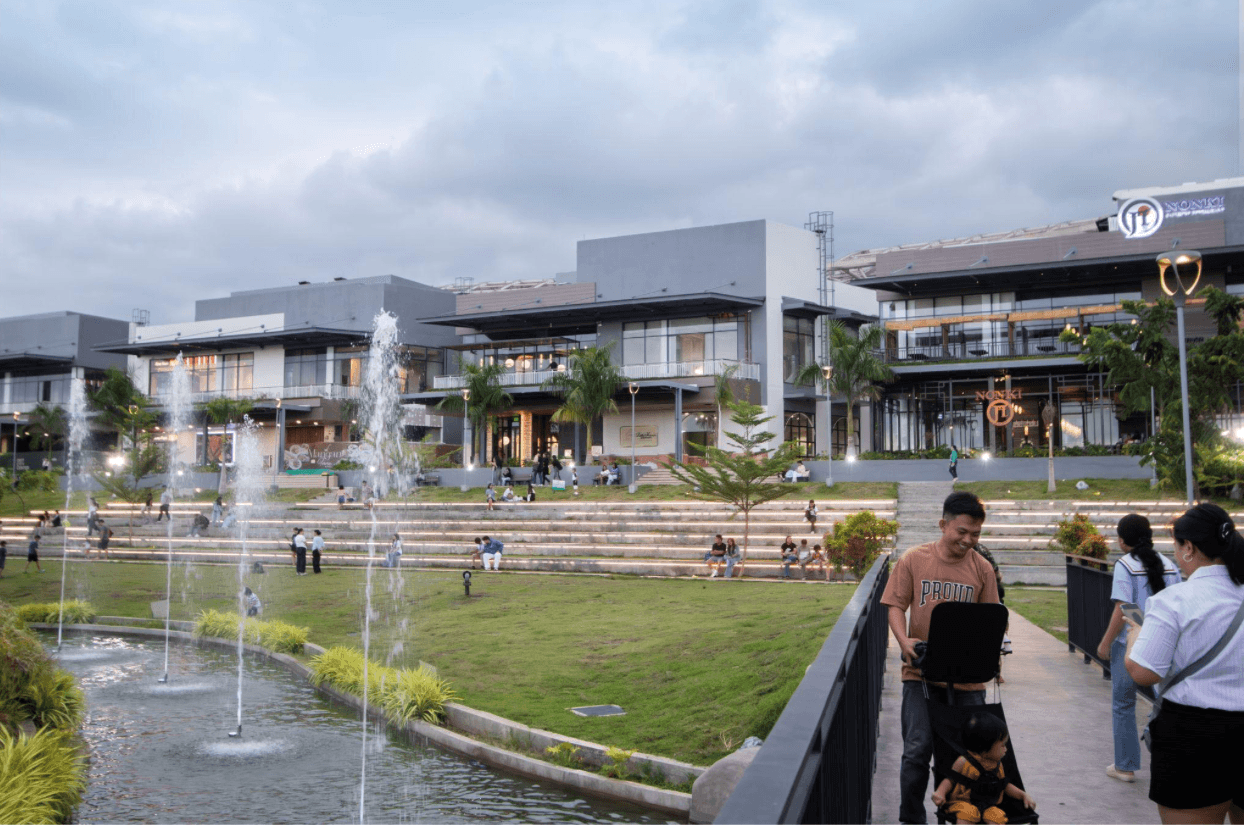
Leasing revenues rose 49 percent year-on-year to P162 million, driven by newly operational commercial assets, an expanding tenant base, and the opening of The Paragon Davao Lifestyle Mall.
Hotel revenues increased 15 percent year-on-year to P231 million, supported by higher occupancy and additional room inventory following the opening of Radisson RED Cebu in Mandaue City in the first quarter. —Ed: Corrie S. Narisma

Contributor