The Subdivision and Housing Developers Association (SHDA) Central Visayas said it will raise the issue at its Housing Summit on Sept. 11, where the industry hopes to find practical ways to sustain housing production while keeping homes within reach of buyers.
The association said discussions at the summit are expected to help shape policy recommendations for incorporation into position papers from both SHDA Central Visayas and its national organization.
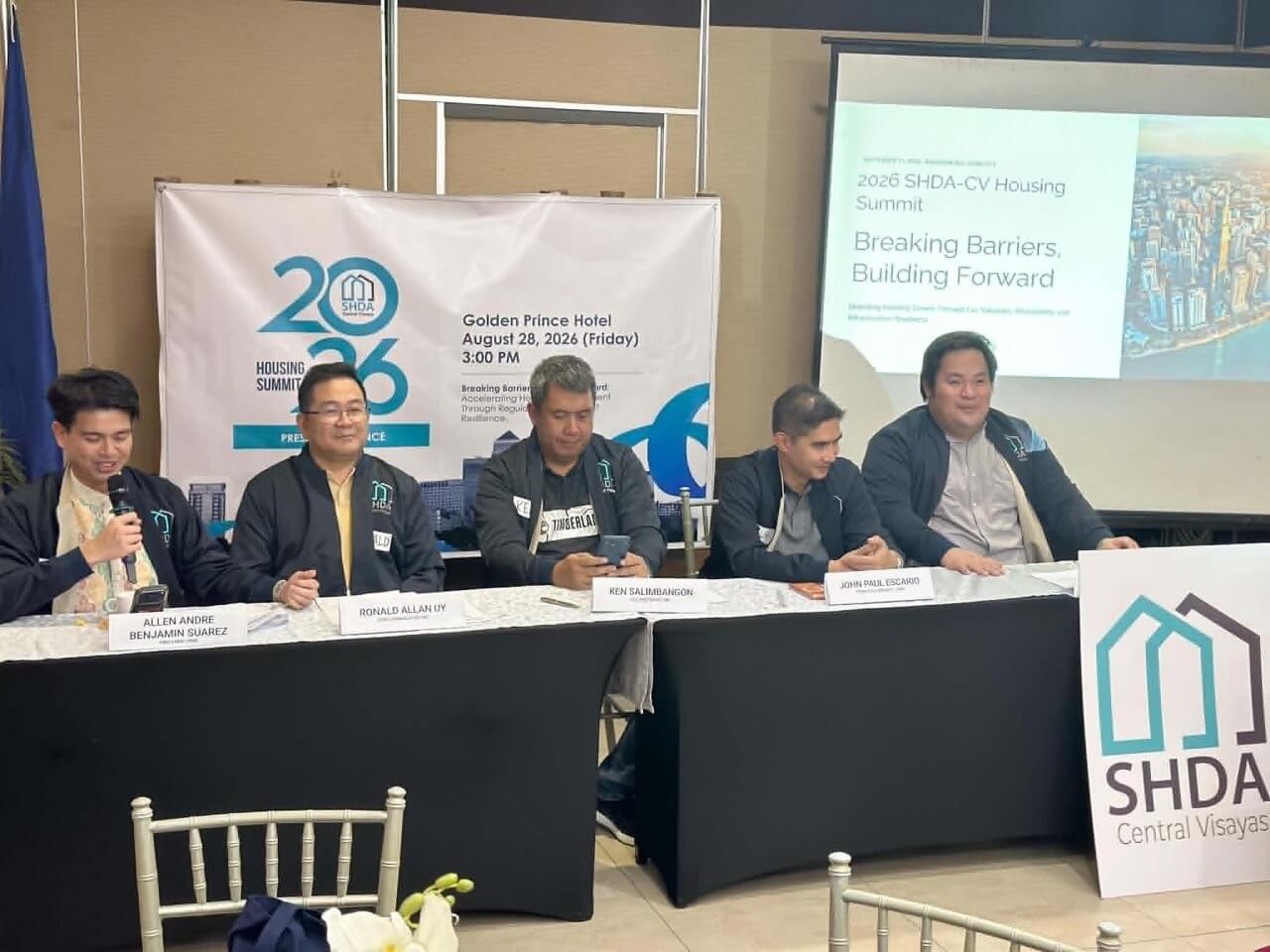
"We really crafted our summit now, our speakers and talking points, really addressing the present needs and issues affecting the industry," according to SHDA vice president and event chair Ronald Allan Uy.
The Housing Summit 2026 is expected to draw at least 100 participants from government, real estate, construction, urban planning, power, water, and academic sectors to address regulatory delays, rising development costs, property valuation reforms, resource security, and emerging growth corridors in Central Visayas.
Issues
Developers are pressing for faster processing of permits and other government requirements, lower financing costs, clearer implementation of property valuation reforms, and improved infrastructure planning, according to SHDA officials.
They said the industry's challenge is not simply building more houses, but continuing to deliver quality homes at prices buyers can afford amid rising development costs.
Harold See, a member of the SHDA Central Visayas board of trustees, said the government could do more to improve housing affordability, particularly by helping lower developers' financing costs.
He suggested state financial institutions — including Development Bank of the Philippines, Land Bank of the Philippines, and the Pag-IBIG Fund — consider offering preferential interest rates to qualified developers or projects, subject to affordability requirements.
Such support, he added, could reduce financing costs and eventually translate into lower homeownership costs.
Rising land costs present a separate obstacle, particularly in highly urbanized areas where affordable housing projects have become harder to develop.
See proposed a model in which the government takes a larger role in providing land for housing while private developers handle construction, saying such public-private arrangements, combined with preferential financing, could help bring down costs.
Outside urban centers
SHDA president Ken Salimbangon said housing development should also be encouraged outside major urban centers to ease pressure on cities and bring communities closer to jobs and other economic opportunities.
He noted that Cebu City continues to draw migrants from the countryside and neighboring islands due to employment opportunities, adding to housing demand — even as high urban land costs make affordable projects difficult to build within the city.
Developers are also seeking closer coordination with local governments on zoning, land-use planning, and infrastructure as residential projects expand into emerging areas.
SHDA officials warned that outdated comprehensive land-use plans, inadequate drainage systems and other infrastructure could become constraints as demand grows.
Delay release of licenses
According to Uy, the industry has faced a difficult year with developers reporting few project launches in recent months amid delays in securing licenses to sell.
"For most, it's still not possible," Uy said, referring to developers still waiting to launch.
He said the slowdown has coincided with higher construction costs, inflation, financing expenses, and concerns over power and water availability needed to support expanding communities.
"The question is, how can the government and the private sector work together to remove the barriers that slow housing development while keeping homes affordable and supporting the continued growth of Central Visayas?" Uy said during a recent press briefing.
SHDA said its concerns extend beyond licensing to the impact of property valuation reforms, rising land and construction costs, utility security, infrastructure, and the identification of new growth corridors across the region.
Developers are watching closely how the Real Property Valuation and Assessment Reform Act (RPVARA) is implemented, amid concerns that higher assessed property values could eventually raise real property taxes and other ownership costs.
Demand in the affordable housing segment remains, but buyers have grown more cautious amid economic uncertainty and rising fuel prices, said John Paul Escario, an official at Pueblo de Cebu Development Corp. and SHDA Central Visayas treasurer. "The challenge is how do you maintain affordability, enticing the market to buy despite what is happening in our economy," he said. —Ed: Corrie S. Narisma
Contributor