The regional data center operator is scaling its Philippine capacity toward 128 megawatts (MW), a move expected to attract more foreign direct investments, generate high-value jobs, and help develop a highly skilled local technology workforce.
Investment push
The expansion plan was discussed during a meeting on July 30 between Trade and Industry Secretary Cristina A. Roque and STT GDC executives at the company's headquarters in Singapore.
Joining the meeting were STT GDC Group chief financial officer Nelson Lim, Group chief operating officer Thomas Ee, Southeast Asia chief executive officer Lionel Yeo, Philippine Trade and Investment Center-Singapore Commercial Counsellor Carla Grepo-Terentev, and DTI Chief of Staff Jeremiah C. Reyes.
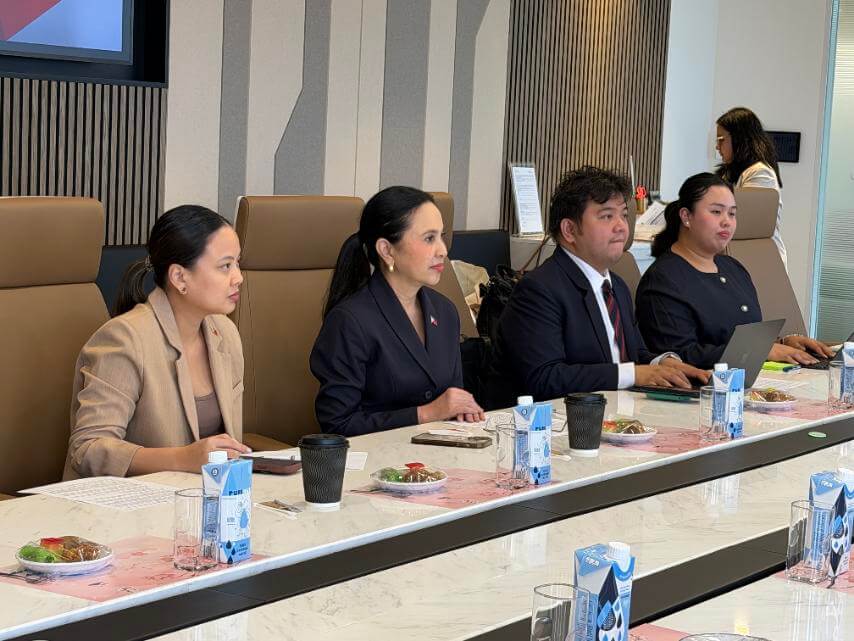
"This level of targeted capital investment is a powerful catalyst for our national economy," Roque said.
She said STT GDC's expansion, supported by its local partnership with Ayala Corp. and Globe, goes beyond building digital infrastructure by stimulating domestic supply chains, creating specialized technical jobs, and equipping Filipinos with globally competitive digital skills.
Economic gains
STT GDC said data center investments generate significant economic activity beyond the facilities themselves.
Citing operational benchmarks across Southeast Asia, Yeo said every dollar invested in data center infrastructure produces about $2.60 to $3.00 in related economic activity, benefiting engineering, construction, consulting, and power industries.
The company also noted that every direct job created within a data center generates at least six additional jobs across supporting industries, with the multiplier expected to be even higher in densely populated Asian markets.
To help ensure Filipinos benefit from the sector's growth, STT GDC Philippines partnered with global certification body EPI Group to launch the DC Power-Up training program.
The initiative enables local engineers and technicians to earn the internationally recognized Data Center Foundation Certificate (DCFC®) and intentionally trains more professionals than the company requires to help strengthen the broader industry.
Competitive edge
During the meeting, STT GDC also challenged the perception that the Philippines has uncompetitive electricity costs.
Yeo said that after accounting for administrative and other charges, electricity costs in the Philippines rank roughly in the middle among the six Southeast Asian markets where STT GDC operates.
He added that the country offers competitive pricing for renewable energy, an increasingly important factor as global hyperscalers and AI workloads require electricity sourced from 100 percent renewable energy.
To support this requirement, STT GDC is working with Ayala Corp. and ACEN Corp. to explore dedicated renewable energy solutions for its Philippine facilities.
The company also cited the country's availability of large contiguous land parcels, which it said provides an advantage as AI-driven data center campuses continue expanding beyond the 100-MW scale.
Expansion plans
STT GDC currently operates seven facilities across Metro Manila and Cavite.
The company recently energized 32 MW of capacity at its flagship Philippine campus as part of its broader plan to reach 128 MW of total capacity.
Its facilities use dedicated commercial renewable power arrangements that are separate from residential electricity grids, while high-efficiency cooling systems and closed-loop water recycling technologies help reduce reliance on municipal water supplies.
Roque assured STT GDC that the DTI, through the Board of Investments (BOI) and the Philippine Trade and Investment Center-Singapore, will provide end-to-end support on permitting and other regulatory requirements as the company expands its investment footprint in the Philippines. —Ed: Corrie S. Narisma