Insider Spotlight
The dim sum brand recently opened its 10th Hong Kong store at Mikiki Mall in Kowloon, doubling its footprint in the city in just over a year.
More important than the store count is the underlying performance. All Hong Kong locations are profitable, and new openings are delivering targeted payback in under two years.
Why it matters
In global dining, expansion announcements are easy. Making the economics work in Hong Kong — where rents are high and diners are exacting — is far harder.
The results suggest Tim Ho Wan’s operating model is resilient enough to scale beyond its home market.
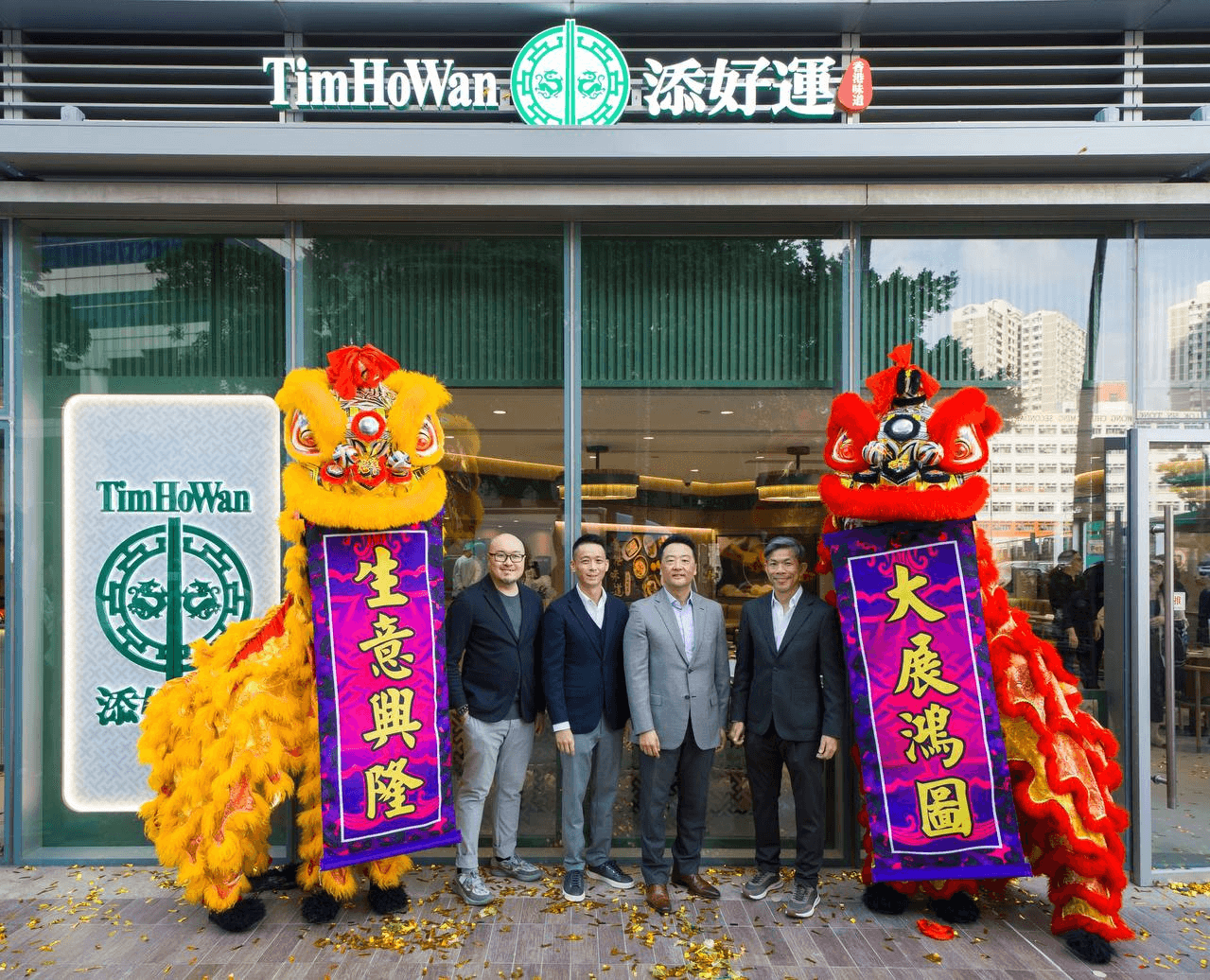
Hong Kong has become Tim Ho Wan’s benchmark market, where operating disciplines are refined before being replicated across both company-operated and franchised territories.
Since joining the Jollibee Group, the brand has strengthened standard operating procedures, increased store audits, and continued investing in chef capability and quality controls.
That discipline is showing up in performance. In the third quarter of 2025, Tim Ho Wan’s system-wide sales rose 5.2 percent compared with the first half of the year, as growth initiatives gained traction, the company said.
All company-operated markets recorded stronger Q3 results, led by Hong Kong, Singapore, and China. Franchise markets also posted improved momentum, with sales up 6.5 pecent, driven by double-digit growth in the Philippines and Taiwan.
Cantonese craftsmanship
Customer feedback points in the same direction. Over the past 90 days, Google ratings in Hong Kong and Singapore averaged 4.7, with all company-operated markets now trending at 4.0 and above.
“Hong Kong is where Tim Ho Wan began, and where our standards are set and proven,” said Sheng Lee, chief executive officer of Tim Ho Wan.
“Across all stores, we focus on Cantonese craftsmanship, taste, and quality, supported by a stronger operational discipline that ensures authentic flavors are delivered consistently.”
With the Hong Kong model established, Tim Ho Wan is now extending its footprint beyond the city. The brand recently opened its first company-operated store in North America, in Irvine, California, alongside a new location at LaLaport Tokyo Bay in Japan.
For the Jollibee Group, Tim Ho Wan is a key pillar of its Chinese cuisine platform.
“Tim Ho Wan reflects our Group’s purpose of delivering superior taste and joyful dining experiences to more people. It shows how culinary heritage can be scaled successfully when supported by disciplined systems,” said Richard Shin, chief executive officer of JFC International and global chief financial and risk officer of the Jollibee Group.
The takeaway
Tim Ho Wan’s Hong Kong story isn’t just about adding stores. It’s about proving the economics first — and using that foundation to guide its next phase of global growth. —-Princess Daisy C. Ominga | Ed: Corrie S. Narisma