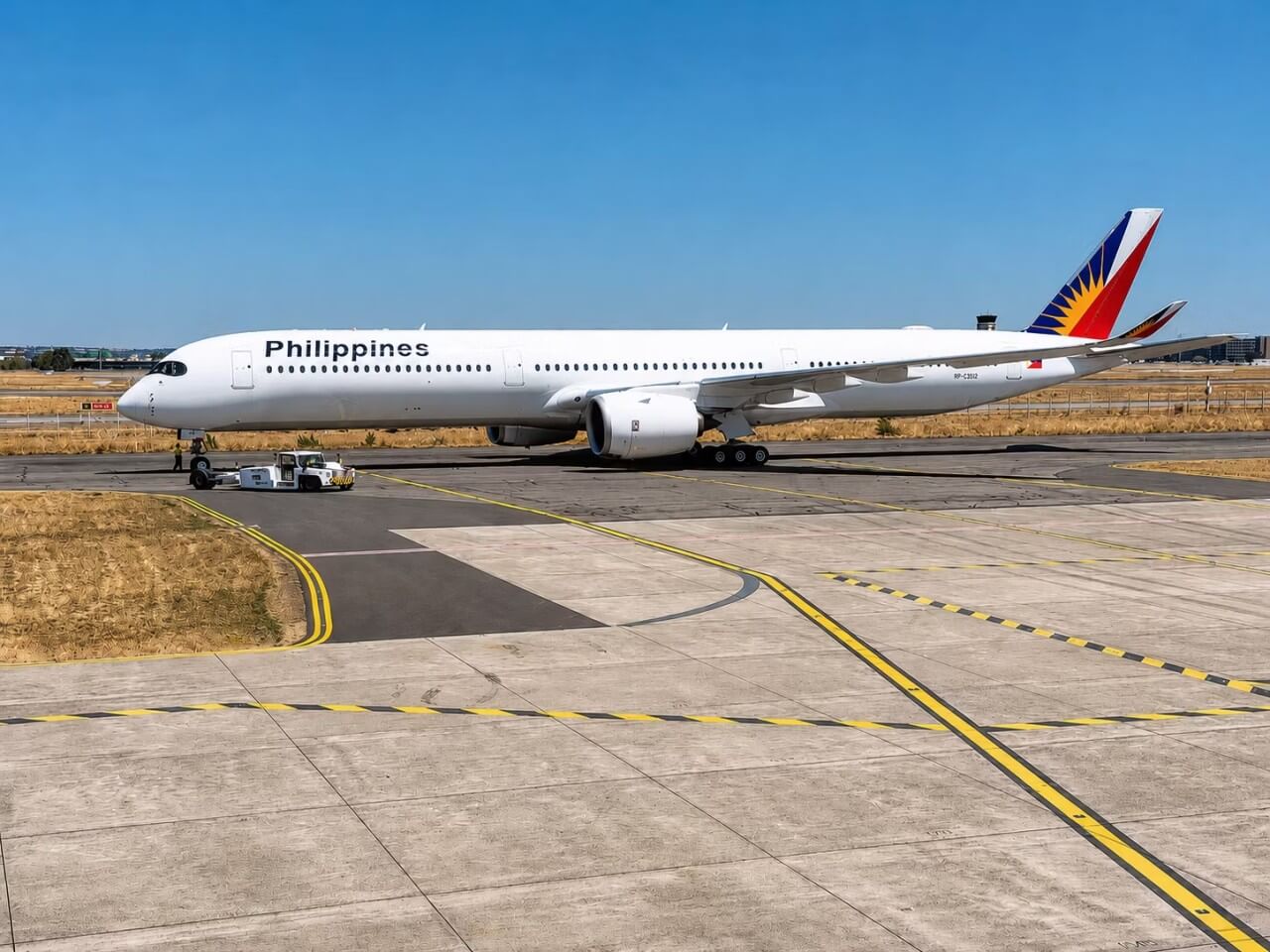
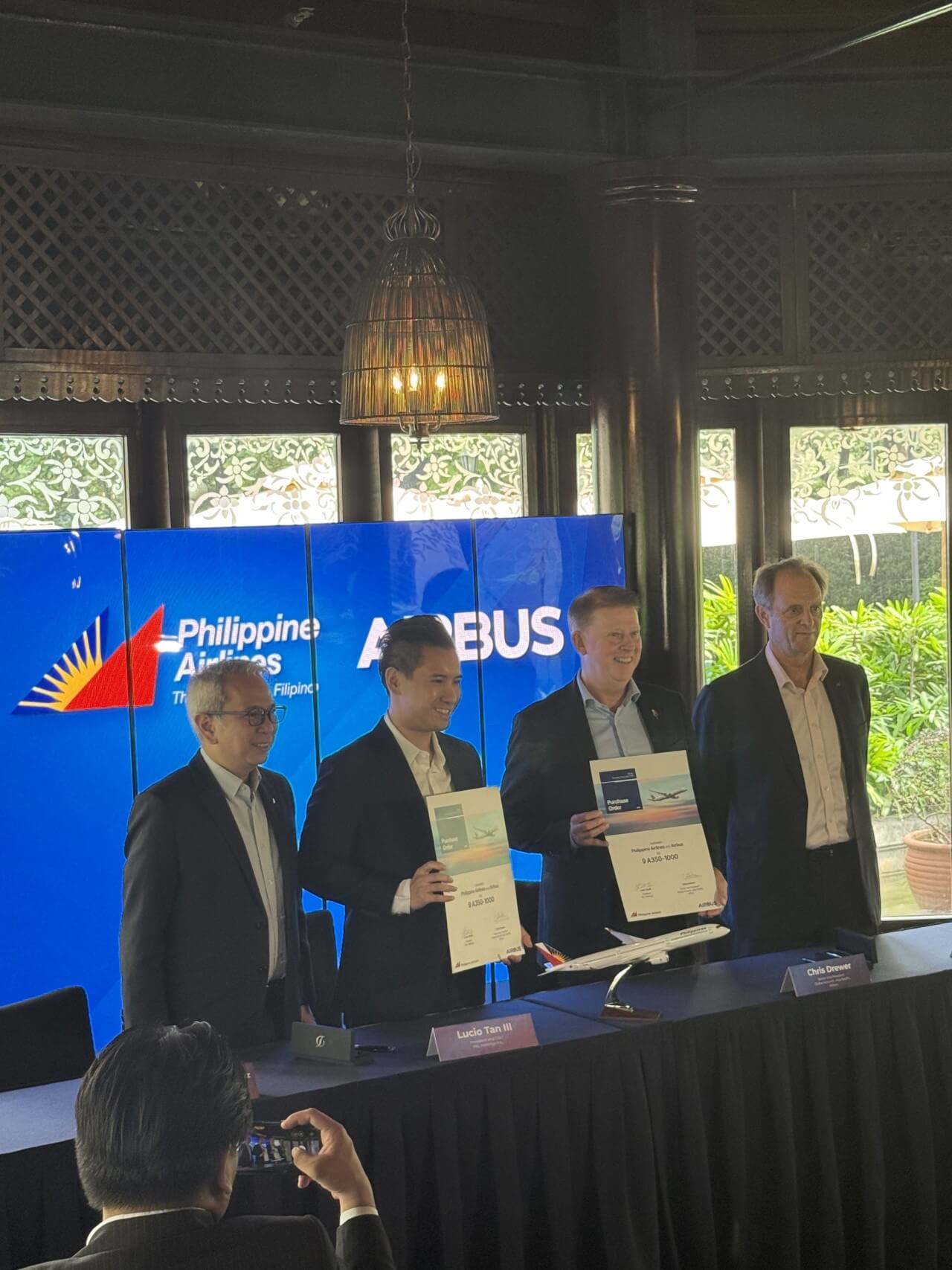
The deal, signed in Manila with Airbus and engine maker Rolls-Royce, follows PAL’s announcement at the Farnborough International Airshow in July and includes purchase rights for five more aircraft.
The long-planned signing offered a moment of optimism for the aviation industry, coming a day after Democrats swept key races in the US midterm elections and amid higher fuel costs linked to the Middle East war.
“Today, together with Airbus and Rolls Royce, we formally turn that commitment into reality,” PAL Holdings president Lucio C. Tan III said during the ceremony.
“This firm order will bring our total A350-1000 fleet to 18 aircraft,” he added.
Tan was joined by PAL president Richard Nuttall and chief operating officer Carlos Luis Fernandez, alongside Airbus senior vice president Chris Drewer and Rolls-Royce senior vice president John Kelly. Civil Aviation Authority of the Philippines director general Raul Del Rosario and Civil Aeronautics Board executive director Carmelo Arcilla also attended.
Bigger long-haul ambitions
The additional jets, with deliveries expected to begin in 2034, are intended to support PAL’s expansion into international markets as competition intensifies among global carriers.
“It is a significant investment in the future of Philippine Airlines and reflects our confidence in the continued growth of our international network,” Tan said.
He pointed to the aircraft’s range, fuel efficiency and passenger comfort as advantages for long-haul routes serving New York, Toronto, San Francisco and Los Angeles.
“Fleet modernization remains a key priority for Philippine Airlines,” Tan said, stressing the need for more efficient aircraft to sustain growth and strengthen competitiveness.

Building on old partnerships
The agreement also covers Rolls-Royce Trent XWB-97 engines, extending PAL’s longstanding relationships with two major aviation manufacturers as the airline celebrates its 85th anniversary.
Tan noted that PAL’s partnership with Airbus dates back to 1978, with the European manufacturer now accounting for 65 of its 86 aircraft in service.
“We take pride in that legacy, but we must also look ahead and make the investments needed to ensure that Philippine Airlines remains strong and competitive for generations to come,” he said.
—Edited by Miguel R. Camus