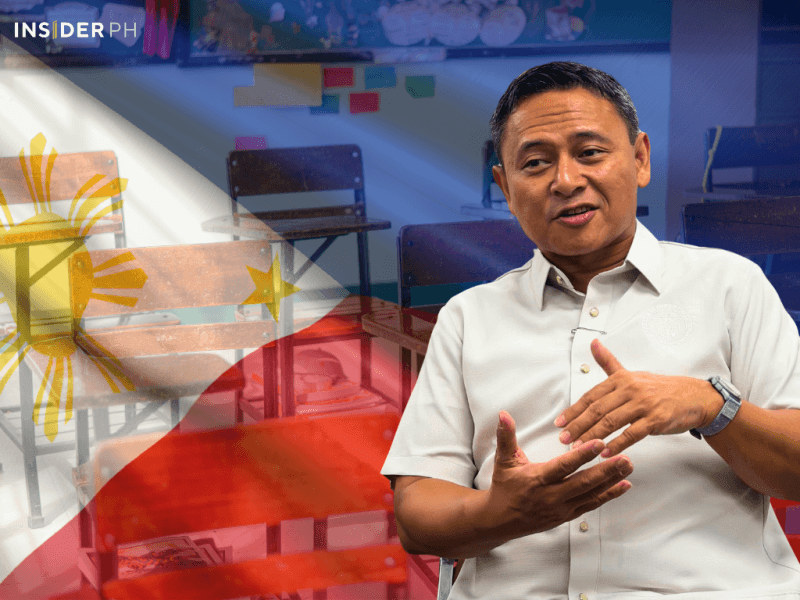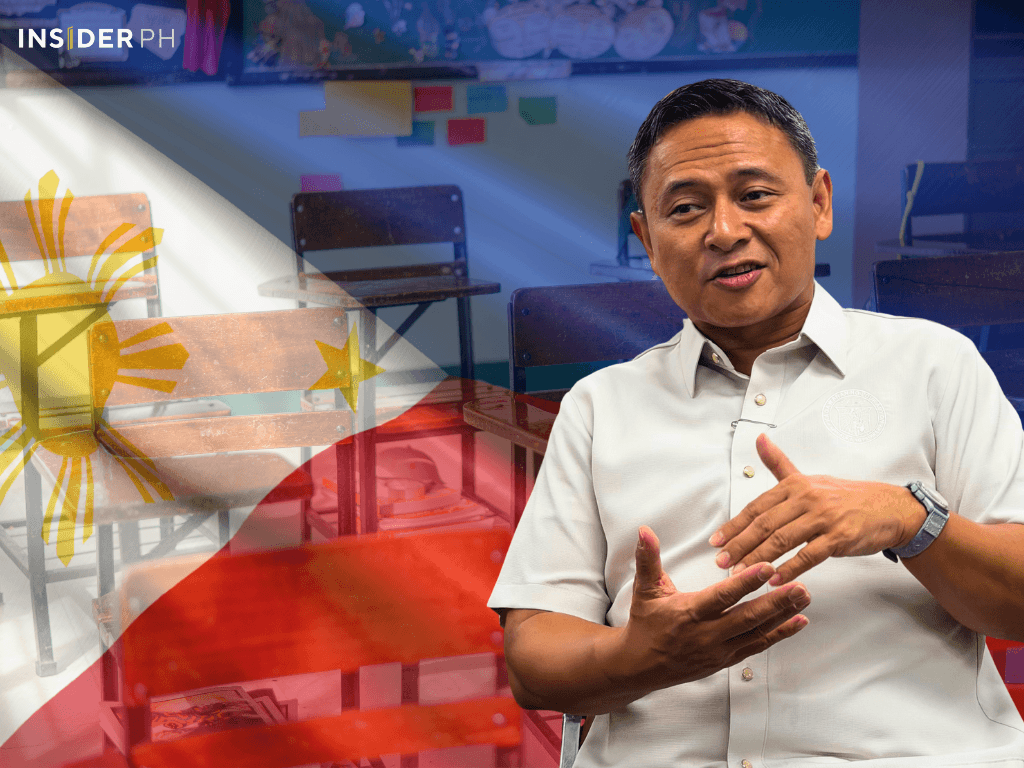
In an interview with InsiderPH on Tuesday, Sept. 8, 2026, Angara said the latest Programme for International Student Assessment (PISA) results represent a dramatic turnaround from the Philippines’ first participation in 2018, when it ranked at or near the bottom across major subjects.
Why it matters
The improvement announced Tuesday gives the Philippines something it has lacked since its poor showing triggered alarm over a national learning crisis: measurable evidence that reforms may be starting to work.
“It's very good. We improved on our previous two-year two two performances. Our first time to join PISA was 2018. We placed last in practically every category,” Angara said.
The latest results showed the Philippines improving in reading, mathematics and science. Angara highlighted reading, where the country emerged as the fastest improving based on the Organisation for Economic Co-operation and Development’s 10-year trend analysis, even as many countries struggled with declining performance.
The backstory
Angara said the earlier dismal results dealt a blow to the country’s confidence, but also became a catalyst for reform.
“I think it really damaged our national psyche in a sense,” Angara said.

He recalled that the disappointing results helped spur the creation of the Second Congressional Commission on Education, or EDCOM II, bringing together government, educators and the private sector to pursue evidence-based and systemic reforms rather than piecemeal solutions.
Angara said the reform push gained significant financial backing from President Marcos and legislators in this year, when education received its first P1 trillion budget. Education spending reached about 4.3 percent of gross domestic product, he said, moving into the range recommended internationally.
The economic angle
Better schools could eventually become a stronger part of the Philippines’ investment pitch as Southeast Asian economies compete for capital and industries requiring increasingly skilled workers.
Angara cited OECD Director for Education and Skills Andreas Schleicher’s description of what is happening in the Philippines.
“Clearly we're seeing an education system on the move,” Schleicher said.
Angara said improvements could help the Philippines make the case that its young workforce will become increasingly competitive against regional peers including Vietnam, Indonesia, Malaysia and Thailand.
“Like, hey, we're also in the game. You know, we also have a young, talented, and would-be-even-better-in-the-future workforce,” he said.
Reality check
Angara rejected any suggestion that the education crisis is over.
“It’s definitely way too early. I think I think it's only we're we're still chipping away at it,” he said.
The bigger challenge is sustaining reforms beyond political cycles. The Education chief said EDCOM has estimated that the country needs a decade of continuous reform and funding to produce lasting change.
That makes complacency a major risk after the encouraging PISA results.
“I think we have to fight that, and maybe not be as angry as we were before, but be like, ‘hey, this is good’. Let's keep it going,” Angara said.
— Edited by Daxim L. Lucas