Insider Spotlight
Filipino learners recorded gains across all three PISA subjects. The share reaching at least Level 2 proficiency climbed to 32 percent in science from 23 percent in 2022, 21 percent in mathematics from 16 percent, and 31 percent in reading from 24 percent, according to the Department of Education (DepEd).
Closer to classrooms
In a statement, the Philippine Business for Education (PBEd) commended teachers, school leaders, learners, parents and Education Secretary Sonny Angara for contributing to the gains.
The PBEd said the results show that learning outcomes can improve, while highlighting the opportunity to build on reforms already producing results.
PBEd said the next step should be identifying successful approaches and bringing them to more schools, particularly those “serving learners who remain furthest behind.”
The bigger picture
Central to that push is decentralization, with PBEd saying that education decisions should increasingly involve the people closest to learners.
In decentralization, the national government would continue setting standards, protecting equity, financing national priorities and holding the system accountable, while local leaders receive greater authority and resources to address specific needs.
The approach envisions three channels—deconcentration within DepEd, greater sharing of authority with local governments and stronger private-sector partnerships.
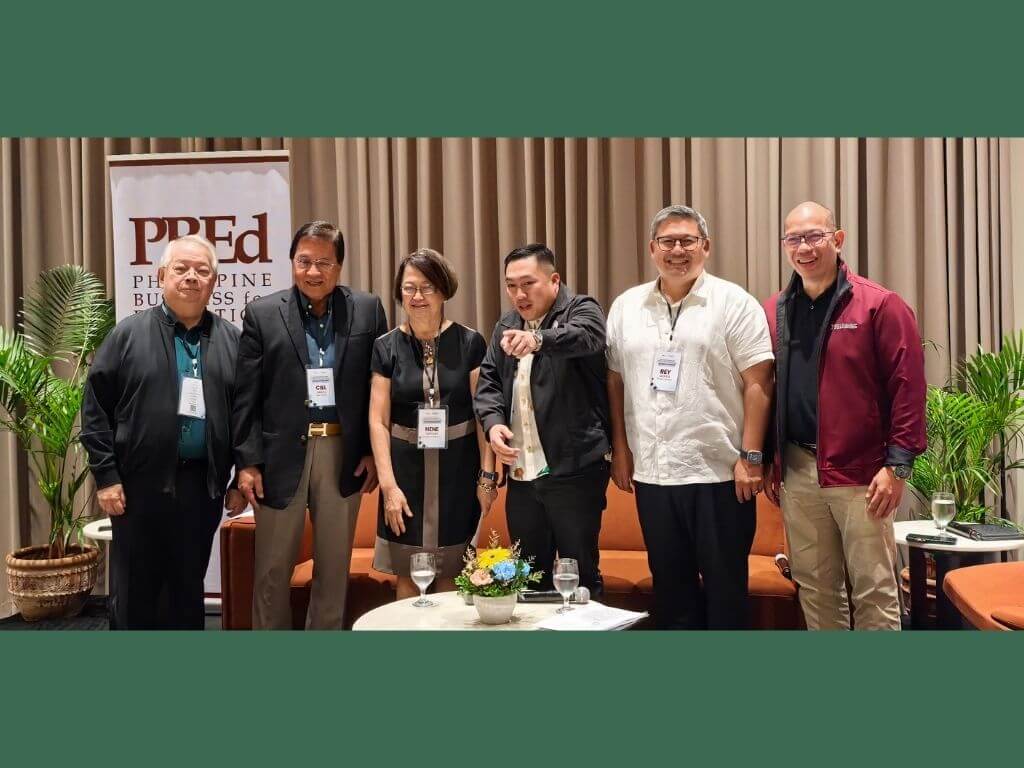
“The purpose of decentralization, ultimately, is not to move boxes around an organizational chart. It is to make the system more responsive, more accountable, and more capable of delivering for the learner,” president and co-founder of PBEd Dr. Chito B. Salazar said during a policy forum last Sept. 8.
For businesses, that means going beyond policy advocacy. Companies can contribute through local partnerships, resources, workforce information and sustained support for schools and communities.
'Whole-of-society effort'
PBEd wants an enabling environment for decentralization by 2028, including pilot “sandboxes” where local governments and DepEd can jointly identify priorities and design education programs.
The forum also pointed to House Bill 8659, or the act strengthening the decentralized governance of basic education, which proposes locally led education zones that could provide such testing grounds by giving local governments and DepEd greater latitude to collaborate.
“The payoff is contextualized delivery for all 48,000 public schools. Our framework is that decentralization should have five elements: capacity, authority, resources, accountability, and transparency,” Asia Foundation’s Education Governance advisor on decentralization Rey Laguda said.
“It is important that we look at this reform as both a whole-of-government and a whole-of-society effort,” he added.
A way forward
PBEd said that the PISA gains provide a “reason to be hopeful and a way forward.” Sustaining them now becomes a shared responsibility: national government setting direction, local governments and schools responding to learners, and businesses and communities helping turn reform into lasting progress.
“PBEd recognizes the hard work behind these results and thanks DepEd for its continued commitment to improving learning outcomes for Filipino children. We look forward to working alongside Secretary Angara and other stakeholders to ensure that the progress is not temporary and that it reaches every learner,” the statement said. —Vanessa Hidalgo | Ed: Corrie S. Narisma