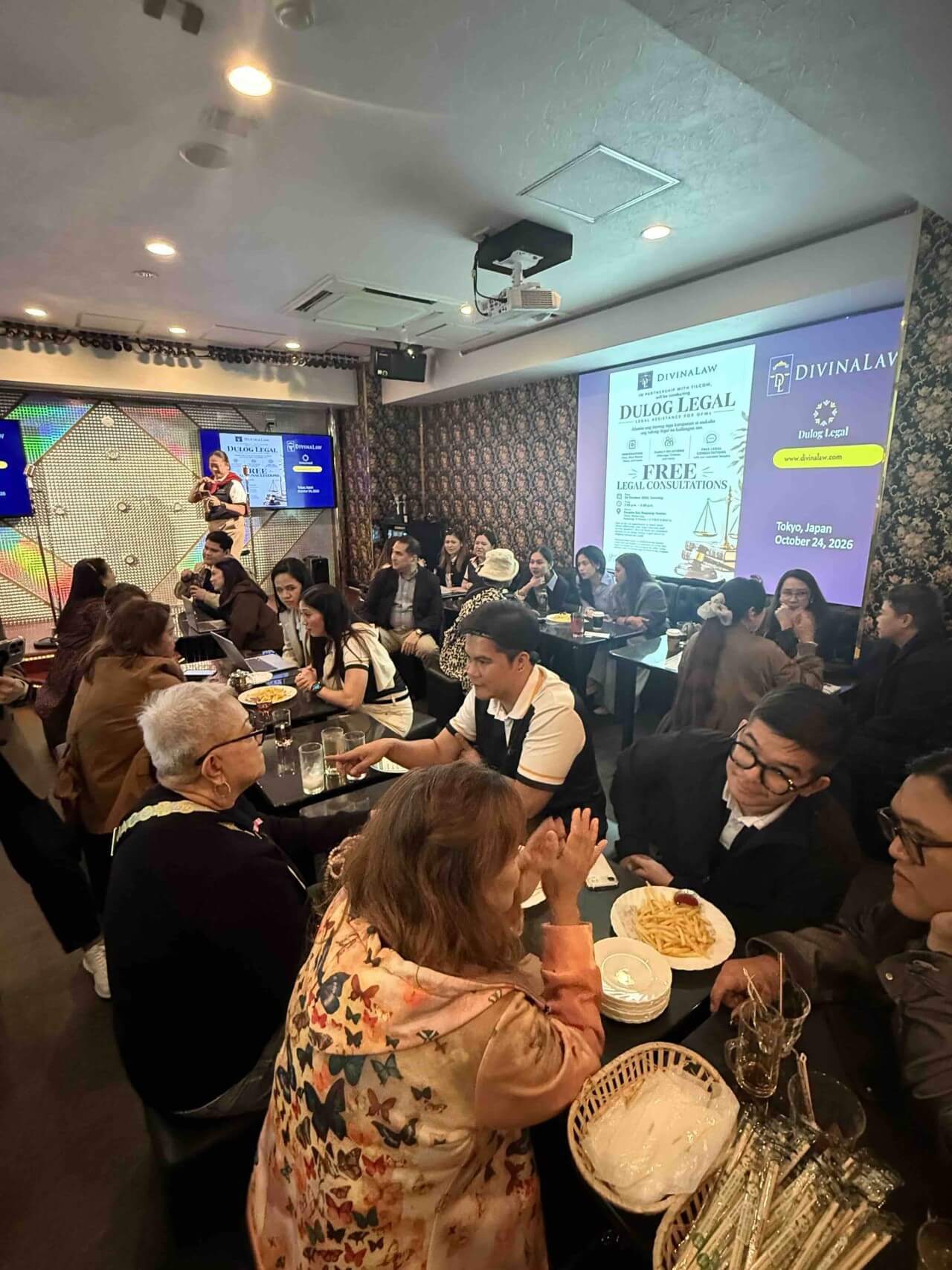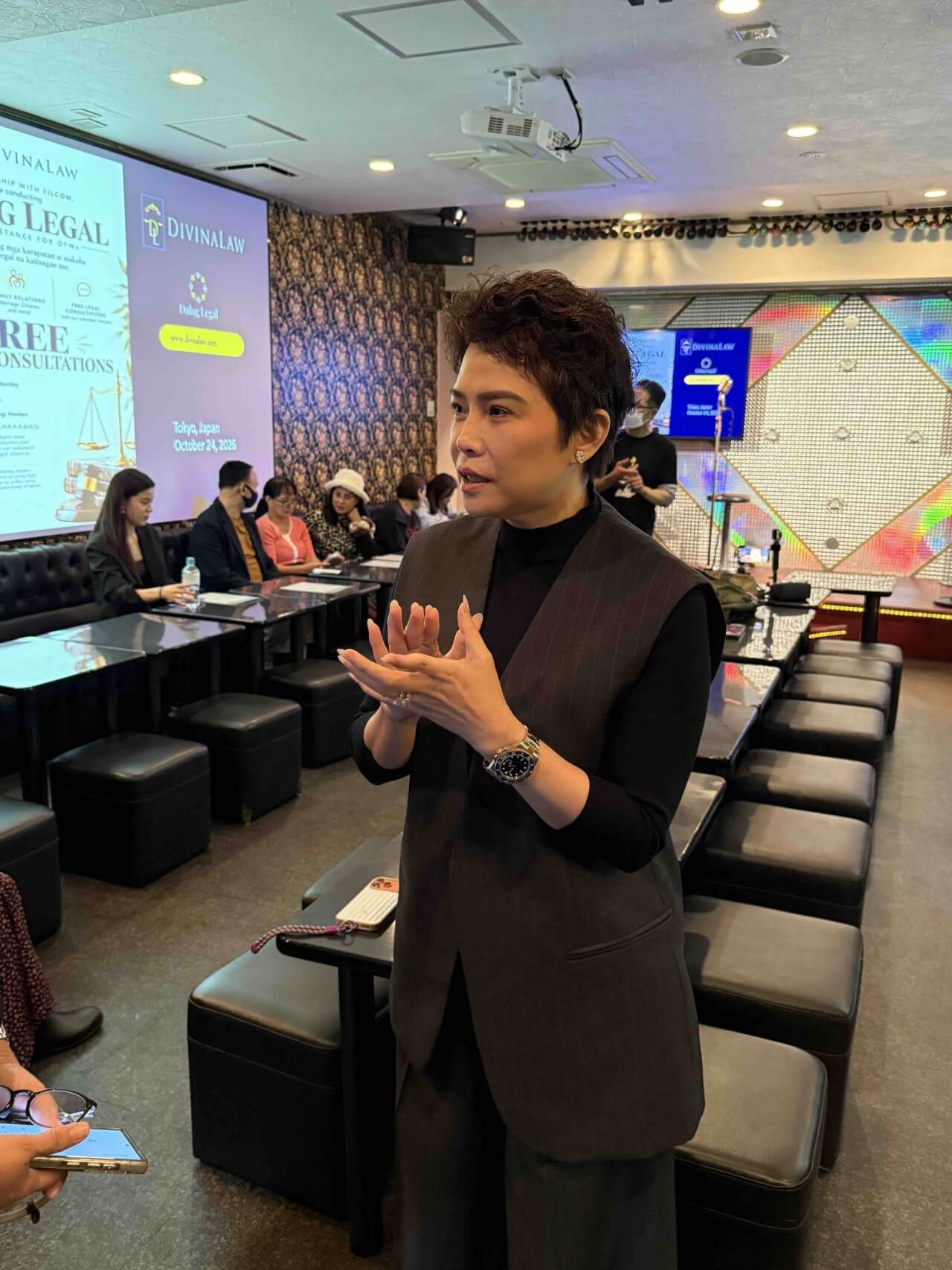
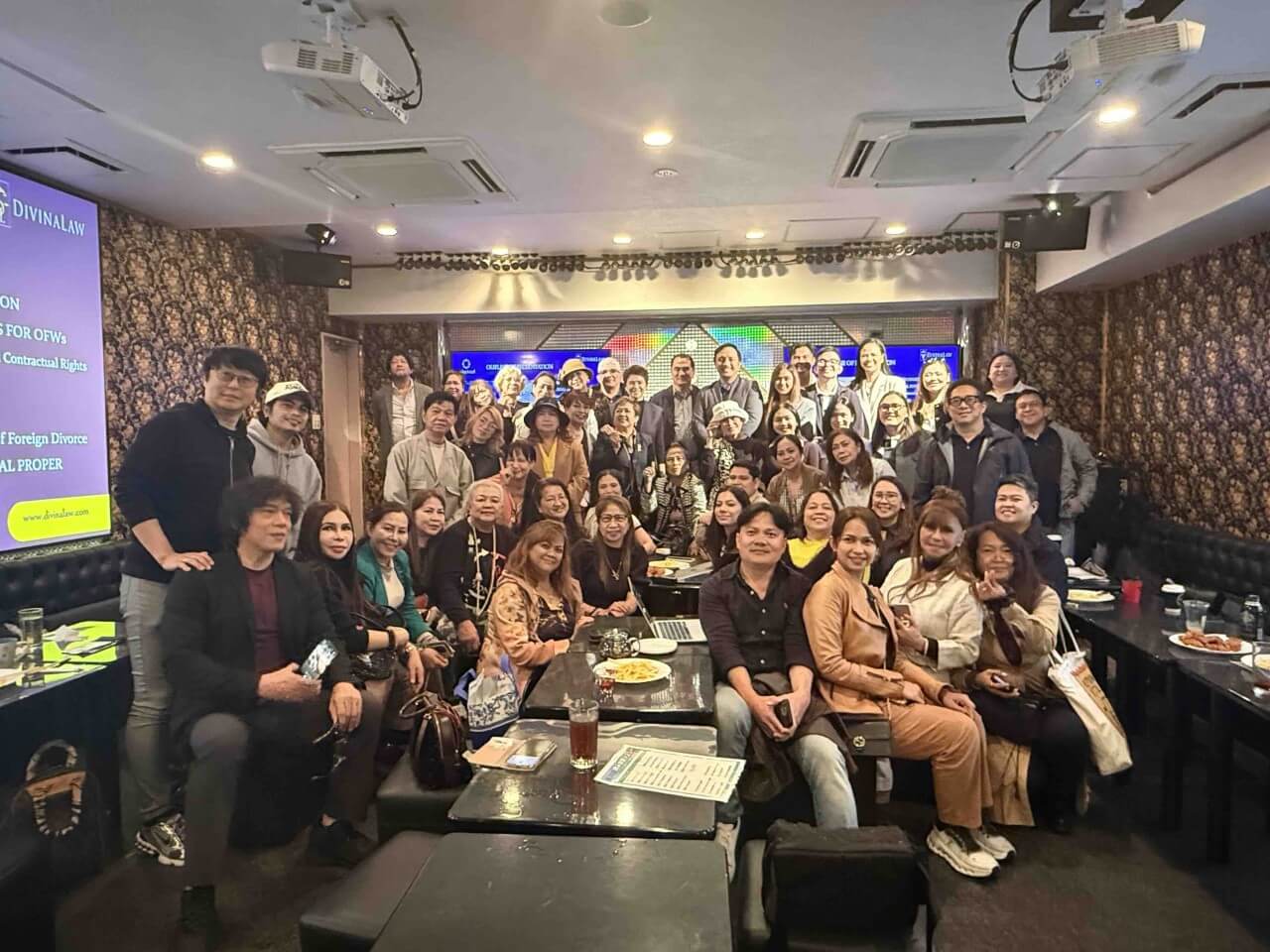
For a few hours, a spacious room inside Karaoke-Kan’s Roppongi branch retained its distinctly Tokyo nightlife feel, complete with colorful neon lights and golden microphones.
But instead of singing, visitors sat across from lawyers at small tables arranged face-to-face, almost like confessionals where priests had been replaced by some of the Philippines’ best legal minds.
Even the karaoke screens had been repurposed, displaying DivinaLaw logos and the day’s rather serious agenda instead of the usual singalong lyrics.
Despite the rainy Saturday afternoon, Filipinos began arriving on time, first a handful, then more and more until the crowd topped 50. There were smiles, friendly greetings and a few too many of selfies, but behind the cheerful scene were serious concerns about jobs, property, citizenship and even divorce.
Lawyers on a mission
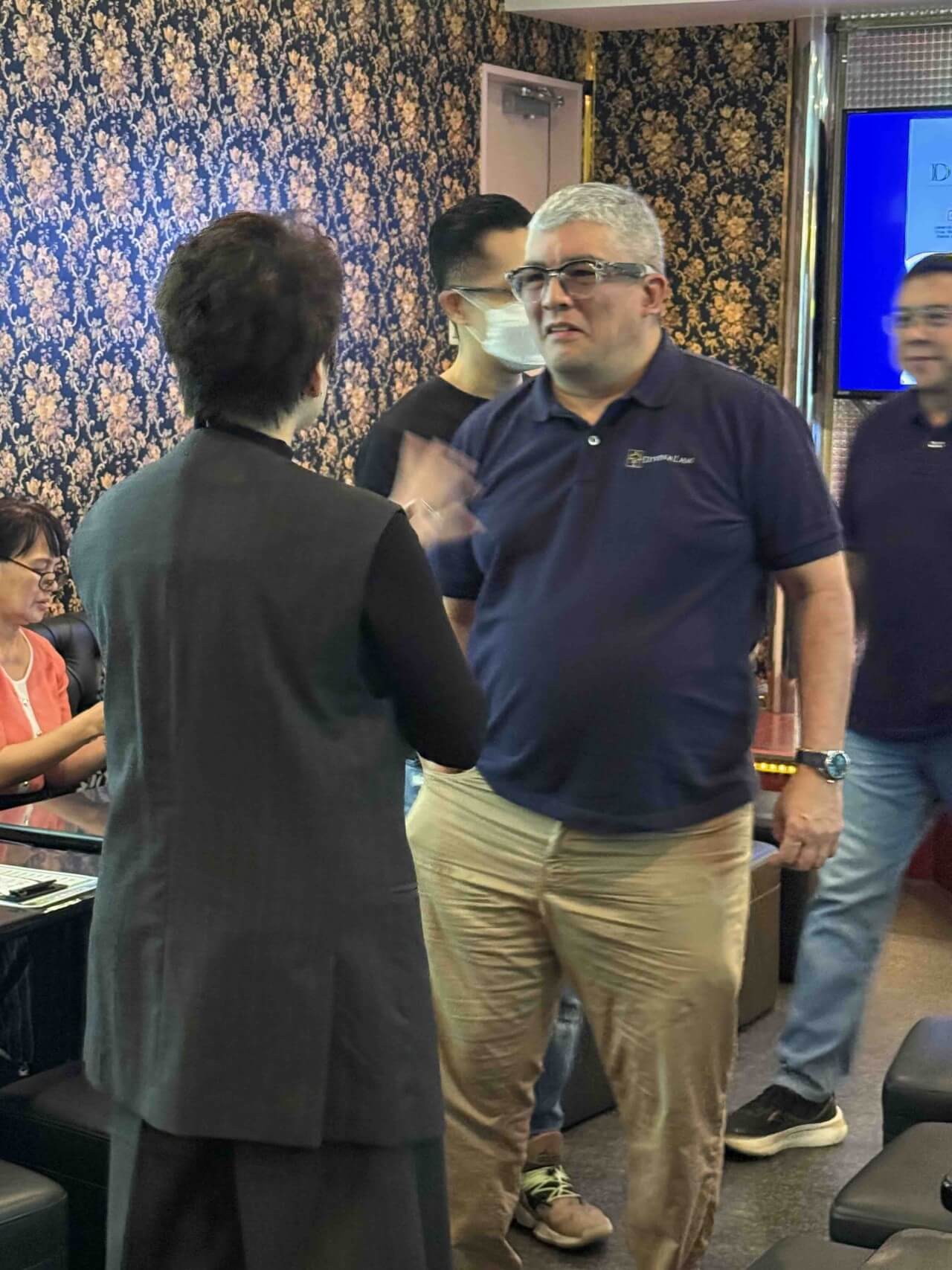
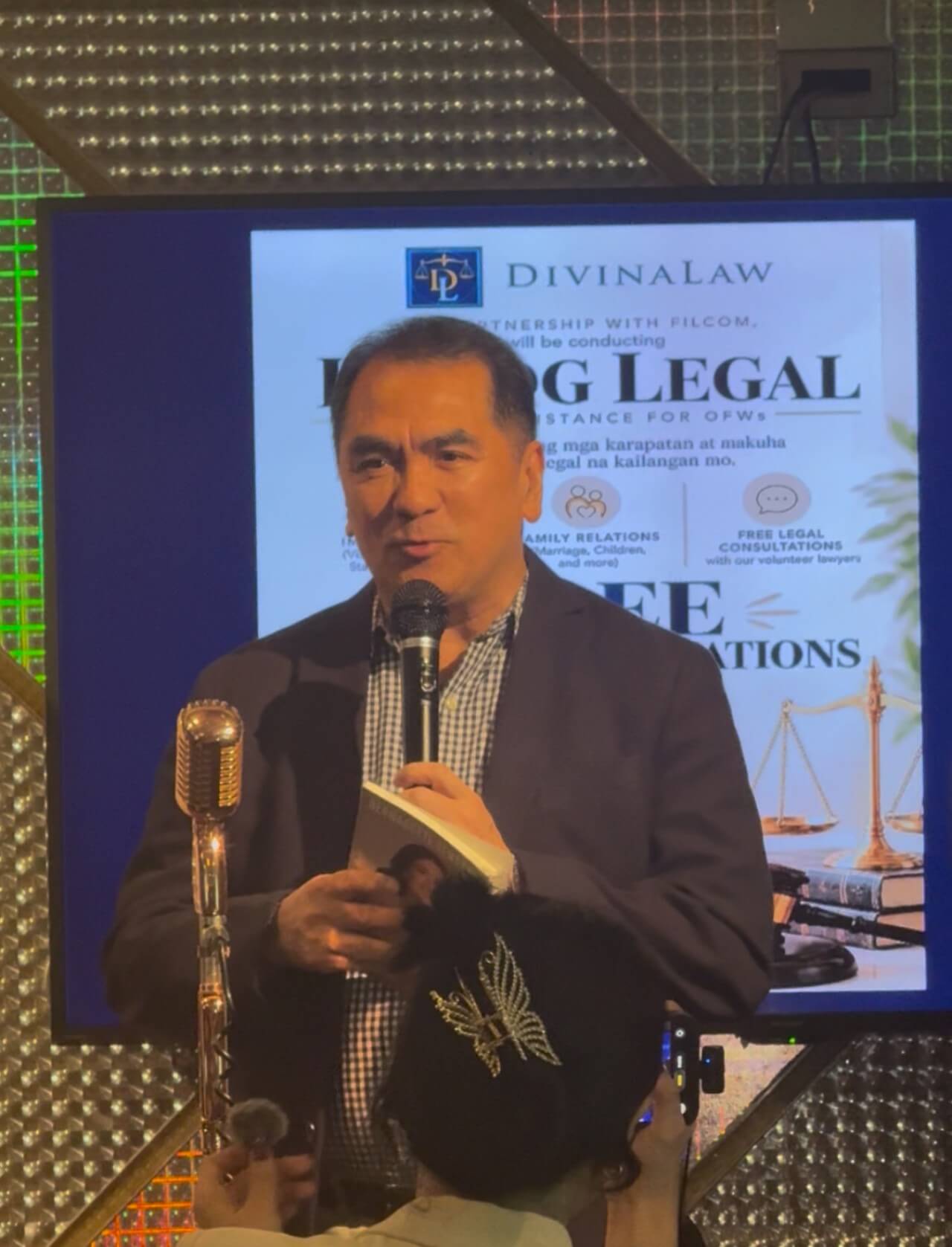
Founder Nilo Divina himself flew to Tokyo with several senior partners, partners and associates, determined to show that working abroad should never mean leaving one’s rights behind.
“OFWs are the best employees out there in the whole world. No one can match the love, affection, dedication and hard work of Filipinos. That’s why we are so proud to be doing this,” the dean of the University of Santo Tomas Faculty of Civil Law told the packed room.
A Filipino success story
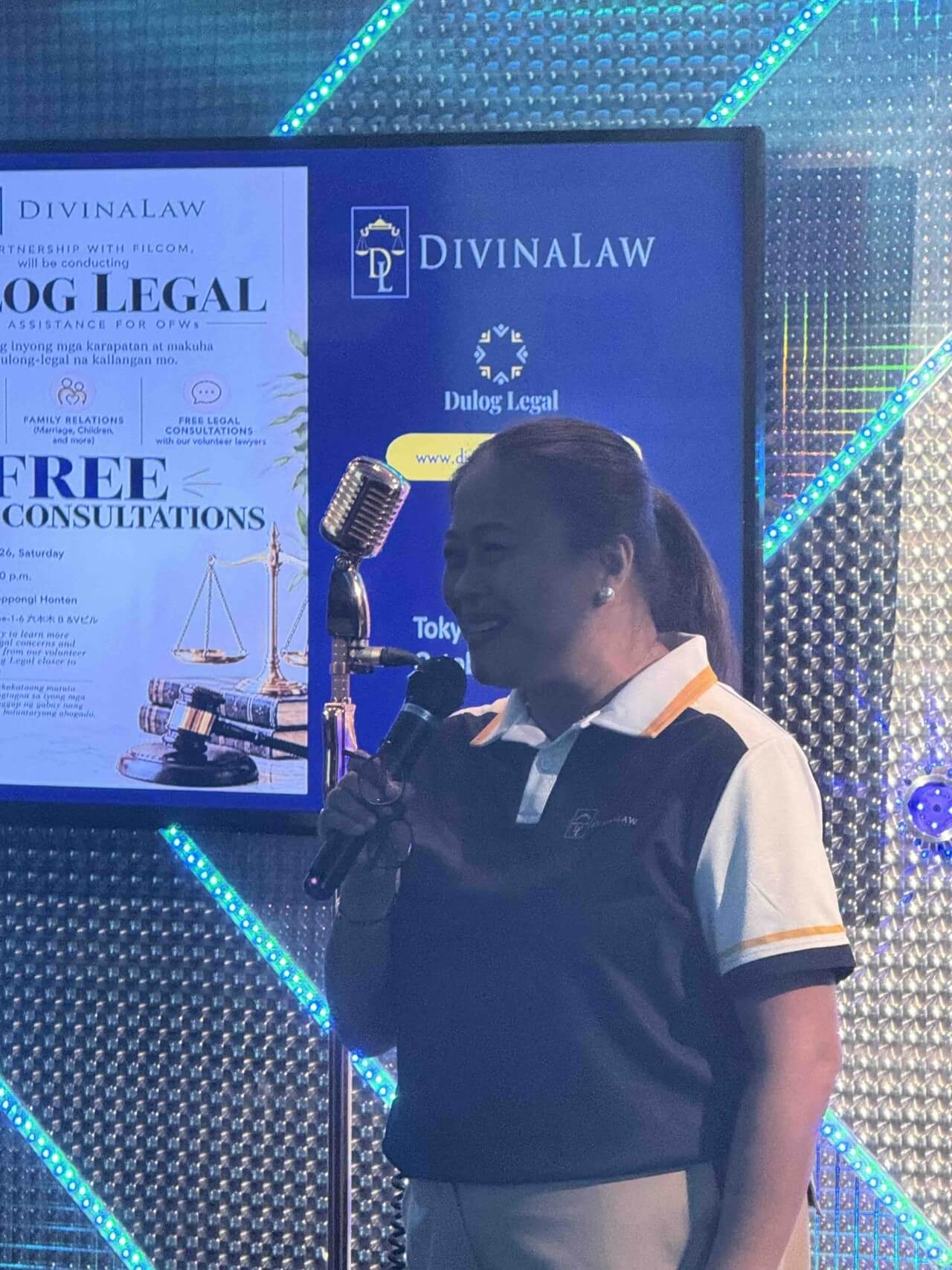
Abby Watabe, the co-owner of Karaoke-Kan—the largest karaoke chain in Japan—said she offered the venue because she wanted Filipinos to have access to critical legal advice without worrying about the cost.
“I sponsored this because I want you to have knowledge of the law, to understand the legal problems we face and the things we don’t know about,” said Watabe, a Filipino who started her career as an entertainer in the early 2000s before becoming one of Japan’s major OFW success stories.
“It’s sad that there are many lawyers who take advantage of us. We need to find lawyers we can trust, lawyers who will genuinely help us and not just take our money,” she said.
The businesswoman also spoke about the differences in how ordinary people experience the legal system in Japan and the Philippines, particularly when money and social status come into play.
“We’re very lucky to be in a country where the law treats everyone equally, whether rich or poor. It’s sad, and it hurts to say this, but the reality in the Philippines is that the law often favors the rich,” Watabe said.
“DivinaLaw is here to help us regardless of our status in life, especially us OFWs,” she added.
From Caloocan to Tokyo
What began as a free legal clinic in a Caloocan barangay in 2022 has since crossed international borders, bringing DivinaLaw’s lawyers directly to Filipino communities in Hong Kong, Chongqing, China; and now Tokyo.
Cheer Mae V. Ecarma, DivinaLaw’s director for corporate affairs and business development, said the program has also picked up pace as the firm celebrates its 20th anniversary in 2026, with legal missions reaching Davao, Pampanga, Batangas and Cebu, and more stops planned in Dumaguete, Siquijor and Iloilo.
Dulog Legal takes its name from the Filipino word meaning to approach or bring closer, a point emphasized by DivinaLaw senior partner Jay Layug as he invited OFWs to raise concerns they might otherwise keep to themselves.
“We all know that each one of you carries your own legal problems, legal questions,” Layug said, noting that even something as simple as a birth certificate could become a major headache abroad.
Other senior partners who joined the event were former commissioner of the Commission on Elections Gregorio Y. Larrazabal, Eloisa D.V. Sy, and Richie Avigale A. Ramos-Pilares.
The remaining partners and associates who joined the Tokyo mission included Floro Balato, Jaqueline Lopez-Kaw, Vaupetroanji Pena, Joshy Aguilar, Patricia Lacuesta, Alfonso Vargas, Bianca Isabel Soriano, Winona Castello, Ferdinand Jian Pulmones, Aziel Narah Manantan, Janessa Kudera, Gianne Co and Joseph Michael Rosuello.
The other side of working abroad
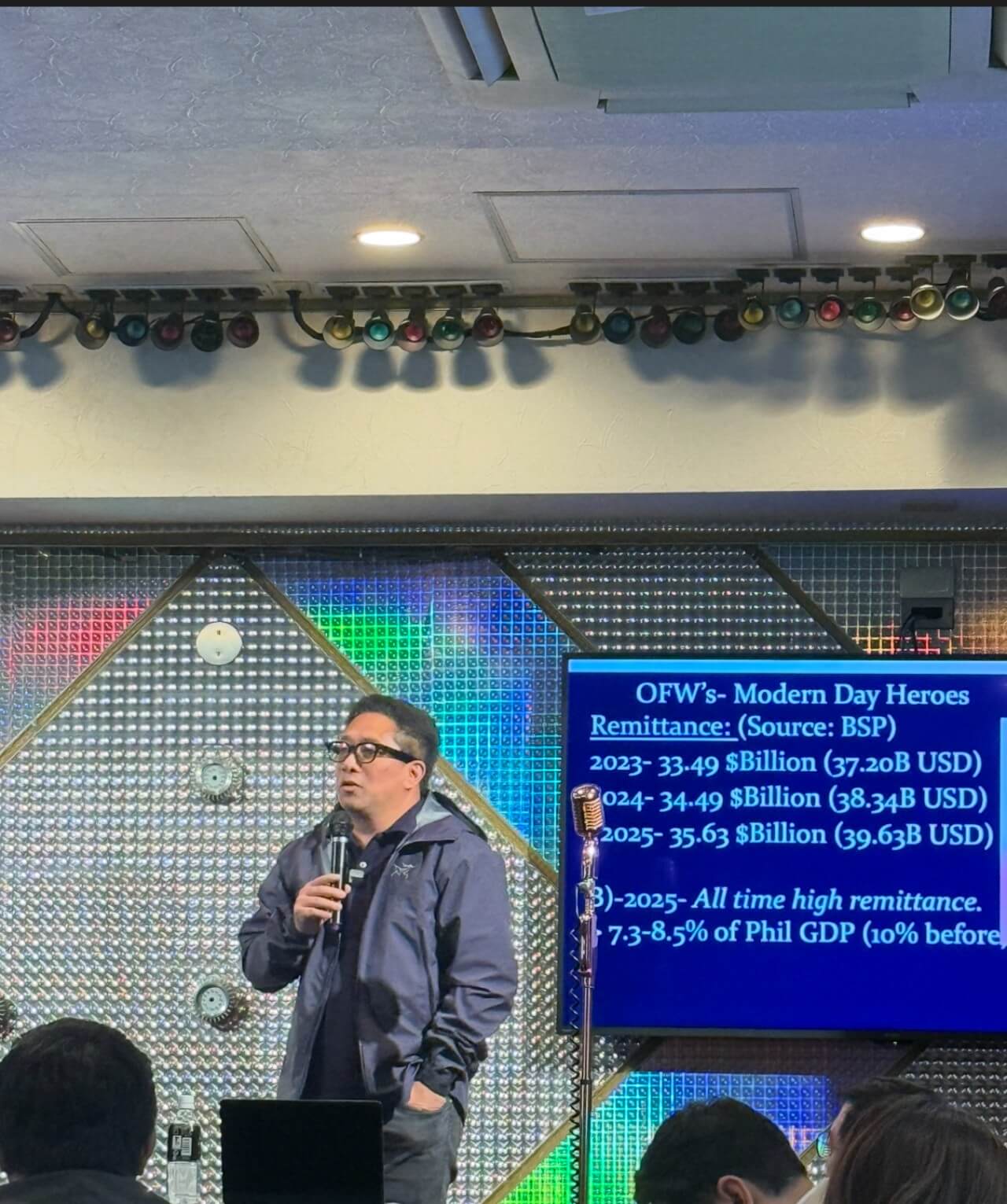
During his presentation, Balato reminded the crowd that Filipinos working overseas help keep the Philippine economy running.
“Ang ating number one resource sa Pilipinas, hindi po mineral, hindi po agricultural product … human resource. Kayo po yun,” Balato said, describing OFWs as the country’s modern-day heroes.
But it’s these same workers who find themselves vulnerable to scams, unpaid wages and property deals that go wrong, potentially wiping out years of hard-earned savings.
For those buying property back home, checking land titles, verifying sellers and making sure ownership documents are in order can help prevent costly mistakes.
When home gets complicated
Other problems hit closer to home. These include children born in Japan whose births were never registered with Philippine authorities and Filipinos whose marriages have ended under Japanese law but remain legally binding in the Philippines.
The discussions highlighted the importance of properly documenting children’s births and resolving the legal status of overseas divorces, which are not automatically recognized in the Philippines.
Divina said Filipino workers deserve the same dignity and respect wherever they are, whether dealing with employers, government authorities or legal troubles back home.
“Your dignity does not end when you leave the airport. Your dignity goes with you wherever you go,” Divina told the gathering.
“It deters anyone who would oppress you, and if not, we are here for you,” he added.
—Edited by Miguel R. Camus