Insider Spotlight
The initiative introduces a QSR Tech Pro elective under the strengthened senior high school curriculum.
The program aims to give students early exposure to the operational realities of the fast-food industry, including teamwork, discipline, systems thinking, and service consistency — skills widely considered essential in high-volume restaurant environments.

Why it matters
The collaboration signals a deeper push by companies and education institutions to address a long-standing gap between academic training and industry requirements.
For a labor-intensive sector like quick service restaurants, employers rely heavily on entry-level talent who must quickly adapt to fast-paced service operations.
Early training could shorten learning curves while opening employment pathways for senior high graduates.
Industry-backed training programs have also become increasingly important as businesses compete for skilled frontline workers and seek to professionalize service roles.
What the program includes
The DepEd–Jollibee Group initiative has two main components: a curriculum focused on the QSR industry and a structured work immersion program that places students inside operating stores.
Through in-store exposure, students are expected to apply classroom lessons in real-world settings and develop workplace behaviors required in service operations.
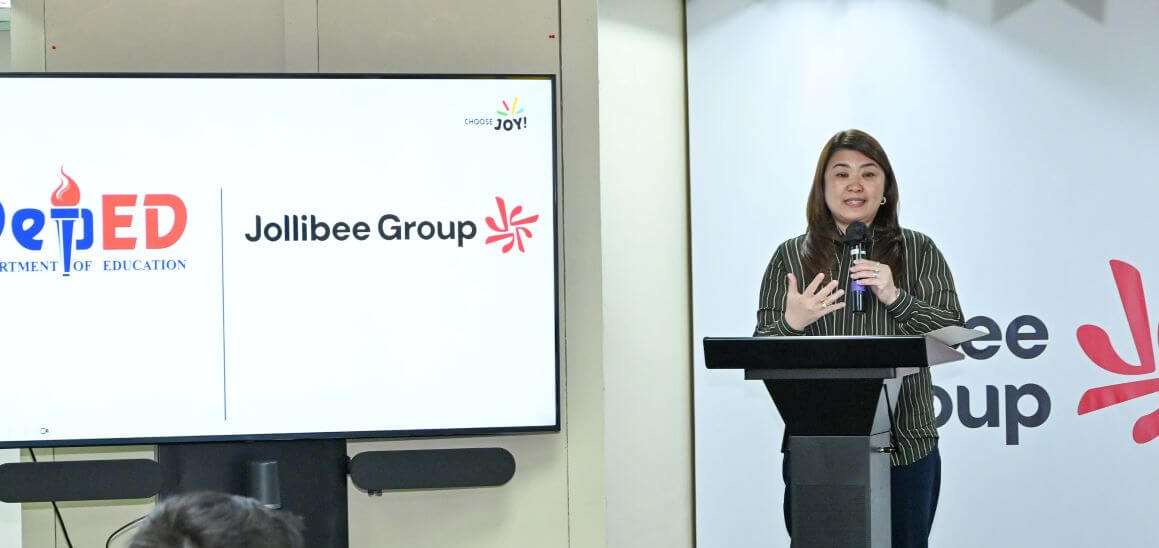
According to details shared in a company release, Jollibee Group has mobilized a cross-functional workgroup of industry specialists to help translate restaurant operations knowledge into classroom-ready lessons aligned with DepEd standards.
Ruth Angeles, chief human resources officer of Jollibee Group Philippines and HR head for Jollibee International, emphasized the program’s employability focus.
“Together, the curriculum and work immersion are designed to help learners graduate with employable, future-ready competencies so they can step into the world of work with readiness, confidence, and aspiration.”
She added: “As we build these competencies in our students, this is how we support workforce readiness. This is how we help bridge the gap between schools and work. And this is how this initiative creates value—for students, for industry, and for the future workforce we all depend on.”

The bigger picture
Jollibee Group Philippines CEO Joseph Tanbuntiong framed the partnership as a long-term investment in workforce development and nation-building.
“For us at the Jollibee Group, this is fundamentally about nation-building. Sustainability is not only about systems or scale, but also about investing early in the next generation, equipping them with skills, confidence, and values that allow them to contribute meaningfully to society.”
He added that stronger collaboration between education and industry could reshape how young Filipinos prepare for their careers.
“Real change happens when education and industry work together, when what students learn in school is informed by what the real world expects, and when industry steps up as a partner in education.” — Princess Daisy C. Ominga | Ed: Corrie S Narisma