Singapore-based electric mobility company Kilats co-founder Sheldon Lee said Cebu already has the fundamental advantages needed to build an electric motorcycle industry, including an established manufacturing base, skilled workers, academic institutions and an international port.
“Cebu is certainly ready for transformation,” Lee said during the Cebu Economic Forum. 4.0 on Sept. 9.
He said Cebu should aspire to become a regional hub instead of merely serving as an entry point for imported electric vehicles.
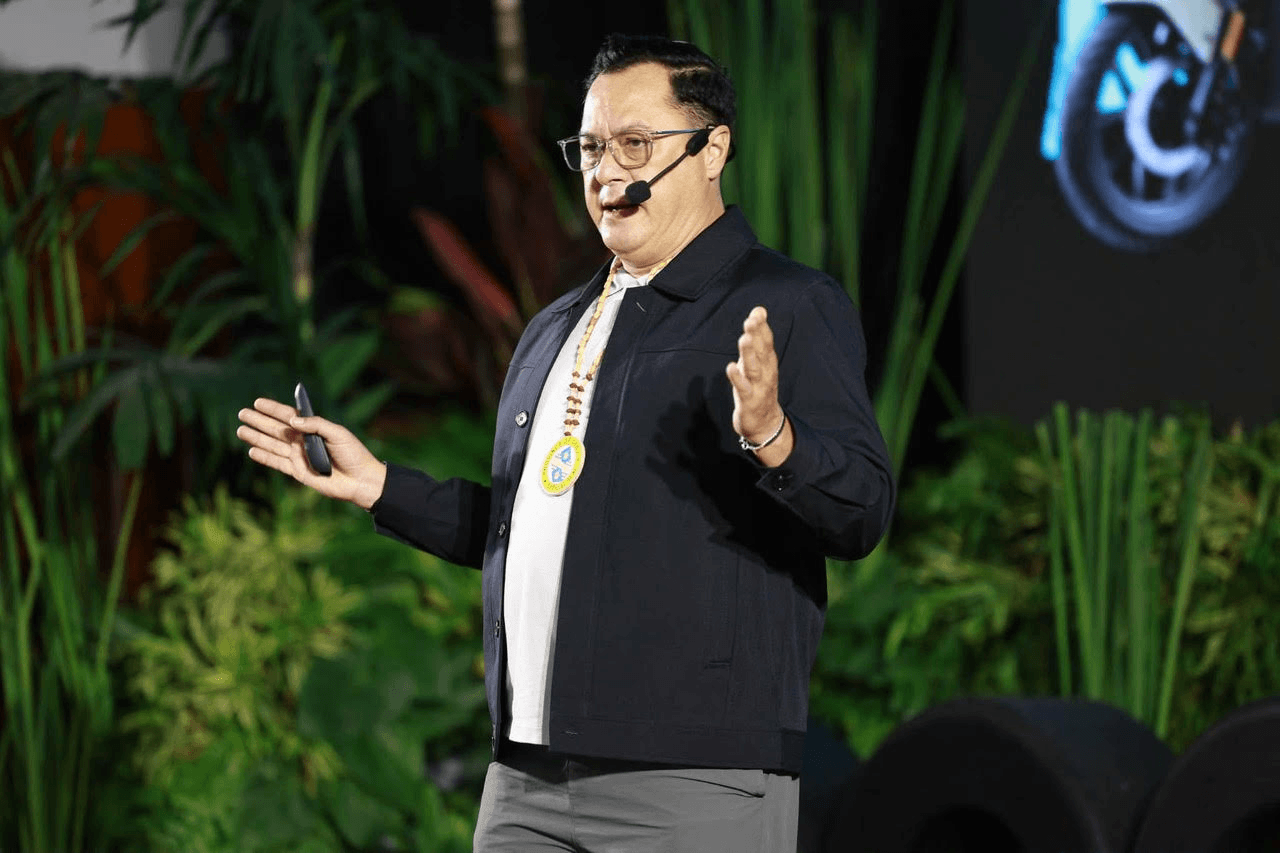
Lee said Cebu’s port connectivity could enable locally manufactured electric motorcycles and components to reach export markets without the high logistics costs associated with shipping through other gateways.
The province also has workers with manufacturing experience and universities that produce talent in electrical and mechanical engineering, artificial intelligence and software development, he added.
Lee said the long-term goal should be to manufacture motorcycles and their components locally rather than import parts for domestic assembly.
“Everything is made here, not assembled,” he said, describing his vision for Cebu.
Reversing the flow
Most electric motorcycles sold across Asia are manufactured in China and shipped to other countries as completely knocked-down units for assembly, according to Lee.
He said Cebu could reverse this flow by acquiring technology and production expertise and eventually exporting Philippine-made electric motorcycles and related systems.
This could keep more investment capital circulating within Cebu while creating jobs and generating business for the province’s logistics, property, housing and hospitality sectors.
Delivery riders
Lee said the transition should initially focus on delivery and ride-hailing drivers because they stand to benefit most from the lower operating costs of electric motorcycles.
Delivery riders typically travel more than 150 km and work for as long as 15 hours a day, making fuel and maintenance major expenses.
Many also work across several platforms, such as Grab, Angkas, Lalamove and Lazada, and cannot afford to lose several hours charging their motorcycles.
Lee said battery swapping could address this problem. Under the system, riders remove their depleted batteries and replace them with fully charged units at a swapping station in less than one minute.
The batteries remain under the ownership of the service provider, allowing riders to pay for energy as an operating expense similar to buying gasoline.
Lower operating costs
Lee said riders using Kilats’ system could reduce their operating expenses by as much as 60 percent. Their daily downtime could also fall from about three hours to less than one hour, enabling them to complete more trips and increase their take-home income.
Kilats operates an integrated system consisting of electric motorcycles, batteries, swapping stations and fleet-management software.
The company launched its operations in Bali, Indonesia, in 2024 before expanding to Bandung. At the time of Lee’s presentation, it had about 700 motorcycles and 44 battery-swapping stations serving mainly Grab drivers.
Its fleet-management system collects data on driver behavior and vehicle performance while allowing the company to manage payment and operational risks remotely.
Ecosystem needed
Despite the potential benefits, Lee said the Philippines continued to lag behind other markets in adopting electric two-wheelers.
Consumers remain concerned about vehicle range, battery life, cost and the availability of charging infrastructure. Some electric motorcycles available in the country may also be unsuitable for the long working hours and demanding conditions faced by delivery riders, he added.
For an electric motorcycle to meet the needs of a full-time delivery rider, Lee said it should offer performance comparable to a gasoline-powered motorcycle, backed by accessible battery-swapping stations and reliable after-sales service.
“An ecosystem” is necessary to encourage adoption, he said.
This would require coordination among fleet operators, financial institutions, property owners, power distributors, investment-promotion agencies, and national and local governments.
Financing is particularly important because many delivery riders are unbanked or lack the credit history required by traditional lenders.
Property owners and fuel retailers could provide sites for battery-swapping stations, while power distributors could generate additional revenue by supplying electricity to the network.
‘Plug-and-play’
Lee said the government should establish a “plug-and-play” investment framework that would allow qualified companies to open their businesses and register their vehicles more quickly.
Applicants should first undergo strict compliance checks, but once these requirements are satisfied, the government should cut unnecessary red tape and accelerate approvals, he said.
Subsidies alone would not be enough to persuade riders to shift to electric motorcycles, according to Lee.
Even a heavily discounted vehicle would not attract buyers if it could not meet their daily transportation or livelihood requirements. Clear policies, dependable infrastructure and a commercially viable operating system would be more effective in encouraging adoption.
Lee also stressed that the industry would need “patient capital” because electric-mobility systems are capital-intensive and investors may have to wait five to 10 years for returns.
Kilats, he said, intends to work with local companies and other electric-vehicle providers rather than try to control the entire market.
Electric-motorcycle companies should consider gasoline-powered motorcycle manufacturers—not one another—as their primary competition, he added.
“Collaboration is the only path,” Lee said. —Ed: Corrie S. Narisma

Contributor