The Department of Transportation (DOTr) has announced that the Cebu Bus Rapid Transit (CBRT) will finally hit the road next month after more than 10 years of delay.
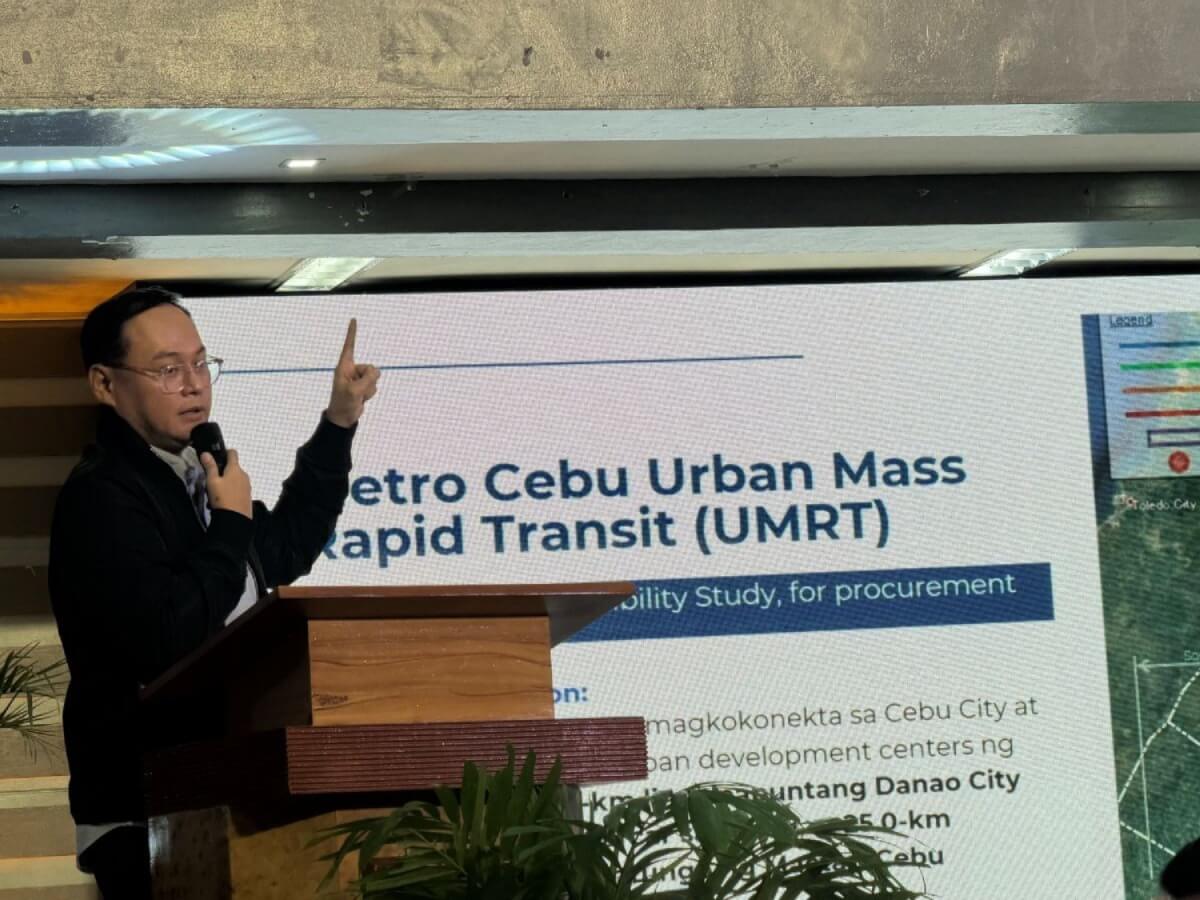
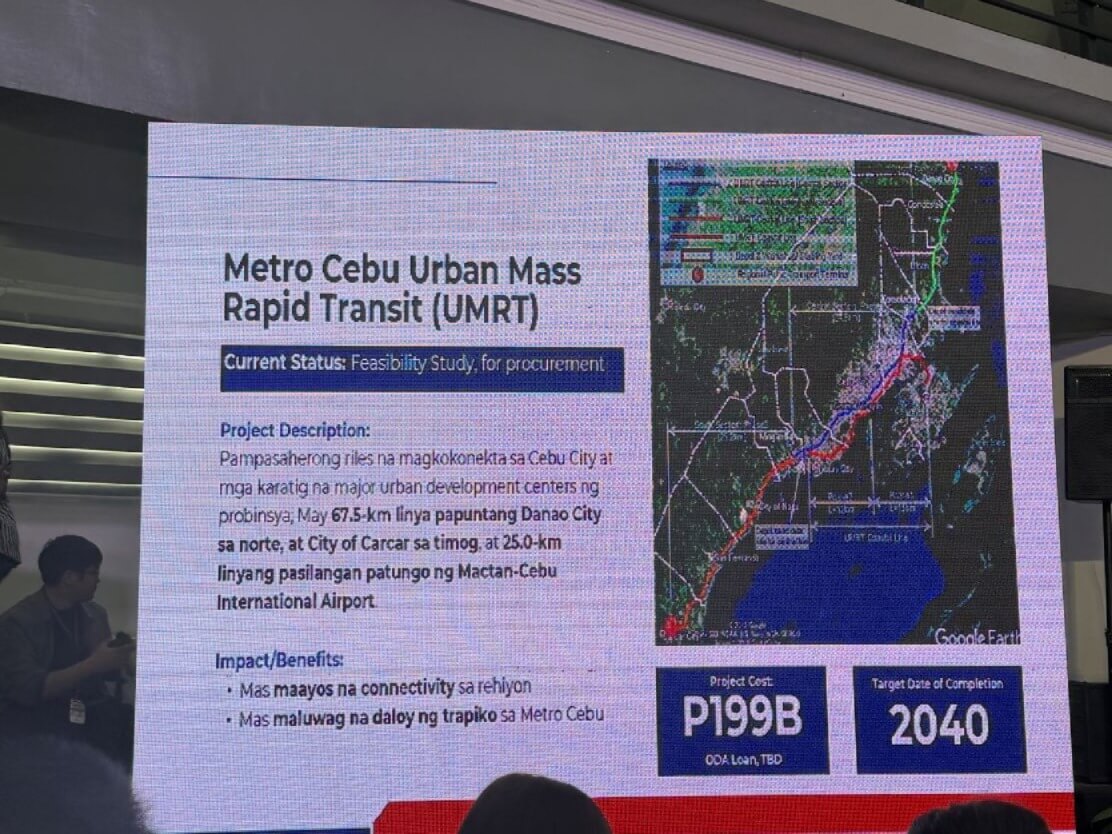
Transportation Secretary Giovanni Lopez also announced that the Metro Cebu Urban Mass Rapid Transit (UMRT), a 67.5-kilometer railway system, is now in the pipeline.
Construction of the 4th Cebu-Mactan Bridge, which connects Mactan Island to mainland Cebu, will start by the third quarter of this year, said Undersecretary Ador Canlas of the Department of Public Works and Highways (DPWH).
Cebu Bus Rapid Transit
Lopez and Canlas were in Cebu City on Feb. 20 to explain the budgets of the DOTr and DPWH during the “Usapang Budget Natin” forum of the Department of Budget and Management.
Lopez said Package 1 of the CBRT, which will run from Cebu Bus Terminal to the Cebu Normal University bus station, will start operating in March and is expected to benefit 34,000 passengers daily.
Package 1 is 97 percent complete, with only punch-list items and documentation required by its funding agency, the World Bank, remaining.
Undersecretary Steve Pastor of the DOTr Road Transport and Infrastructure said the March opening would push through even without the station in front of the Capitol.
Construction of the station along Osmeña Boulevard was halted after it was flagged by the National Historical Commission of the Philippines (NHCP), as the median platform would impede the panoramic view of the Capitol, a national historical landmark.
Pastor said they are awaiting the response of Gov. Pamela Baricuatro to the NHCP letter seeking the province’s stance on the matter.
Baricuatro, for her part, plans to meet with the Provincial Board on Feb. 23 to decide on their official position.
World Bank funding expiration
Lopez said that since the World Bank funding will end by September 2026, Packages 2 and 3 — which pertain to the project’s operations and maintenance — will have to be implemented through a public-private partnership (PPP) framework.
The World Bank earlier gave an “unsatisfactory” rating to the CBRT’s overall implementation and its progress toward achieving the Project Development Objective due to delays.
The bank approved the project on Sept. 26, 2014, granting a $141-million loan — $116 million from its International Bank for Reconstruction and Development (IBRD) and $25 million in trust funds.
The loan is set to expire on Sept. 26 this year, yet the project has not been fully completed.
Only 35.02 percent, or $40.62 million, has been disbursed from the IBRD loan, while the trust fund remains untouched, according to the World Bank’s Implementation Status and Results Report released on Dec. 25, 2025.
Railway system
The BRT is among the physical connectivity projects identified in the Urban Transport Master Plan, a study conducted by the Japan International Cooperation Agency (JICA) in 2019 to address Metro Cebu’s transportation problems.
Complementing the BRT is the UMRT, an underground railway system that will connect Cebu City to major urban centers. It will span 67.5 kilometers from Danao City in the north to Carcar City in the south.
A 25-kilometer line will also connect to Mactan-Cebu International Airport in Lapu-Lapu City on Mactan Island. The project is estimated to cost P199.62 billion and will be funded through Official Development Assistance (ODA). The target completion date is 2040.
Lopez said they hope to start the feasibility study by October this year with assistance from the Asian Development Bank.
Fourth bridge
Construction of the 4th Cebu-Mactan Bridge, funded through ODA-JICA at P76.412 billion, is set to begin this year.
The 3.34-kilometer bridge, with a 2.17-kilometer elevated viaduct, will have two lanes in each direction. The project also includes the construction of the Mandaue Coastal Road, which has a total length of 5.43 kilometers, including a 4.95-kilometer elevated viaduct.
It is scheduled for completion in 2031.
Another major infrastructure project is the Consolacion-Liloan Bypass Road Project, a component of the New Cebu International Container Port (NCICP) in Consolacion town. The port will be built on a 25-hectare reclaimed island in Barangay Tayud.
The NCICP, costing about P16.93 billion and funded through ODA-Korea, will handle foreign containerized cargo to decongest the Cebu International Port in Cebu City, about 13 kilometers south of Consolacion.
As of February 2026, the NCICP is 20.33 percent complete. Its target completion date is 2028, the same year construction of the Consolacion-Liloan Bypass Road is scheduled to begin.
Based on initial studies, the bypass road will have four to six lanes and will connect to the Mandaue Coastal Road and the container port. It is estimated to cost about P32.74 billion and will also be funded through ODA-Korea. Completion is targeted in 2032. — Ed: Corrie S. Narisma

Contributor