Insider Spotlight
Nearly eight decades after the Ayala group began transforming Makati into the country's premier business district, the Zobel family's property giant is bringing back Mandarin Oriental on November 26 as part of a broader reinvention of the estate that built its property empire.
The opening of the 275-room luxury hotel comes as Ayala Land pours more resources into its increasingly important leasing and hospitality businesses while pursuing a bigger share of the international luxury tourism market.
“We see tremendous opportunity in Makati, not simply because of what it has been, but because of what it can become,” Ayala Land president and CEO Meean Dy said in a statement.
“We want it to be a destination that draws people from around the world and gives them a compelling experience of the best the Philippines has to offer.”

New growth from old strengths
A landmark on Makati's skyline since 1976, the original Mandarin Oriental closed in September 2014 after 38 years in operation.
Its return comes 12 years later at a new location in Ayala Triangle, six years after its originally scheduled opening in 2020, the year the global pandemic struck.
Projects like the Mandarin Oriental are part of a broader shift in Ayala Land's earnings mix, with recurring-income businesses contributing 55 percent of its operating earnings in the first nine months of 2026, up from 44 percent a year ago.
Leasing and hospitality revenues grew 8 percent to P37.8 billion during the period.

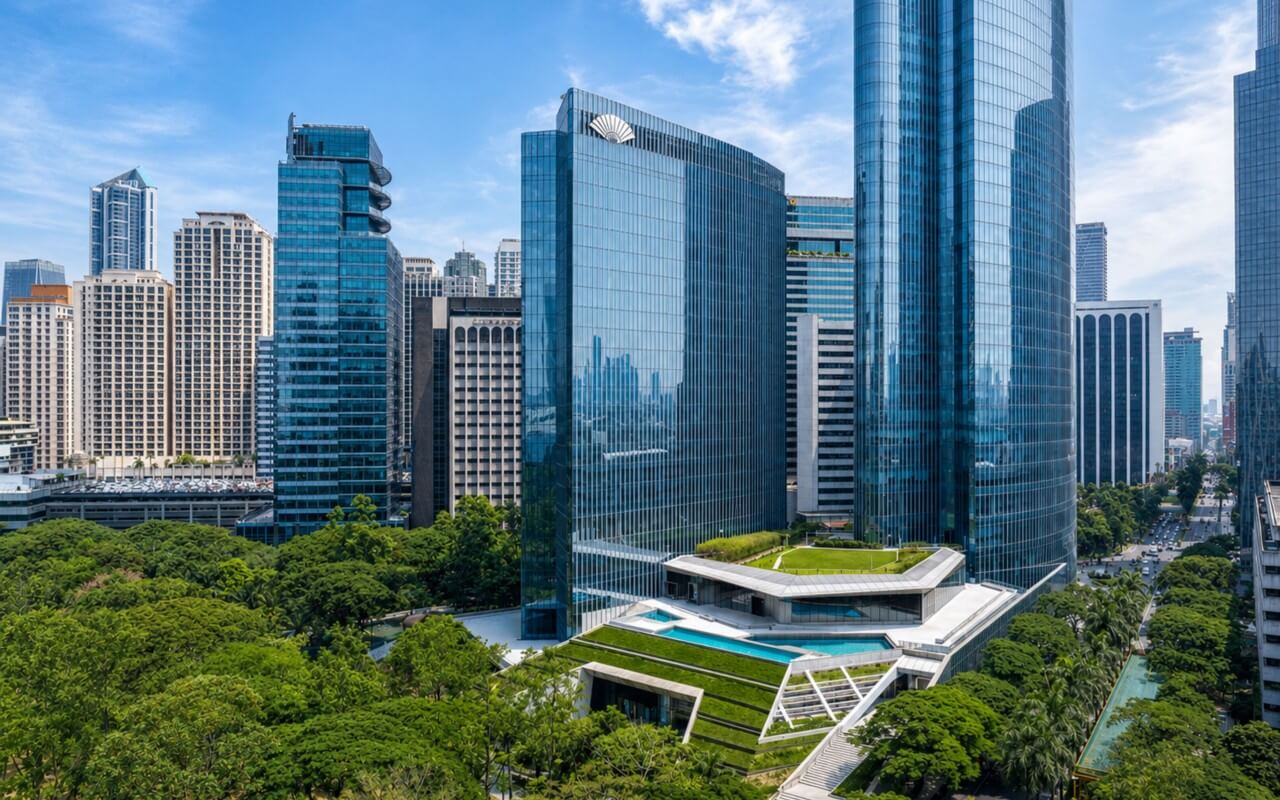
In Makati, Ayala Land is building on decades of investments in office towers and commercial properties by expanding its retail, dining, cultural and hospitality offerings to attract visitors beyond the traditional business crowd.
A distinctly Filipino luxury experience
Owned by Ayala Land Hospitality and managed by Mandarin Oriental Hotel Group, the new hotel was designed by international architectural firm Skidmore, Owings & Merrill in collaboration with Leandro V. Locsin Partners.
Ayala Land took an active role in shaping the property, incorporating Filipino art, craftsmanship and design as part of its ambition to compete with established luxury destinations across Asia.
The broader strategy is to make these investments complement one another, attracting more visitors while enhancing the long-term commercial value of the entire estate.
“One of Ayala Land’s greatest strengths is our ability to continually reinvent the places we have built,” Dy said.
—Edited by Miguel R. Camus