
The planned expansion was discussed during a meeting between President Ferdinand R. Marcos Jr. and MinebeaMitsumi representative director, chair and CEO Yoshihisa Kainuma on the sidelines of the President’s State Visit to Japan and the celebration of the 70th anniversary of Philippines-Japan diplomatic relations.
Expanding semiconductor capacity
The investment will support the expansion of MinebeaMitsumi’s semiconductor back-end manufacturing operations, battery protection modules for hyperscale data centers, and Optical Image Stabilization (OIS) technologies used in premium smartphone cameras.
A key component of the project is the continued development of Cebu Mitsumi’s semiconductor operations in Cebu. The company plans to increase analog semiconductor production capacity beginning in 2027 to meet growing global demand fueled by artificial intelligence, cloud computing, and digital infrastructure.
MinebeaMitsumi will also allocate about P5 billion for battery protection modules used in hyperscale data centers and another P10 billion to expand manufacturing capacity for OIS technologies.
Boosting jobs and advanced manufacturing
Department of Trade and Industry Secretary Ma. Cristina A. Roque said the expansion will generate significant economic benefits beyond employment creation.
“MinebeaMitsumi is already one of the Philippines’ largest Japanese investors and employers, with around 22,000 workers across facilities in Cebu, Batangas, and Bataan. With the company’s expansion, we expect around 3,000 additional jobs to be created locally,” Roque said.
She added that the company’s products contribute to global automotive and electronics supply chains while helping strengthen local capabilities in advanced electronics, digital infrastructure, and high-value manufacturing.
Supporting industry goals
As of March 2026, MinebeaMitsumi reported cumulative investments of about P53 billion in the Philippines.
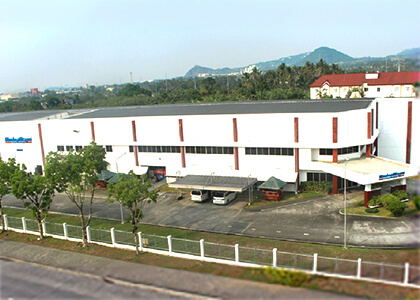
Its facilities manufacture semiconductors, battery protection modules, precision motors, and other electronic components used in vehicles, smartphones, computers, and digital infrastructure systems.
The latest investment aligns with the Philippines’ semiconductor and electronics roadmap, which aims to raise semiconductor and electronics exports to $110 billion by 2030 and expand the country’s participation in higher-value manufacturing activities. —Ed: Corrie S. Narisma