Insider Spotlight
The exercise, dubbed Beacon2026 (Bohol Emergency Airport Coordination Operations Network 2026), was held on April 24 and brought together airport personnel, government agencies, medical institutions, airline partners, and local government units to test emergency response procedures at the country’s tenth-busiest airport.
Why it matters
The drill forms part of BPIA’s compliance with Civil Aviation Authority of the Philippines (CAAP) regulations and international aviation safety protocols.
It assessed the effectiveness of the airport’s emergency systems, including rescue and firefighting services, medical response units, recovery teams, and implementation of the Airport Emergency Plan.
“Preparedness is at the core of Bohol-Panglao International Airport’s safety and resilience. Through exercises like Beacon2026, we continuously strengthen our systems, sharpen coordination among stakeholders, and ensure that our teams are capable of responding swiftly and effectively to any emergency scenario,” BPIA general manager Aldwin C. Uy said in a statement.
“These drills are essential in maintaining the trust and confidence of the traveling public,” he said.
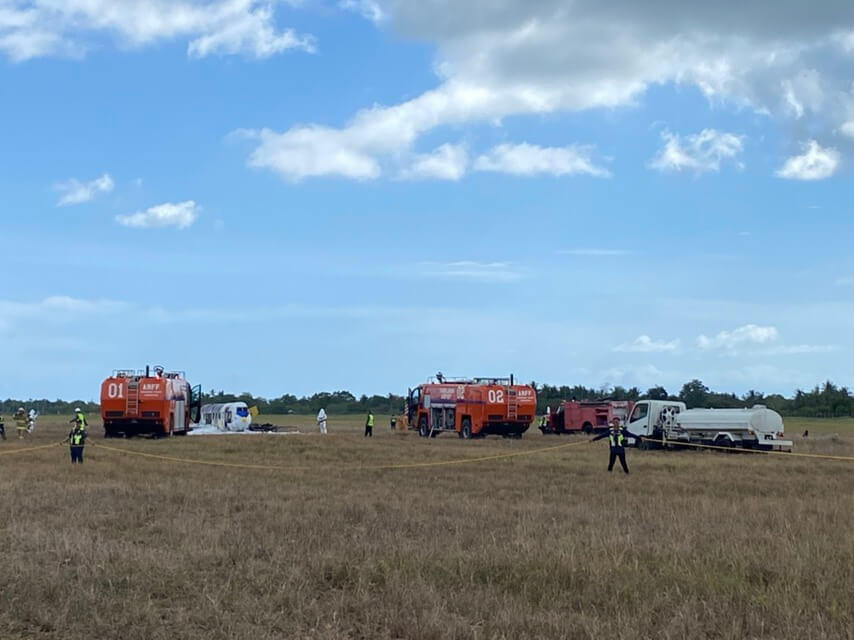
According to the statement, Beacon2026 simulated a runway excursion involving a mock narrow-body commercial aircraft upon landing, allowing responders to evaluate coordination protocols during a high-pressure emergency scenario.
The scenario
The exercise tested the coordinated response of airport personnel, airline partners, local government units, medical institutions, and national agencies operating under the airport’s Mutual Aid Emergency Agreement.
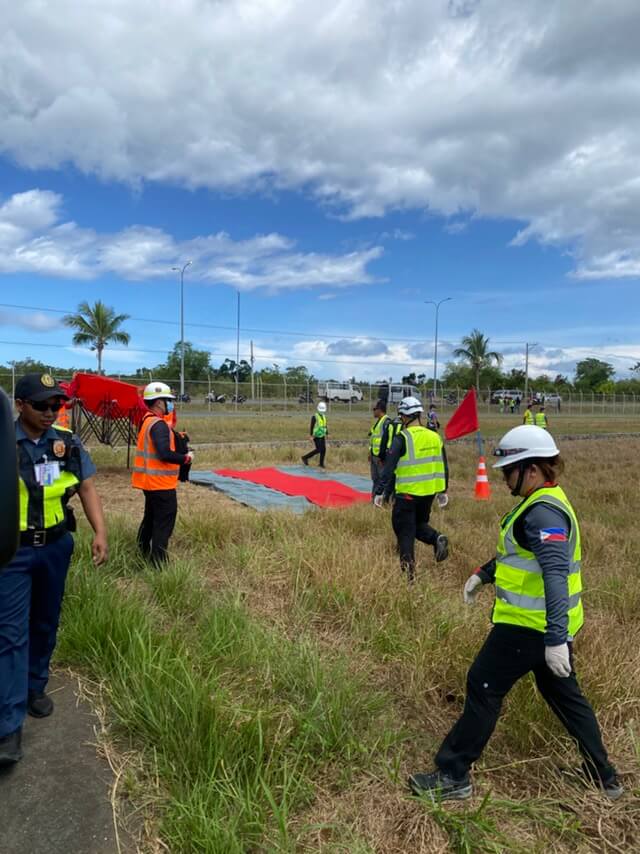
Participating organizations included the CAAP, Bureau of Fire Protection, Philippine National Police, Philippine Coast Guard, Office of Civil Defense, Provincial Government of Bohol, Municipal Government of Panglao, nearby hospitals, and airline partners serving the airport.
“Exercises such as Beacon2026 demonstrate the importance of unified action among government agencies, airport operators, and emergency responders,” said CAAP BPIA manager Anghelo B. Ibañez.
“This level of coordination ensures that Bohol-Panglao International Airport remains compliant with global aviation standards while fostering a culture of preparedness and operational excellence,” Ibañez said.
The bigger picture
Regular airport operations continued throughout the exercise, with staging, treatment, and command areas positioned to avoid disruptions to passengers and flight activities.
The emergency drill follows a similar exercise recently conducted at Laguindingan International Airport in Misamis Oriental.
AIC Airports said the initiatives support its broader goal of establishing a unified safety, resilience, and operational excellence framework across its growing portfolio of regional gateways, which also includes Mactan-Cebu International Airport.
BPIA is positioned as AIC Airports’ gateway to Central Visayas and one of the Philippines’ key tourism hubs, making emergency preparedness a critical component of maintaining passenger confidence and operational continuity as air travel demand continues to recover and expand. —Princess Daisy C. Ominga | Ed: Corrie S. Narisma