Dubbed “AERON2026,” the April 17 drill brought together airport authorities, government agencies, and private sector partners in a coordinated effort to test emergency response systems under high-pressure conditions.
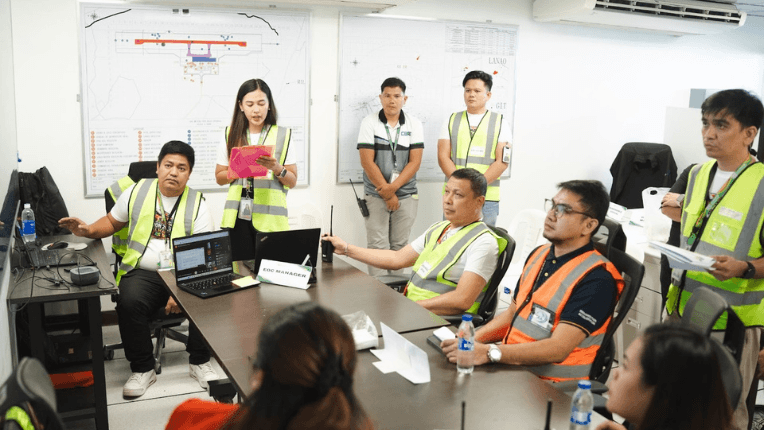
Coordinated test
AERON, or Airport Emergency Response Operations Network, represents the strength, unity, and coordination required to ensure passenger safety. Conducted every two years in compliance with Civil Aviation Authority of the Philippines (CAAP) requirements, the exercise serves as a critical stress test of the airport’s readiness.
The simulation evaluates the performance of Aerodrome Rescue and Fire Fighting Services (ARFFS), medical rescue teams, and recovery units, while also assessing the effectiveness of the Airport Emergency Plan (AEP).
Crisis scenario
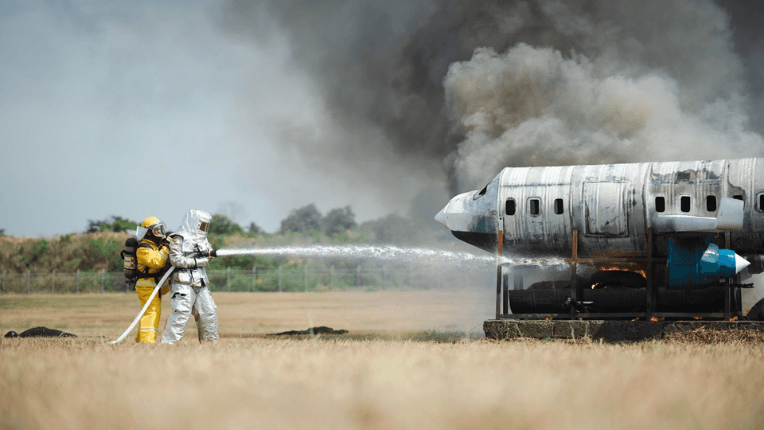
This year’s exercise focused on Emergency Plan No. 1—an aircraft accident occurring within airport grounds. Using a mock Airbus A321-NEO, the scenario simulated a hard landing incident that required immediate and coordinated response.
Primary responders at the airport worked alongside secondary responders from government and private sectors under a Mutual Aid Emergency Agreement, testing how different units function together during a crisis.
Continuous readiness
For airport officials, the drill highlights the importance of constant preparation in a rapidly evolving aviation landscape.
“Safety is not a static goal but a continuous practice,” said Engr. Ryan Ermac, general manager of Laguindingan International Airport, in a statement. “By conducting this exercise every two years, we refine our communication channels and response times and ensure our teams and partners act as a single, seamless unit.”
Strong synergy
Officials from CAAP also underscored the importance of collaboration in maintaining safety standards.
Engr. Job B. De Jesus, CAAP Area 10 manager, said the exercise demonstrated strong coordination between government and private sector stakeholders.
“These simulations are vital in ensuring that our safety protocols are not just compliant, but continuously evolving to meet global standards,” he said. “When we work as a unified front, we strengthen the integrity of our aviation industry.”
Minimal disruption
Despite the scale of the exercise, regular airport operations remained unaffected. Designated areas such as the General Aviation Area and Arrival Hall were used to ensure minimal disruption to passengers and flights.
This careful planning allowed authorities to conduct a realistic simulation while maintaining normal airport services.
Shared review
The exercise concluded with a comprehensive review involving airline partners and participating agencies, including the Philippine Coast Guard, Office of Civil Defense, Bureau of Fire Protection, and local government units.
Their feedback and recommendations will help refine future emergency plans and strengthen overall preparedness.
Resilient gateway
Organizers say the collaborative approach demonstrated during AERON2026 provides a model for improving airport standards nationwide. By fostering strong partnerships, Laguindingan Airport continues to enhance its role as a resilient and reliable gateway in Northern Mindanao.
As air travel grows and risks evolve, such proactive measures ensure that while emergencies may be unpredictable, the airport remains ready to respond effectively—safeguarding passengers and reinforcing confidence in the country’s aviation system. —Ed: Corrie S. Narisma