Despite this strong presence, many women-led micro, small and medium enterprises (MSMEs) struggle to scale, facing persistent barriers such as limited access to capital, gaps in digital adoption, and the challenge of balancing business and family responsibilities.

Growth barriers
These constraints highlight a growing gap between participation and expansion.
While women are highly active in business creation, many remain confined to small-scale operations without the support needed to grow sustainably, according to a statement issued by PLDT Home.
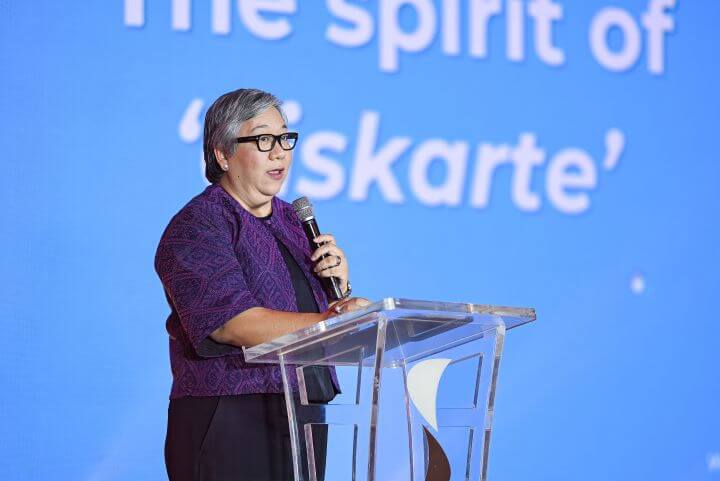
At the 4th Gawad Madiskarte, leaders from government and development organizations underscored the urgency of addressing this issue, emphasizing that resilience alone is no longer sufficient.
Policy push
Quezon City Mayor Joy Belmonte pointed to the critical role of local governments in helping entrepreneurs transition from informal ventures into scalable enterprises.
Programs such as “Pangkabuhayang QC” aim to provide capital assistance and mentorship, supporting entrepreneurs as they formalize and expand their businesses.
“Our goal is to guide entrepreneurs as they grow into formal enterprises that can create more opportunities,” Belmonte said. She added that accessible childcare services are equally important in enabling mothers to focus on innovation and business growth.
Inclusive strategy
For development organizations, investing in women entrepreneurs is not only a social priority but also an economic one.
UN Women Philippines Country Programme Coordinator Rosalyn Mesina described such investments as a “smart macroeconomic strategy,” noting that women remain underserved despite their significant contribution to the MSME sector.
“Women entrepreneurs must not only be supported, they must be seen, recognized, and protected within the system,” Mesina said, calling for gender-responsive policies and stronger leadership commitment.
Digital access
Digital inclusion has also emerged as a key driver of growth. Philippine Commission on Women Chair Ermelita Valdeavilla highlighted initiatives such as Elevate AIDA, which equip women with skills in artificial intelligence and data annotation.
These programs open new income opportunities, particularly for women working from home, enabling them to participate in the digital economy while managing household responsibilities.
Community support
Private sector initiatives are likewise expanding support networks. Now in its fifth year, PLDT Home’s Madiskarte Moms PH (MMPH) has grown into one of the country’s largest communities of mompreneurs, with more than 228,000 members.
Through training, mentorship, and peer support, the platform helps women entrepreneurs launch and grow their businesses, while its annual Gawad Madiskarte awards recognize standout success stories across different stages of enterprise development.
“At its core, entrepreneurship goes beyond hitting sales targets,” said Menardo “Butch” Jimenez Jr., COO and chief technology officer of PLDT. “It is about building a strong support system that empowers entrepreneurs to sustain growth and scale with confidence.”
Scaling future
From home kitchens to online marketplaces, Filipina mompreneurs continue to transform small ventures into thriving enterprises that uplift families and communities.
However, unlocking the full potential of women-led MSMEs will require more than determination. Experts say it will take coordinated action across government, private sector, and communities to address structural challenges and create an enabling environment for growth.
Shared agenda
As initiatives like MMPH expand, stakeholders are sending a clear message: investing in Filipina entrepreneurs is not just a matter of inclusion—it is an economic imperative.
With the right support systems in place, women-led businesses can move beyond survival and toward sustained growth, strengthening their role as a driving force in the Philippine economy. —Ed: Corrie S. Narisma