
Insider Spotlight
AIA Philippines’ latest research shows a cultural shift from passive acceptance to intentional health management, as Filipinos begin aligning daily habits with their broader understanding of holistic well-being.
“Last year, we learned that Filipinos see health as holistic. This year, we wanted to dig deeper to learn what actually drives people to act on that understanding,” Melissa Henson, chief marketing officer of AIA Philippines, said in a press statement.
By the numbers
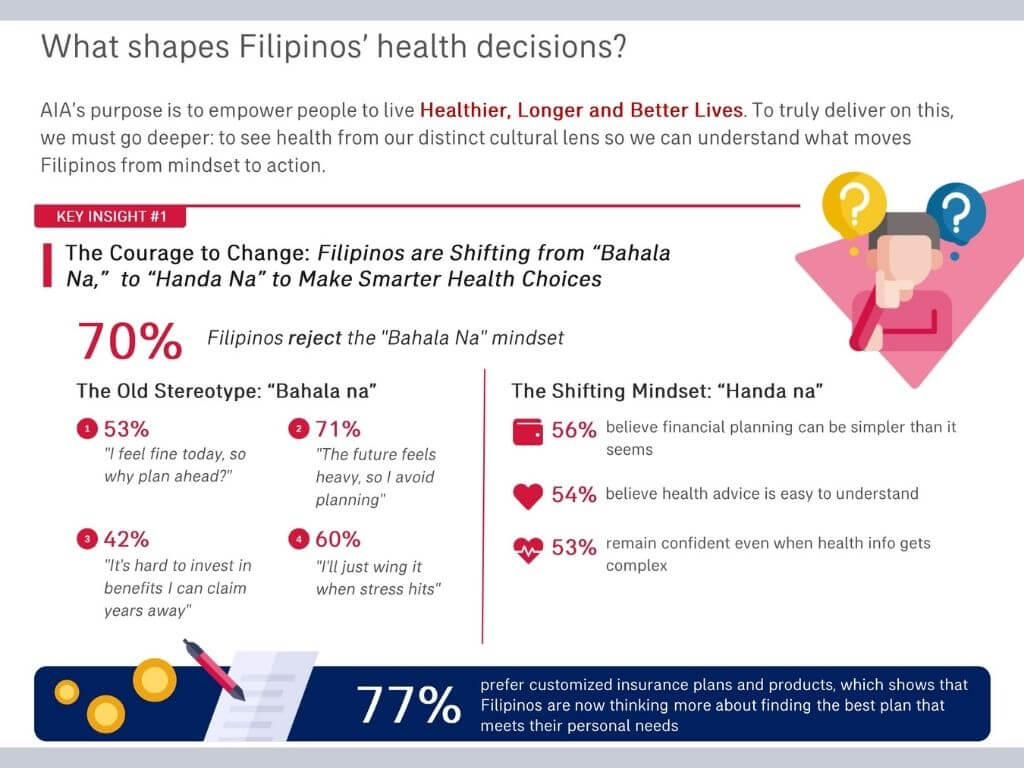
Seventy percent reject a “bahala na” attitude toward physical health, while 60 percent say they no longer want to “wing it” when managing mental well-being.
At the same time, 56 percent are willing to curb short-term spending to prepare for the future, signaling a growing openness to long-term planning.
Why it matters
The shift reflects deeper behavioral change in a market where lifestyle diseases remain a leading cause of death, making prevention and sustained health habits increasingly critical.
Family first
Health decisions in the Philippines remain deeply rooted in family dynamics.
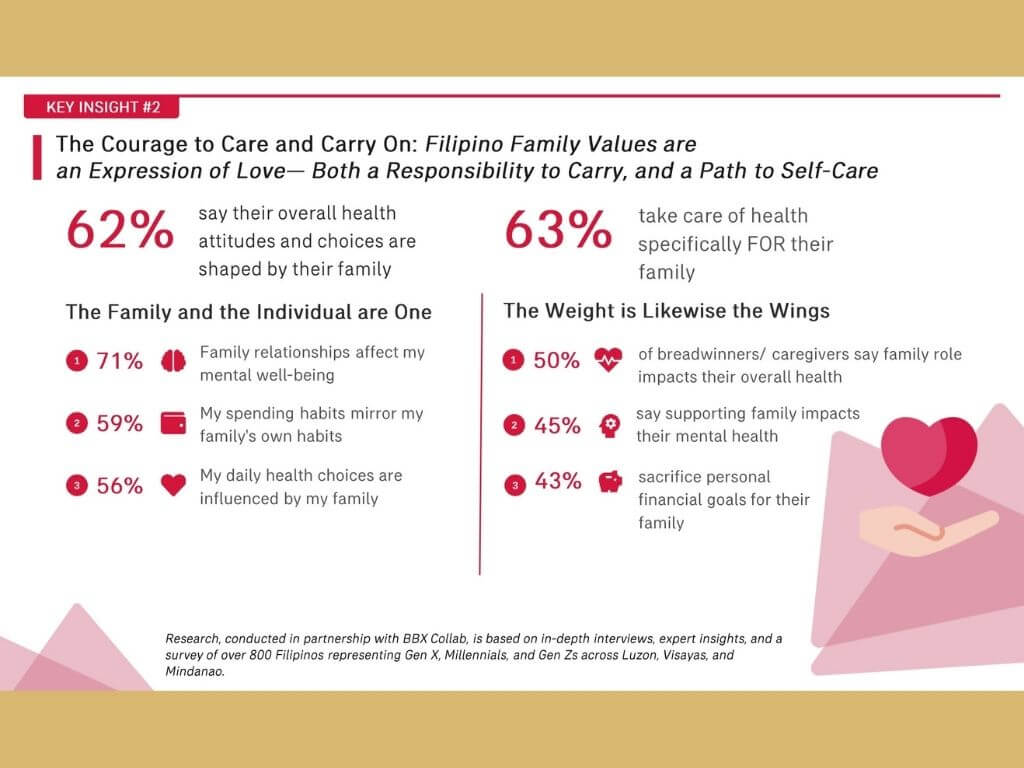
Sixty-two percent say their health choices are shaped by family, while 63 percent maintain their health specifically for loved ones.
But the influence cuts both ways. Seventy-one percent say family relationships affect their mental well-being, and 43 percent admit sacrificing personal financial goals for relatives.
The tension
This creates what AIA describes as a uniquely Filipino paradox, where family acts as both a source of pressure and a powerful motivator for healthier living.
“When caring for their health becomes a way to protect their loved ones, it becomes a powerful driver for change. The weight of their responsibility for their families becomes the very force that moves Filipinos toward better health choices,” Henson added.
What’s next
Despite progress, 83 percent still become proactive only after major life events such as illness or job loss.
Still, momentum is building, with more Filipinos planning ahead, considering insurance, and integrating health into everyday decisions—marking a gradual but meaningful shift toward prevention over reaction. —Vanessa Hidalgo| Ed: Corrie S. Narisma