The partnership forms part of five Memoranda of Understanding (MOUs) signed on May 7 during the Indonesia-Philippines High-Level Business Roundtable, held on the sidelines of the 48th Association of Southeast Asian Nations (ASEAN) Summit and related meetings that concluded on May 8.
The event brought together business and government leaders from both countries, who committed to strengthening cooperation in critical minerals, food security, renewable energy, finance, and coal supply.
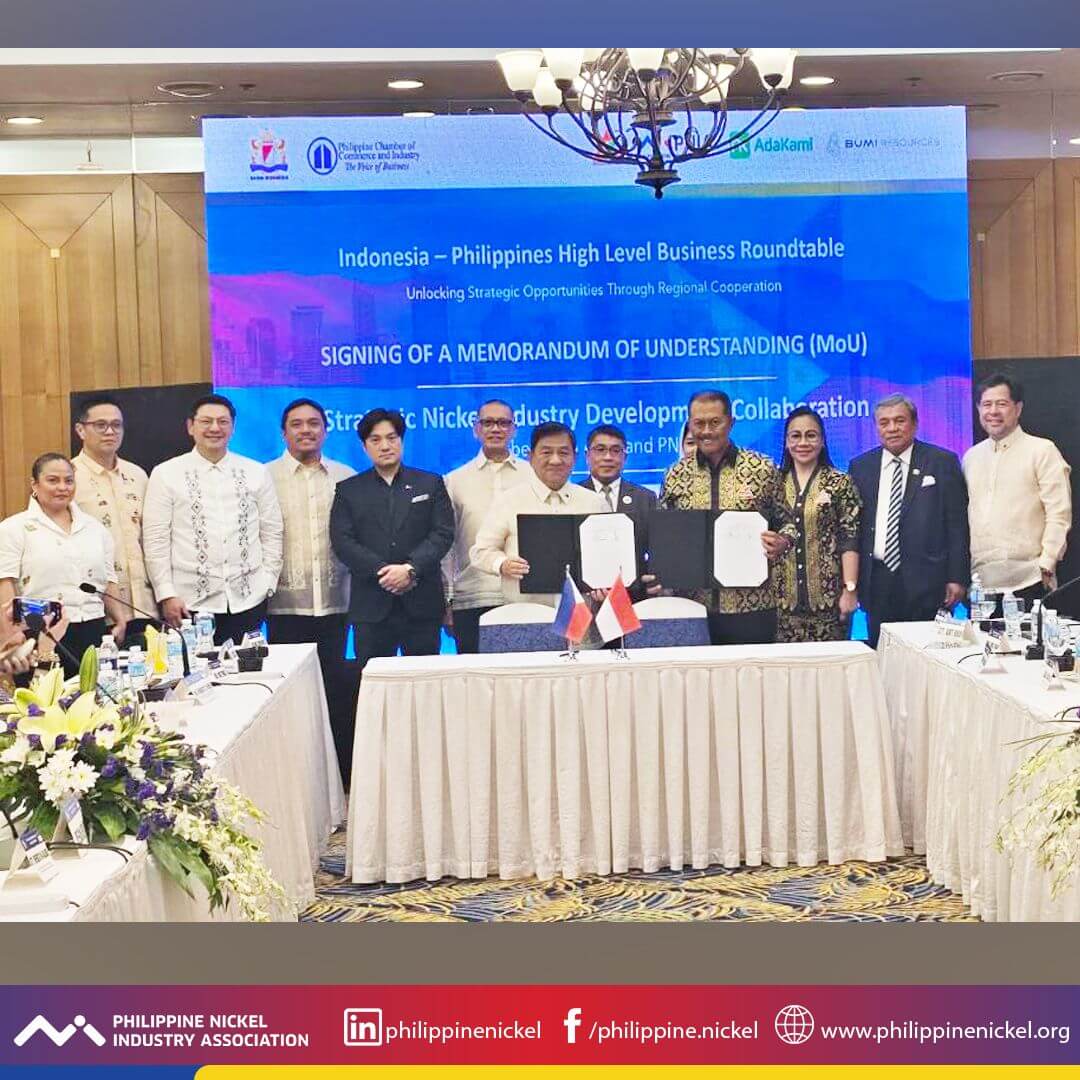
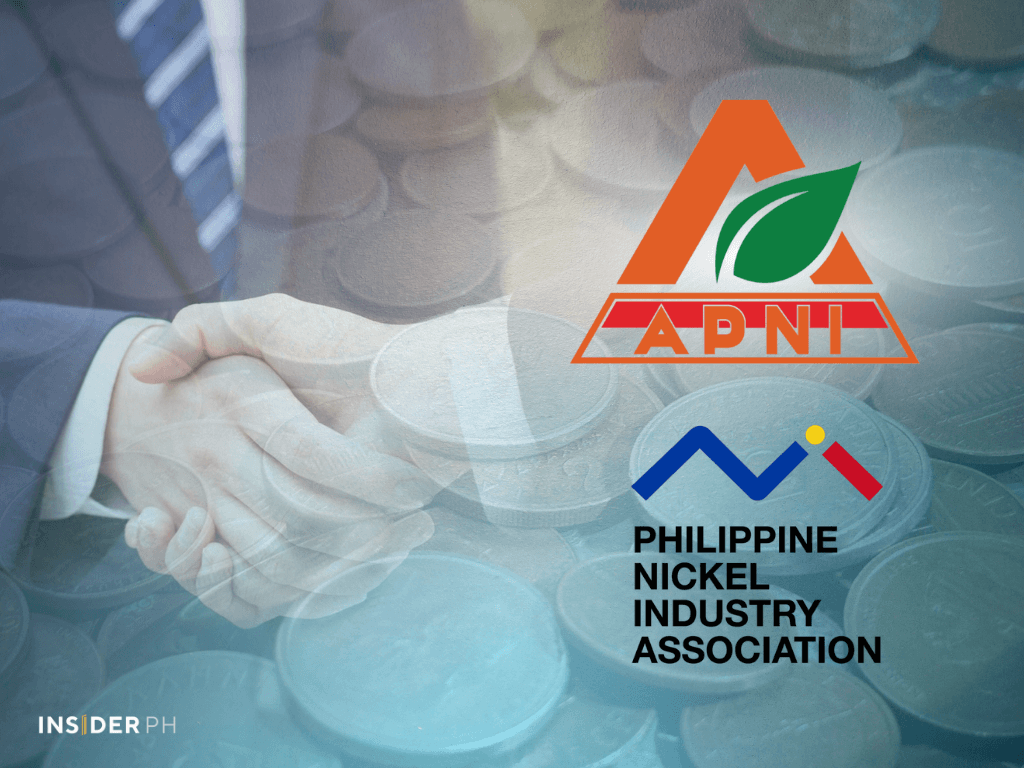
The MOU signed between the Indonesian Nickel Miners Association (APNI) and the Philippine Nickel Industry Association (PNIA) covers a broad range of initiatives, including industry data exchange, regulatory dialogue, joint events and capacity-building programs, field visits to mines and smelters, cross-promotion of investment opportunities, development of environmental, social, and governance (ESG) methodologies, and scholarship programs aimed at developing human capital in the nickel sector.
The agreement also commits both parties to strengthening the regional nickel value chain by linking upstream and downstream industry players, investors, and other key stakeholders across Indonesia and the Philippines.
Opec of Nickel
Meidy Katrin Lengkey, secretary general of the Indonesian Nickel Miners Association (APNI), likened the proposed collaboration between Indonesia and the Philippines to an “Opec of nickel,” noting that the two countries together account for at least 75 percent of global nickel supply.
She was referring to the Organization of the Petroleum Exporting Countries (Opec), the 12-member bloc known for influencing global oil prices through coordinated production policies.
Indonesia currently accounts for about 65 percent of global nickel production, while the Philippines contributes around 15 percent. Indonesia’s nickel is generally considered higher grade than that of the Philippines.
However, Lengkey said during a press briefing that Philippine nickel remains important as a “sweetener” because of its lower silica-magnesium ratio compared with Indonesian nickel, making it more suitable for blending operations in processing plants.
Game changer
Dante Bravo, president of PNIA, described the collaboration as a “game changer,” saying the Philippines hopes to learn from Indonesia’s expertise in smelting and battery production to develop its own value-added industry instead of relying mainly on raw ore exports.
Indonesia has at least 60 nickel smelting plants as of May 2026.
“We believe that our synergy, our alliance with Indonesia, is very important to the world,” Bravo said, noting that the two countries could supply enough battery-grade nickel materials needed for the global energy transition, particularly for electric vehicles. He added that nickel also remains a key component in stainless steel production, which is vital for urban development worldwide.
He said the collaboration is important not only for Indonesia and the Philippines, but also for the world because the two nations supply around 70 to 75 percent of global nickel.
The collaboration, Lenkey said, could help stabilize global nickel prices while supporting the growing demand for EV batteries.
Coal supply
Aside from nickel, Indonesia has also agreed to increase its coal supply to the Philippines in the short term.
“Now, in these changing and critical times, you need more energy, and we are willing to open up and actually supply more coal. That’s the short-term plan,” said Bernardino Moningka Vega, vice chair for foreign affairs of the Indonesian Chamber of Commerce and Industry (Kadin Indonesia).
At the same time, both countries are pursuing renewable energy projects, including hydroelectric and solar power initiatives, as part of their medium-term goal of transitioning to cleaner energy sources, Vega said.
He previously served as alternate chair of the ASEAN Business Advisory Council (ASEAN-BAC) Indonesia during the country’s 2023 chairmanship.
Coal currently accounts for 43 percent of the Philippines’ energy mix, with Indonesia supplying about 97 percent of the country’s coal imports.
In 2025, Indonesia exported 37.12 million metric tons of coal to the Philippines, valued at $2.17 billion.
Fertilizer and aviation
Another memorandum of understanding (MOU) focused on fertilizer cooperation, with Indonesian President Prabowo Subianto agreeing to a request from President Ferdinand Marcos Jr. to increase fertilizer supply to help boost Philippine agricultural productivity.
The fourth MOU covers partnerships in aviation-related projects, particularly in aircraft maintenance, between Indonesia’s Garuda Maintenance Facility and the Philippines’ JAR Aviation Services. The agreement aims to establish an exclusive collaboration for sourcing, developing, supporting, and executing aviation-related projects.
Halal economy
Another MOU was signed between Kadin Indonesia and the Philippine Chamber of Commerce and Industry (PCCI) to strengthen strategic cross-chamber cooperation.
The agreement establishes a structured institutional partnership aimed at advancing bilateral trade, investment, and business-to-business cooperation in key sectors such as critical minerals, the sharia economy, digital finance, food security, and energy security.
It also reconstitutes a joint working group tasked with ensuring practical follow-through on initiatives, while positioning both chambers as the primary private-sector conduit for Indonesia-Philippines economic engagement.
Vega noted that the Philippines has an untapped $4-billion market in the sharia economy, particularly in the potential export of halal products.
“So we believe that's a market that can help grow the Philippines, especially in the southern region in developing its economy and we can collaborate. Indonesia has always been a partner for the Philippines,” said Vega.
Ferdinand “Perry” Ferrer, president of the Philippine Chamber of Commerce and Industry (PCCI), said the organization is focusing on expanding the country’s halal product sector, an area where Filipinos have been “missing out significantly.”
With Indonesia serving as a mentor, Ferrer said the Philippines would work on developing a stronger halal value chain to tap into growing opportunities in the global sharia economy. —Ed: Corrie S. Narisma
Contributor