Insider Spotlight
The company's accessibility strategy recently gained third-party validation after its properties received 14 distinctions at the 31st Apolinario Mabini Awards, a biennial program of the Philippine Foundation for the Rehabilitation of the Disabled Inc. recognizing organizations and developments that advance the rights and welfare of persons with disabilities.
The latest tally builds on the 10 honors SM Prime received in the previous cycle, the company said in a release.
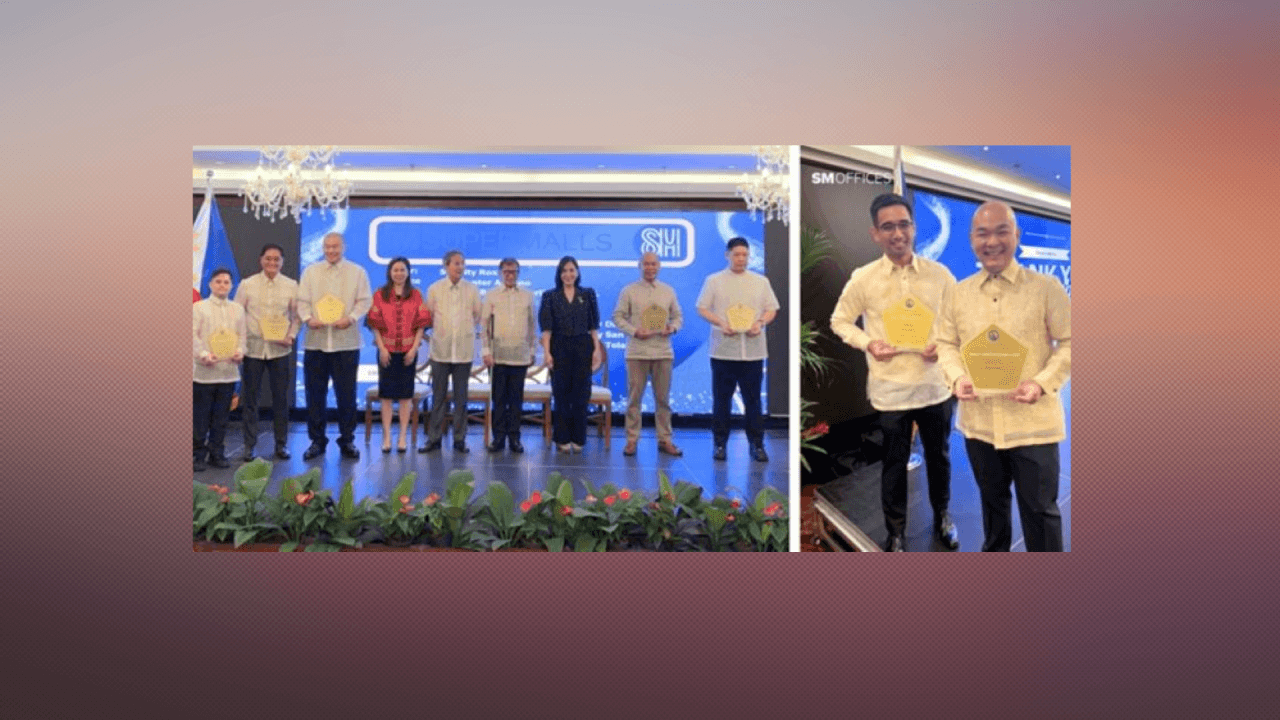
"These awards affirm our commitment to creating spaces where everyone can participate fully and independently. As our portfolio grows, accessibility will remain central to how we design, build and operate our developments," said SM Prime president Jeffrey C. Lim.
SM Supermalls accounted for 12 distinctions covering mall expansions and accessibility improvements. SM City Bicutan and SM City Fairview received Special Awards on Expansion for Substantial Compliance with Batas Pambansa Blg. 344, while SM City Dasmariñas, SM City San Pablo, SM City Telabastagan, SM City Urdaneta Central and SM City Tarlac earned Special Awards for Correcting Deficiencies.
SM City East Ortigas, SM City Sto. Tomas, SM City Bacolod North Block Extension and SM Center Angono received Bronze Awards, while SM City Roxas earned a Silver Award.
Why it matters:
As accessibility standards become increasingly embedded in commercial real estate, developers are placing greater emphasis on designing malls and workplaces that are inclusive while meeting regulatory requirements.
SM Offices also received Bronze Awards for Three E-Com Center and Five E-Com Center, both part of the six-building E-Com Campus within the Mall of Asia Complex.
The company said the campus combines Grade A office spaces, sustainable building features and accessible design, enabling employees, clients and visitors of varying abilities to navigate the workplace safely, comfortably and independently.
Batas Pambansa Blg. 344, or the Accessibility Law enacted in 1983, requires public and private buildings, utilities and transportation services to provide accessibility features such as ramps, railings and designated parking spaces to improve mobility for persons with disabilities. —Princess Daisy C. Ominga| Ed: Corrie S. Narisma