Insider Spotlight
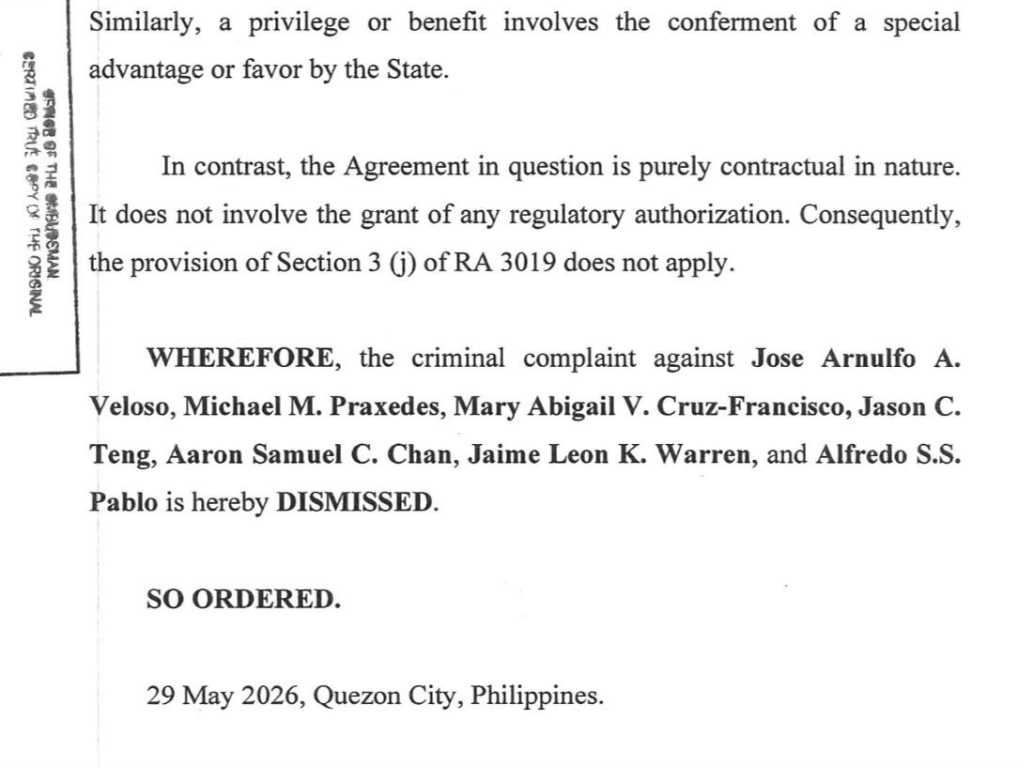
In a May 29, 2026 resolution, the Ombudsman dismissed the criminal complaint against Jose Arnulfo Veloso, Michael Praxedes, Mary Abigail Cruz-Francisco, Jason Teng, Aaron Samuel Chan, Jaime Leon Warren and Alfredo Pablo.
Why it matters
The ruling removes criminal liability hanging over officials involved in the AHC transaction, while drawing a distinction between graft and failures to comply strictly with internal investment procedures.
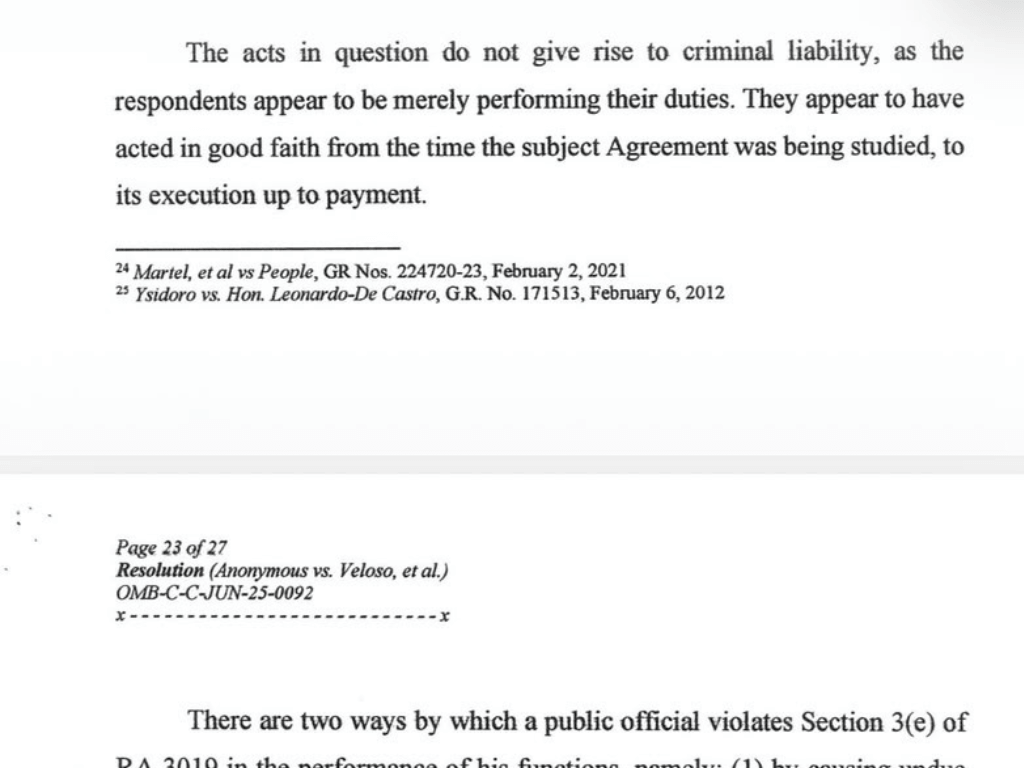
The Ombudsman said records showed neither undue injury to the government nor unwarranted benefits, advantage or preference given to AHC. It also found no evidence that respondents received pecuniary benefits or acted with corrupt intent.
The decision said there was “no showing that graft and corruption actually transpired” and “no issue at all on overpricing.”
Follow the money
A key factor was the investment’s actual return. The Ombudsman noted GSIS had already earned dividends of almost P118 million from AHC Preferred Shares 2A for 2024 alone.
That return undercut allegations that the agreement was grossly and manifestly disadvantageous to the government under Section 3(g) of Republic Act 3019. The Ombudsman also ruled Section 3(j) did not apply because the agreement was contractual rather than a government license, permit, privilege or benefit.
Yes, but…
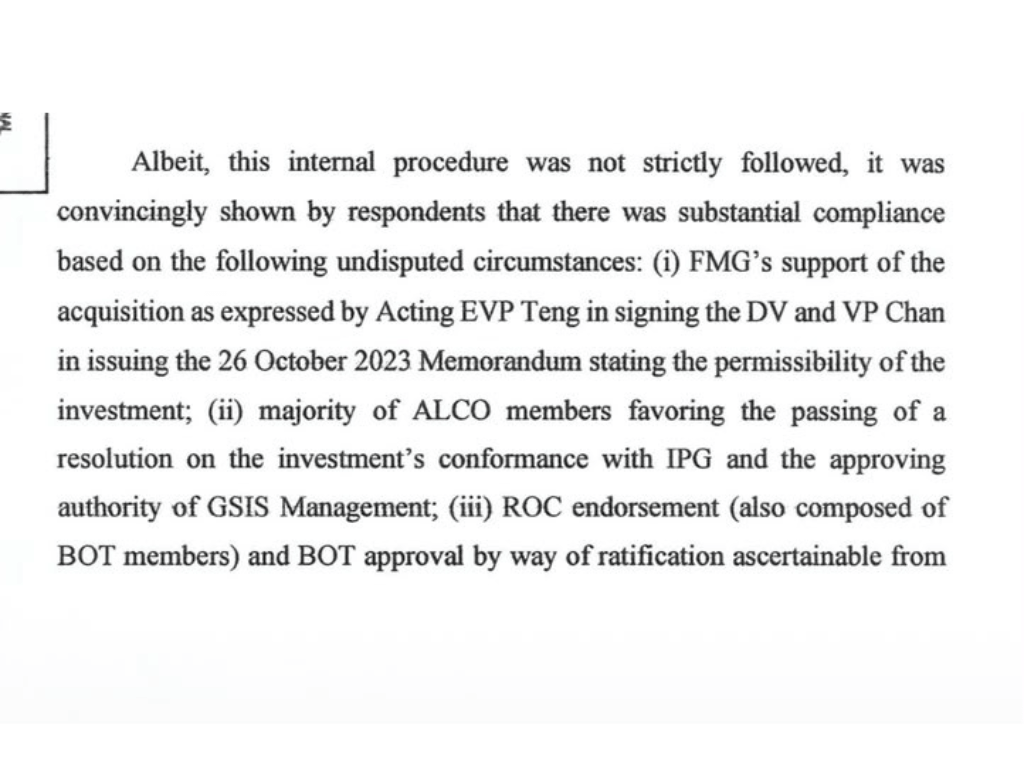
The Ombudsman found GSIS did not strictly follow its internal procedure for the transaction, even as the evidence showed “substantial compliance,” including internal endorsements and subsequent board ratification.
It concluded the lapses were insufficient to establish grave misconduct or gross neglect of duty because the evidence did not demonstrate bad faith, malicious intent, corruption or willful disregard of official duty.
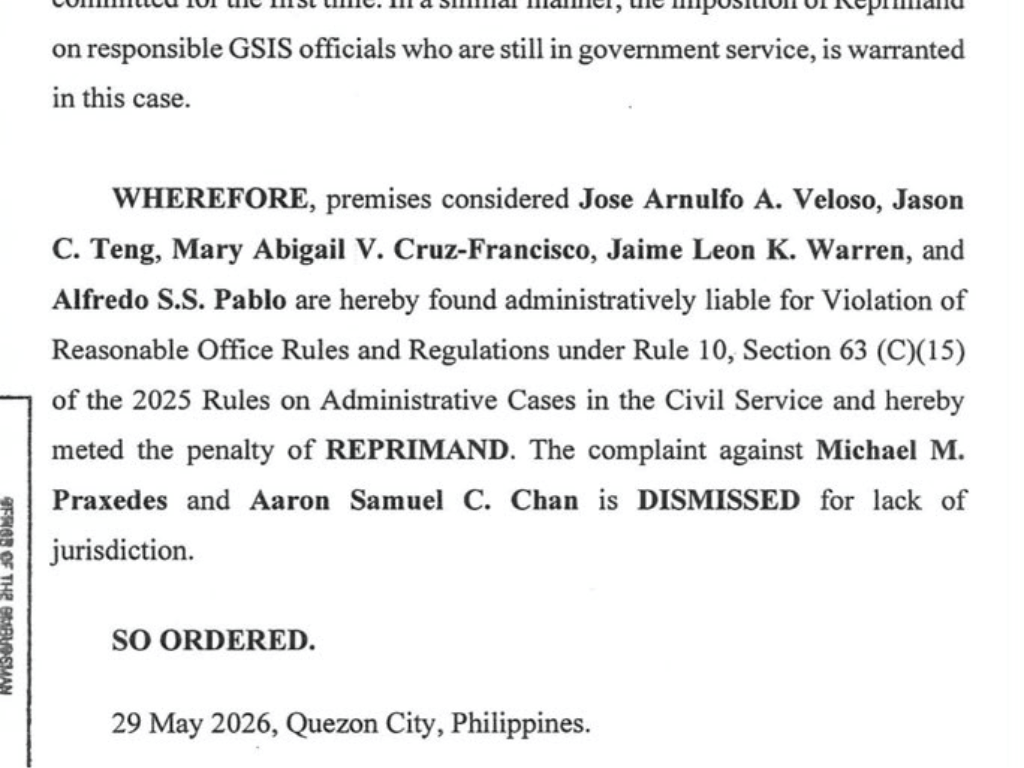
Still, Veloso, Teng, Cruz-Francisco, Warren and Pablo — officials who remained in public service — were found administratively liable for violation of reasonable office rules and regulations and given the penalty of reprimand.
The administrative complaints against Praxedes and Chan were dismissed for lack of jurisdiction.
— Edited by Daxim L. Lucas