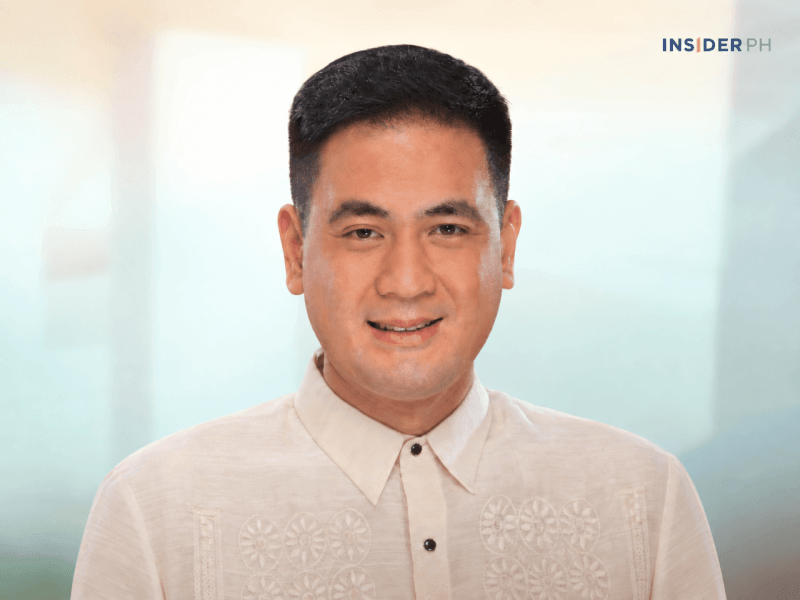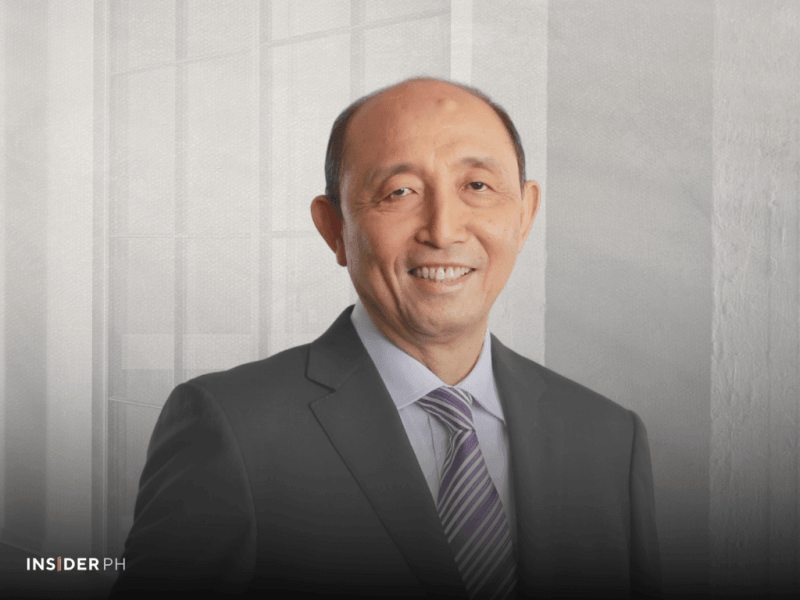
Together with San Juan City Mayor and League of Cities of the Philippines president Francis Zamora and other representatives of the country’s local government leagues, Cua sought an audience with members of both the majority and minority blocs of the upper chamber.

“Napapansin namin na ang ekonomiya natin ay bumagal (we have noticed that our economy has slowed down),” Dax told Deo Macalma of DZRH, explaining the reason for the visit.
“Dahil ang DPWH, ang pangunahing infrastructure investment agency ng ating gobyerno, medyo naglilinis ngayon... naglilinis ng kanilang ranks (because the DPWH, our government’s main infrastructure investment agency, is currently cleaning up… cleaning up its ranks) .”
With construction and public works projects slowing down, Dax made the case that local government units, or LGUs, could pick up some of the slack. Depending on their capabilities, provinces, cities and municipalities could take on smaller infrastructure projects — provided they received adequate support.

“So sinabi namin baka naman puwede ‘yung mga maliliit na construction projects, madagdagan ang support ng mga LGUs para lalo tayo makapagbigay ng sapat na serbisyo sa ating mga komunidad...sa barangay, sa munisipyo,” he said. (“So we said, perhaps LGUs could be given more support for smaller construction projects so we can provide better and more adequate services to our communities... in the barangays and municipalities.” )
The local government leagues were seeking an additional P44 billion for the Local Government Support Fund (LGSF) to support provinces, cities, municipalities and barangays across the country.
The additional funding, Dax argued, could help LGUs “bridge the needs of the communities” — from providing assistance to typhoon-hit areas and supporting health programs to repairing infrastructure and rebuilding classrooms — projects that local governments could undertake themselves.
That visit appears to have borne fruit.
By July, the Philippine News Agency reported that direct funding from Malacañang was allowing LGUs to implement priority programs and projects more efficiently.
According to Zamora, cities across the country were receiving allocations under the LGSF based on population, with the funds released directly by Malacañang.
Half of the allocations, he said, went to purchasing rice for free distribution to residents, while the other half was earmarked for priority infrastructure projects.
“That’s the first time. We can already feel the empowerment of LGUs,” Zamora said.
Dax’s efforts to rally support for issues of national concern, well beyond the bounds of his own constituency, offered a glimpse of the kind of politics and leadership he sought to practice. His sudden death on Sept. 15, 2026, at the age of 48, was mourned by many.

Leading ULAP and LPP
“As ULAP National President and National Chair of the League of Provinces of the Philippines, Governor Dax gave the local government sector a clear and credible voice,” ULAP said in a statement. “He consistently pressed for devolution that recognized the differing capacities and fiscal realities of LGUs.”
ULAP further noted how Dax advanced stronger national-local coordination in public health, disaster resilience, agriculture, infrastructure, livelihood and local economic development. He was also the first Filipino president of United Cities and Local Governments Asia-Pacific, his voice reaching beyond our shores.
Representing Qurino Province
During his stint in the House of Representatives, where he represented Quirino’s lone district from 2010 to 2019 through the 15th to 17th Congresses, Dax filed measures seeking to regulate equity crowdfunding and collective investment schemes; electronically link the Bureau of Internal Revenue with VAT-registered businesses using cash registers and point-of-sale machines; grant an estate tax amnesty; consolidate social welfare rights, privileges and benefits under a Philippine Social Welfare and Benefit System; and provide a framework for citizens to participate in the legislative process through the internet.
As chair of the House Committee on Ways and Means during the 17th Congress, he played a key role in the passage of the Tax Reform for Acceleration and Inclusion (TRAIN) Law. Signed into law in December 2017, TRAIN restructured personal income taxes while introducing or increasing taxes on a number of goods and transactions.
“Bilang kapwa-Ilokano at kasamang nagsilbi sa Cagayan Valley, nakita ko ang kanyang malasakit sa Quirino at kanyang pagsisikap na maiangat ang buhay ng mga pamilyang pinaglilikuran,” House Speaker Faustino “Bojie” Dy III said in a statement.
(“As a fellow Ilokano and someone who served alongside him in Cagayan Valley, I saw his deep concern for Quirino and his efforts to improve the lives of the families he served.” )
“For those of us who knew and worked with Dax, we mourn more than the loss of a leader. We mourn a colleague and a kailian whose commitment to public service touched so many lives.”

Philippine Red Cross
Dax also lent his time and abilities to the Philippine Red Cross.
He served on the PRC Board of Governors for 16 years, beginning in 2008. In this capacity, he supported the organization’s humanitarian mission and efforts to ensure sustained resources and stronger capacity to save lives and serve communities.
“Dax had so much promise and so much more to give, yet in the time he was given, he accomplished so much and touched many lives through his service to the people and the Philippine Red Cross,” said PRC Chair and CEO Richard Gordon.
A Xaverian through and through, Dax went on to study at the University of the Philippines, where he earned a degree in Business Administration. He later completed a Master in National Security Administration for Senior Executives at the National Defense College of the Philippines.
He came from a political family. His father, Junie Cua, served as both governor and representative of Quirino, while his mother, Maria Angela Enriquez Cua, also represented the province in Congress.
A young public servant
Dax’s own political career began at the young age of 23, when he was elected vice governor of Quirino in 2001 — making him, at the time, the youngest to hold the position in the country.
Six years later, in 2007, he was elected governor, pushing programs focused on tourism, livelihood and moral recovery. After nine years in Congress, he returned to the provincial capitol as governor in 2019.
Matthew Marcos Manotoc, now vice governor of Ilocos Norte, remembers:
“He was my ‘batchmate’ as governor in 2019 and somebody whom I recall warmly welcomed me to the League of Provinces of the Philippines,” Manotoc said. “He was, to my knowledge, the only governor taller than me, but was grounded, approachable, and very generous. He offered to help me and the people of Ilocos Norte. Brother Dax, thank you for your service to the people and the country.”
Dax married Midy Nacague Cua in 2011. She would herself enter Congress, winning in 2022 as representative of Quirino’s lone district. They had three children. —Ed: Corrie S. Narisma
Features Reporter