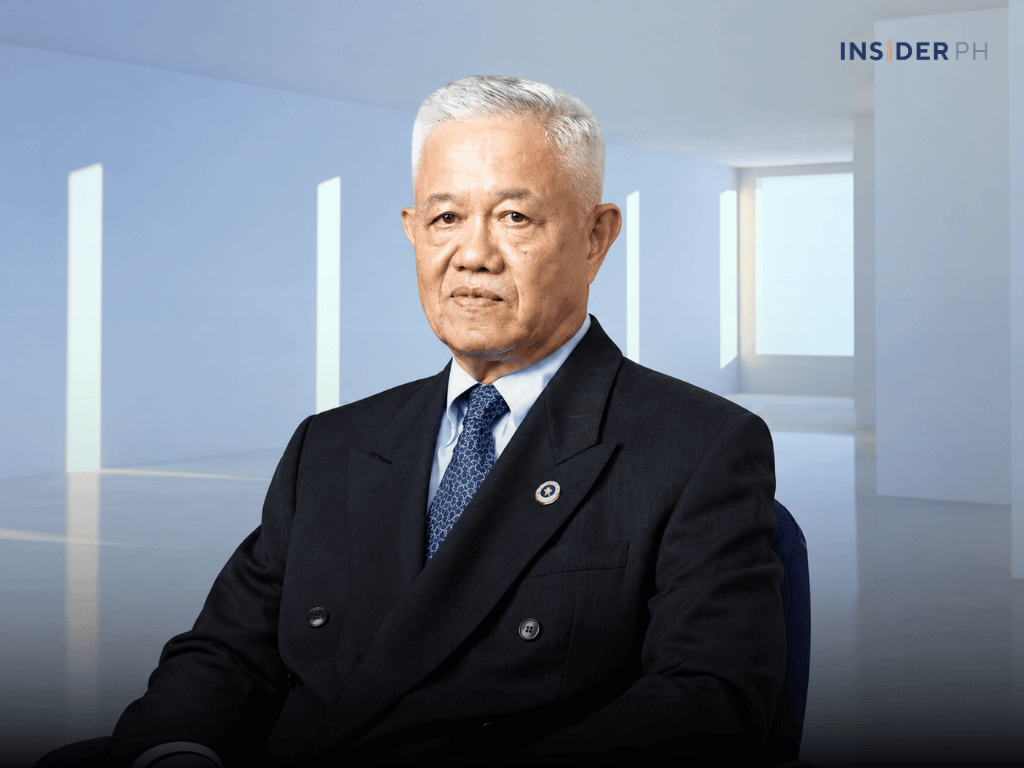
“He is known as obstinate, he is known as always saying ‘no’ undiplomatically. He is known as a nonpolitician,” Marcos said.
That “nonpolitician” label had been the basis of objections to Virata’s nomination as prime minister two years earlier, particularly among members of the Interim Batasang Pambansa (IBP), since he had not run in the 1981 elections.
As recounted by Gerardo Sicat in Cesar Virata: Life and Times Through Four Decades of Philippine Economic History, those who objected, members of the ruling Kilusang Bagong Lipunan (KBL), lobbied First Lady Imelda Marcos for the position. Leading the push was her brother, Kokoy Romualdez, who “had worked to advance her toward greater political prominence at every important possibility.”
Yet, at a party caucus presided over by Marcos, when Imelda’s name was raised during the nomination process, the First Lady herself stood up and nominated Virata instead — in what the book described as “political theater.”
As prime minister, Virata took on broader responsibilities as head of the Cabinet. Although Marcos retained the authority to appoint Cabinet members, Virata “had to help manage the government’s direction in economic and social development.”
(In a 2014 roundtable discussion organized by Asian Dragon Magazine, Virata revealed that Marcos also put him in charge of the Bataan Nuclear Power Plant or BNPP: “Since there are so many collateral issues in the operation of the plant, you better handle it.”)
A complex legacy
In 1984, despite opposition from Deputy Foreign Minister Manuel Collantes of the KBL and others, Virata was reelected prime minister. This time, however, he was also an elected parliamentarian representing Cavite. His decision to run for public office—a departure from his earlier stance as a nonpolitician—was “to determine whether he still had the support of the people, in view of the harsh economic measures undertaken during the economic crisis of 1983-1984.”
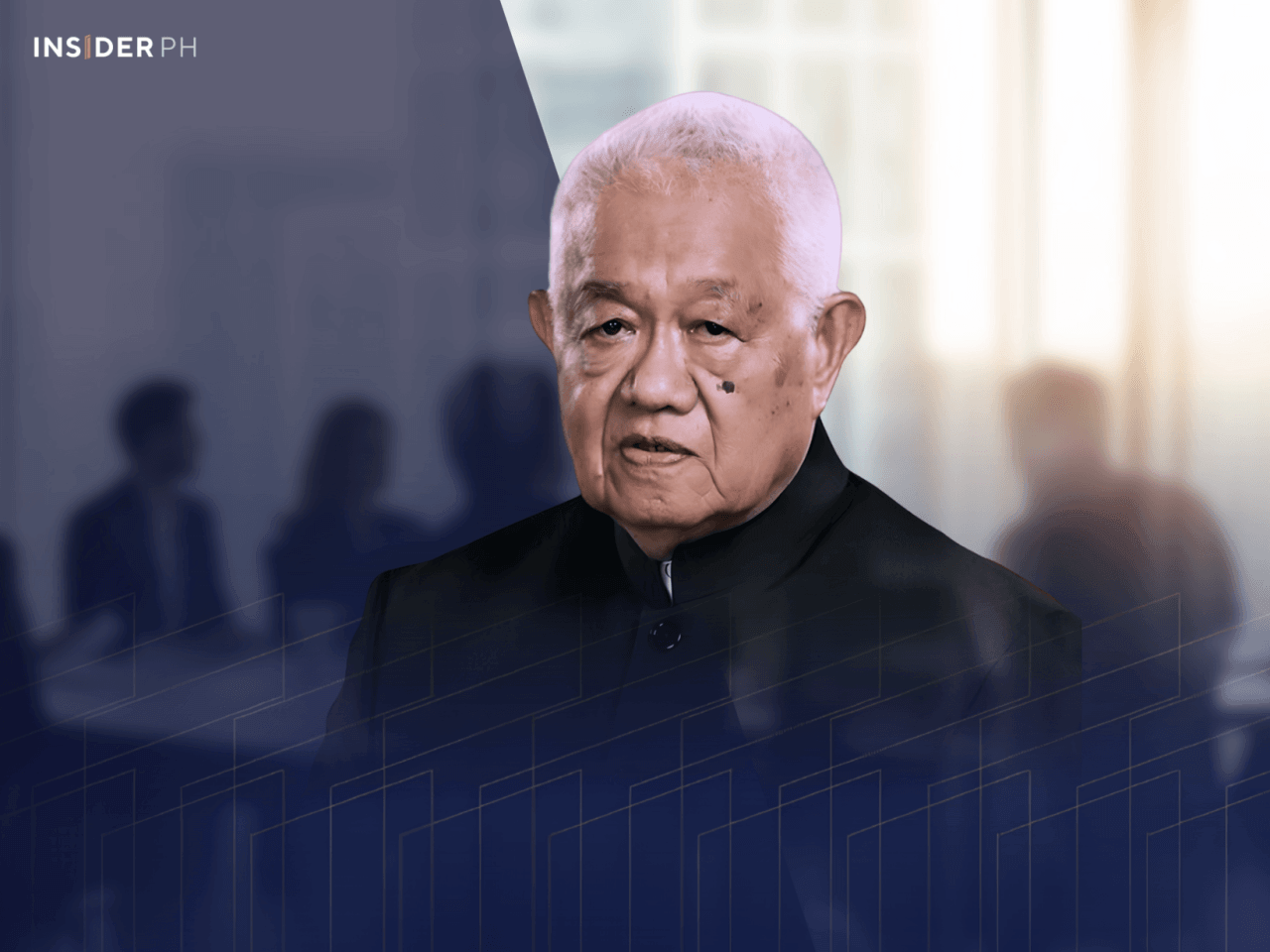
It was perhaps at this critical juncture in Virata’s life — he died on Oct. 2, 2026 at age 95 — that his legacy became contentious.
Some viewed Virata as complicit in the abuses of the Marcos regime, among them economist and banker Tony Gatmaitan, who wrote in 1987:
“...Never mind that plunder took place because insiders like themselves who weren’t in on the deals didn’t want to know what was going on or simply looked the other way.”
Lewis E. Gleeck, former U.S. Consul-General in Manila, was even more blunt:
“Nor did Cesar Virata say or do in public anything of a critical nature against the martial law regime, which, with its concomitant elements of restriction, coercion and repression, was to give rise to business takeovers, the monopolies and crony enterprises…”
Others, however, argued that Virata’s position as Prime Minister was weak from the outset. As former economist Gerardo P. Sicat explained:
“Marcos made it clear that the president was to continue to take on all executive powers” and that “although the prime minister was elected by the Batasang Pambansa, his selection was in fact critically dependent upon the president's support. This made for a far weaker prime minister.”
Virata, for his part, maintained that “...the decisions I made during the 16 years that I was minister of finance and prime minister were made in accordance with the law.”
Sicat, who served under Marcos as chair of the National Economic Council and later as the first director-general of its successor, the National Economic and Development Authority (NEDA), also noted how Virata had to contend with competing forces, particularly Imelda.
“Unlike some government officials who flattered Mrs. Marcos with subservience,” Sicat wrote, “Virata made it clear that he acted only on instructions from the president and, by implication, certainly not from Mrs. Marcos.”
According to Sicat, Imelda regarded Virata — whom she nicknamed “Dr. No” — “as an adversary with whom she had to compete for funds.”
A May 1983 report in Malaya offered a glimpse of this friction:
“Annoyed by the sniping (of Mrs. Marcos and [Roberto] Benedicto), Virata told reporters in an unusually defiant outburst that he had offered to resign.”
“If my performance is bad, I do not deserve to be in government,” Virata declared angrily. “The President should decide on this.”
Still, critics hold Virata accountable for the collapse of the Philippine economy, going as far as calling it “the country’s worst economic crisis since World War II.”
Managing the crisis
Acknowledging the mounting debt crisis following the Aquino assassination in 1983, Virata told reporters that “the Philippines now needs urgently to reduce its daily payments on $6.5 billion in short-term foreign debt and an additional $11 billion in long-term debt,” while assuring them that default was unlikely.
Nevertheless, the late Central Bank Governor Jose B. “Jobo” Fernandez Jr., who worked closely with Virata on debt negotiations with the IMF, World Bank and members of the so-called Paris Club, held a different view.
In Jobo: The Life and Times of Jose B. Fernandez Jr., Benito Legarda Jr. wrote that Fernandez, whom Virata had recommended for the governorship in 1984, “thought so highly of Cesar Virata.”
Legarda added that “Jobo always said in effect that the turnaround of the Philippine economy started with Cesar Virata’s determined efforts.”
“Imelda was no match to the both of them,” Legarda further said.
Whatever one thinks of Virata’s legacy—as a technocrat who, rightly or wrongly, lent his abilities and knowledge to a dictatorial regime and remained in government even as some colleagues departed—he appears to have led a modest life despite rising to the second most powerful position in the country. For many years, he lived in Philam Homes.
The making of a technocrat
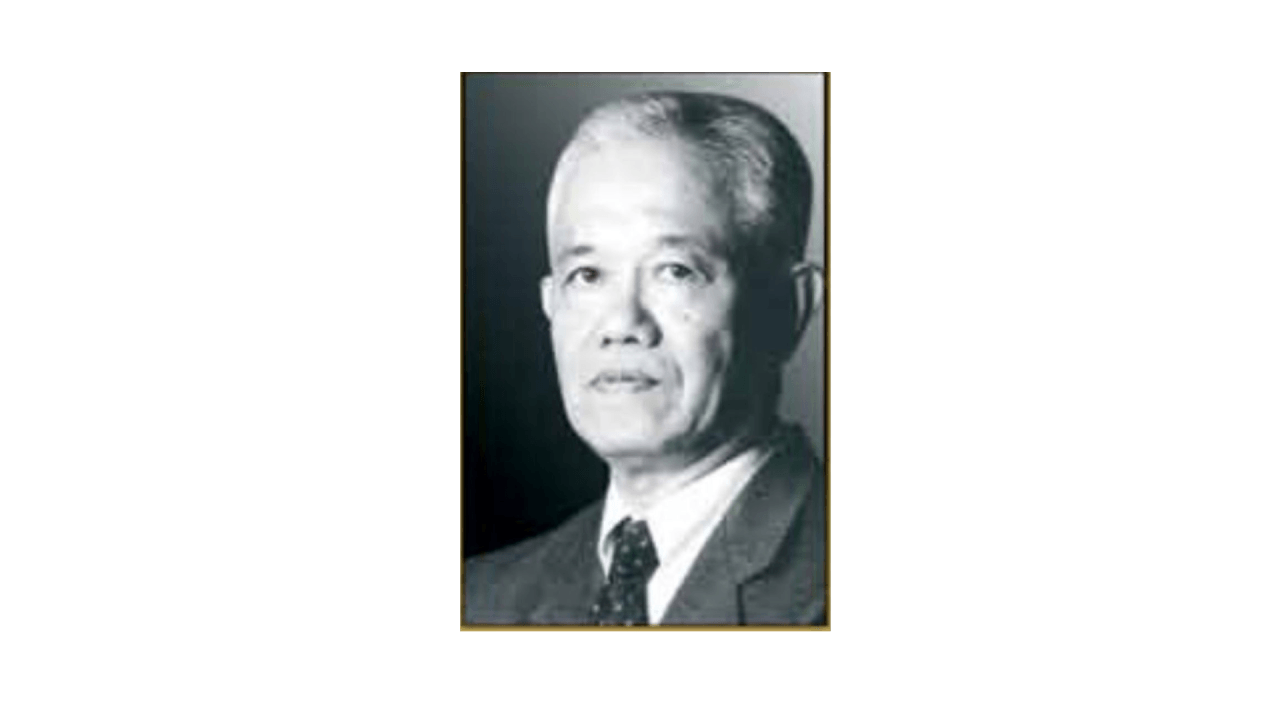
Cesar Enrique Aguinaldo Virata was born on Dec. 12, 1930, the eldest of three children of Enrique Virata and Leonor Aguinaldo.
The Viratas were farmers, “prominent but not high enough to be elite.” Cesar's paternal grandfather, Luis, maintained a sizable fishpond, modest rice fields, and a coconut farm. His maternal grandfather was Baldomero Aguinaldo, brother of revolutionary leader Emilio Aguinaldo. Leonor was said to have owned more land than her husband's family.
The family lived in the home of Cesar's maternal grandmother, Petrona Reyes Aguinaldo, in the barrio of Binakayan, Kawit, Cavite.
Luis later married Agapita Sarao and raised a second family. Among their children was Leonides Virata, who would become Secretary of Commerce and Industry and later chair of the Development Bank of the Philippines (DBP).
An avid sportsman and a mathematics teacher, Enrique belonged to the generation of Filipino government pensionados sent to study in the United States. He earned his master's degree from Harvard, magna cum laude, in 1924, and a Ph.D. from Johns Hopkins University, writing his dissertation on analytical geometry.
The family briefly moved to Baguio when Enrique was appointed dean of the UP College of Arts and Sciences there. They later relocated to Diliman, where he rose through the ranks of the state university, becoming executive vice-president and acting president.
Cesar's fascination with science drew him to engineering, but his father preferred that he study law or business, seeing how engineers were poorly paid. As a compromise, Cesar graduated cum laude in 1952 with a degree in engineering and business administration. Named Most Outstanding Engineering Graduate, he was also active in Pan Xenia, a fraternity of business-oriented students.
In 1953, after joining the UP College of Business as a professor, Cesar earned his MBA from the University of Pennsylvania. The experience proved transformational: “he tried to understand the operations of industry from an engineering viewpoint.”
He considered pursuing a Ph.D. but was dissuaded by his uncle Leonides, who advised:
“You already have your MBA. The years spent in working for a PhD could mean lost opportunities for developments in business that will happen in the country.”
Career shift
After a brief stint as a freelance business consultant, Virata received an offer from Ramon del Rosario to join PHINMA. Instead, he chose SGV, where he developed its management services arm into “a dynamic source of growth for the firm.”
His work went beyond improving clients’ accounting systems to include corporate reorganization, job evaluation, mechanization, electronic systems and productivity improvements involving plant layouts, production and distribution.
He also prepared feasibility studies for major private firms, including Dole and United Fruit Company, the latter with Juan Ponce Enrile as legal adviser.
His government-related assignments involved the Bureau of Customs, Philippine Charity Sweepstakes Office (PCSO), Metropolitan Waterworks and Sewerage System (MWSS) and Social Security System (SSS). This experience would later prove valuable when he entered public service.
By 1960, Virata was dean of the UP College of Business. Two years later, he was named one of the Ten Outstanding Young Men (TOYM) awardees.
In 1967, on the recommendation of Placido Mapa Jr. of the Presidential Economic Staff (PES) and his deputy, Cesar Zalamea, Virata was offered a government post.
The PES benefited from direct access to the president and the support of an established bureaucracy that included lawyers, economists and other professionals.
Over dinner with Imelda Marcos, who “unleashed her charms on the young guest,” Virata accepted the position of PES deputy director-general, overseeing investments.
Within months, he became undersecretary of industry, supervising the National Cottage Industries Development Authority (NACIDA) and Bureau of Patents.
He subsequently became the first chairman of the Board of Investments before Marcos appointed him finance secretary at just 39, breaking with the tradition of choosing older, more senior officials.
Thus began a government career that lasted nearly two decades, ending on Feb. 16, 1986, when Virata resigned as finance secretary, days before Marcos was ousted from power.
Life after Marcos
Facing civil suits filed by the Presidential Commission on Good Government (PCGG), Virata returned to the private sector but remained vocal in his criticism of certain Aquino administration policies, including proposals to repudiate foreign debts, which he warned “would simply cut the country off from the international financial community.”
“Legislators should think twice before passing laws cancelling existing loan agreements with foreign banks,” he added.
Apart from establishing his own management consulting firm, C. Virata and Associates, he maintained a long association with the Yuchengco Group, beginning with his appointment to the board of Rizal Commercial Banking Corp. (RCBC) in 1995.
This, despite the fact Amb. Alfonso T. Yuchengco had been a silwnt supporter of anti-Marcos forces and was appointed Ambassador to China by Cory Aquino.
As RCBC corporate vice-chair, Virata assumed the role of acting CEO following the abrupt resignation of Alfonso “Tito” Yuchengco III in 2001, which left a leadership vacuum and succession crisis at the bank.
In 2016, when CEO Lorenzo Tan went on voluntary leave following RCBC’s involvement in the Bangladesh Bank cyber heist, Virata joined board chair Helen Y. Dee and Armando Medina on a management committee overseeing the bank’s day-to-day operations.
From 2001 to 2003, Virata also served as director of Pacific Plans Inc., the Yuchengco-linked pre-need company that entered corporate rehabilitation in 2005. Citing deregulated tuition fees as the key contributor, Pacific found itself unable to service 34,000 traditional, open-ended educational plans.
Virata was also chair emeritus of the Cavite Historical Society, where he was actively involved.
Finding love
Virata is survived by his wife, Phylita Joy Gamboa-Virata, a longtime thespian associated with Repertory Philippines who had been his business administration student in the mid-1950s.
The two grew closer when Joy joined Cesar in a university research project. She later admitted having had a crush on him. They married in December 1956 and have three children: Steven Cesar, Gillian Joyce, and Michael Dean.
Writing in 1984, at a time when Virata and the country was confronting mounting economic and political pressures, Louie Beltran offered these words:
“The one thing Virata cannot do is pretend that everything is the way it was before,” Beltran wrote.
“If he does, everything that he has done — all the sacrifice, the self-effacement, the dedication to duty, the uncompromising honesty, the incredible loyalty, the exemplary conduct of a humble public servant, the proper management of power — all these would have been discarded by lesser men, and dumped in the garbage bin of politics.” —Ed: Corrie S. Narisma
Features Reporter