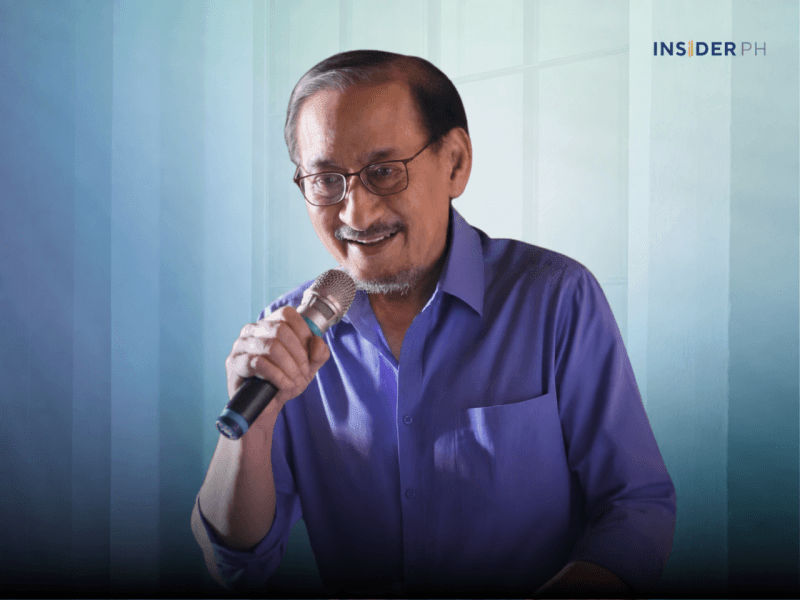
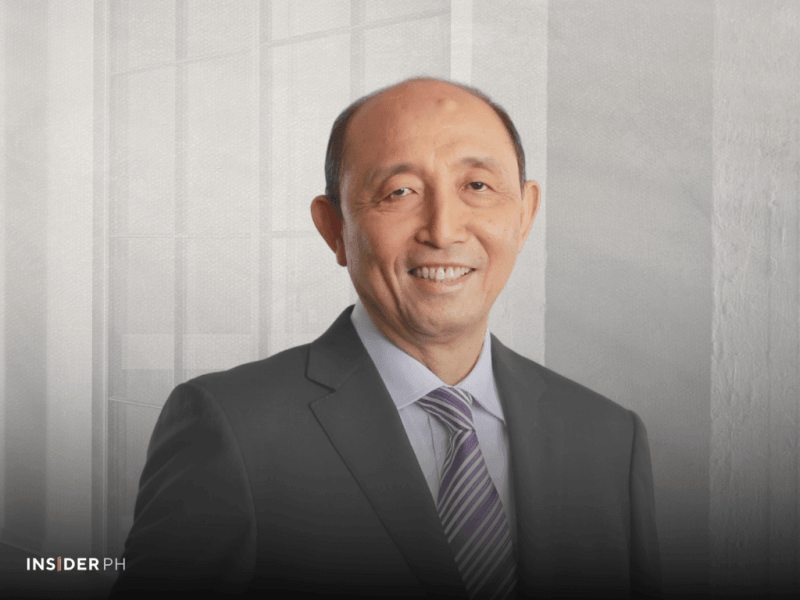
The esteemed Jesuit philosopher, Fr. Roque Ferriols, constantly taught generations of Jesuit scholastics, seminarians and college philosophy students what I believe philosophy was to him: “Madali maging tao. Mahirap magpakatao.”
This is the same lesson that Tito Cesar’s life leaves behind to us who have had the privilege to know him, to be touched by his life, to witness his story – to listen to his story.
In Tito Cesar’s own words, “I have a story to tell.”
For many years, for many of us, he was THE Cesar Buenaventura. His career spanned 75 years, starting as an engineer, he rose to being one of the most respected and admired leaders and mentors in various industries.
His story was one larger than life and, as in all great stories, greatness lies not in the achievements but in the underlying inspirations, lessons learned and shared, and the influence of the people who shaped one’s values and one’s heart.
I am grateful for the privilege of having very meaningful conversations with Tito Cesar on different occasions – the book launching of Ces, the wedding of Erica and in many small gatherings hosted by Buboy and Libet Virata.
Let me share three lessons I learned from Tito Cesar, inspirations gained from these conversations.
Humble beginnings
First: How deeply grateful he was about his humble beginnings. It was a gratitude that instilled in him the core values of hard work, discipline, achievement based on merit.
He saw this in his family, most notably in his father and mother. And this, I believe, planted the seeds of how he valued family – the second point I will invite you to reflect on.
In the book Heroic Leadership, former Jesuit Chris Lowney wrote that what was common to men whose achievements were some of the greatest achievements in human civilization was that they were nurtured in an environment of care and were given opportunities to achieve their full human potential.
This was Tito Cesar’s experience. It was an experience that fueled dreams – and not ambitions – as his dreams were always tempered by the lessons learned from his humble beginnings.
These same dreams were transformed into achievements that will be part of our nation’s and our people’s story; achievements that came from humble beginnings and guided by enduring core values.
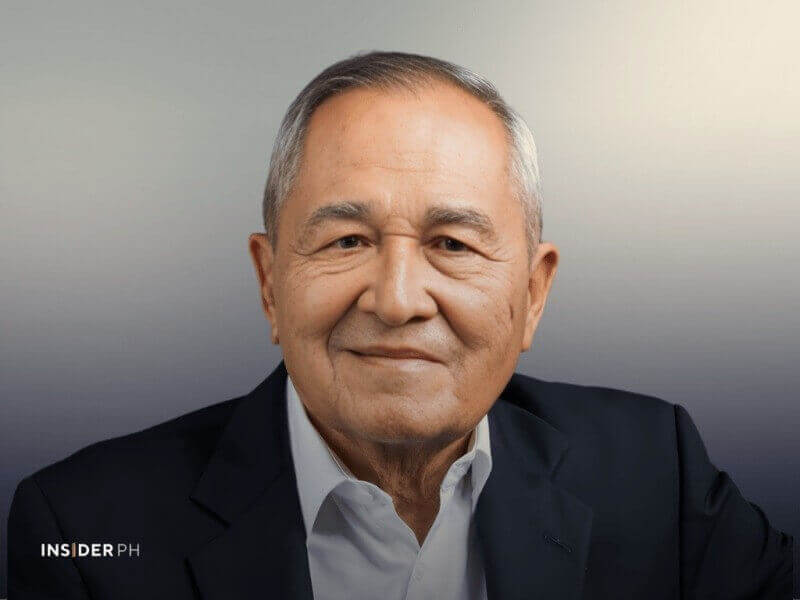
Love of family
The second lesson learned: How he cherished his own family, Tito Cesar’s other great “achievement.” Again, this was marked by gratitude.
He was deeply grateful for having been blessed with two wonderful marriages, children and grandchildren he cherished. He wrote this piece years back.
“I am truly blessed to have been given a second chance at life and love, old friends of mine have commented that I must have done something good in my youth to be twice gifted with two equally wonderful women in my lifetime. Whatever it is, I thank God for having been so blessed.”
There is no greater sense of gratitude than giving thanks to God.
In the opening chapter of his autobiography, he wrote to his grandchildren and opened with these words: “I have been fortunate to live long enough to see most of you grow into adulthood. I have many fond memories of the times I have spent with each of you.”
And then he continues, “this book and the two others that accompany it are for you, written with you in mind… because, ultimately, family is what has mattered the most to me in this life.”
In more ways than one, Tito Cesar had extended families in the people he mentored in various industries, the people he helped through the various projects and foundations he became not just a part of, but one of the driving forces behind them.
He was a natural mentor because – again – he was deeply grateful for the people who mentored him.
Mortality and God
Finally: His sense of his mortality and God. In one conversation I had with him, he mused if he had lived a life good enough when he comes face to face with God.
Our Gospel for today gives us the answer to Tito Cesar’s question:
‘Come, you who are blessed by my Father, inherit the kingdom prepared for you from the foundation of the world. For I was hungry and you gave me something to eat; I was thirsty and you gave me something to drink; I was a stranger and you welcomed me; I was naked and you clothed me; I was ill and you took care of me; I was in prison and you came to visit me.’
“Then the righteous will say to him, ‘Lord, when did we see you hungry and give you something to eat, or thirsty and give you something to drink? When did we see you a stranger and welcome you, or naked and clothe you? When did we see you ill or in prison and come to visit you?’
And the Lord will say to Tito Cesar, “Whatever you did to the least brothers and sisters of mine you did to me.”
National challenges
In the epilogue of his autobiography, he sharply defines the two challenges we face as a nation and as a people – stunting due to malnutrition, and the quality of our education.
Tito Cesar wrote at very end of his autobiography:
“Let me bring this volume to a close by inviting you, the reader, to ask yourself two questions: ‘What have I done to make sure no child goes hungry? And what am I doing to help ensure that children who have enough to eat also have enough to feed their hungry minds?’
These questions are a challenge to you, the reader, whether you are young or old, affluent or a working professional. It isn’t a political challenge, although there is a time and place for politics. It’s a national, essential challenge: to have that sense of urgency, and thus, be galvanized into action, to do something tangible for the generations who will inherit the country we all love.”
The great Nelson Mandela once said: “What counts in life is not the mere fact that we have lived. It is what difference we have made to the lives of others that will determine the significance of the life we lead.”
Tito Cesar’s life was a testament to the core values that shaped him: hard work and merit. For him this was what mattered.
And today as we bring him to rest, we also thank the Lord for the life that he has shared with us. Today would have been his 96th birthday and so we thank the Lord those many years.
The UP Chapel
Incidentally, this year also marks the 70th anniversary of one of his early projects, the UP Chapel, when in 1955 he was in a sense project manager of the UP Chapel built by his mentor, Dave Consunji.
And of course, the UP Chapel is a symbol of our nation’s soul and pride: architect, the National Artist, Lindy Locsin; the artwork by Arturo Luz, Billy Abueva, Vicente Manansala, Ang Kiukok, and the project manager, Cesar Buenaventura.
These men embodied the spirit of our race. These men embodied the spirit of our nation. What we can become as a people and as a nation.
Tito Cesar believed in this and today we honor him by keeping his story alive in our own stories.
As Tito Cesar said, “I have a story to tell.”
Toward a better Philippines
And may his story inspire our own stories that we may give life to stories of other people – the poor and disadvantaged who Tito Cesar wanted to serve and did serve in the many things he did to make life better for others.
“Madali maging tao. Mahirap magpakatao.”
Tito Cesar showed us this and he passed with flying colors. His humanity will live on in our own humanity. His humanity will always inspire us to share ourselves with others. Makipag-kapwa tao, especially with the poor and disadvantaged.
Yes, we will continue his dream of a society of greatness that is based on hard work, discipline and merit.
We thank the Lord for having been given the chance to know him. We thank the Lord for his sharing his story, a story I pray will always live on in our hearts.
Tito Cesar, I am sure the Lord said, “Come and inherit the Kingdom prepared for you from the foundation of the world.”
Pray for us, help us, inspire us to build our nation to the greatness you believed it possessed.
— Ed: Corrie Narisma
Fr. Carmelo “Tito” Caluag is a Catholic priest known for his pastoral work, spiritual direction, and public engagement on faith and social issues. He has served in parish, retreat, and formation settings, accompanying laypeople, religious, and clergy. He is a sought-after homilist and speaker, valued for preaching that connects Scripture with everyday realities and national concerns. Fr. Caluag has been active in interfaith and civic conversations, encouraging discernment, integrity, and service. He continues to write and speak on spirituality, leadership, and the responsibilities of faith in public life.