Insider Spotlight
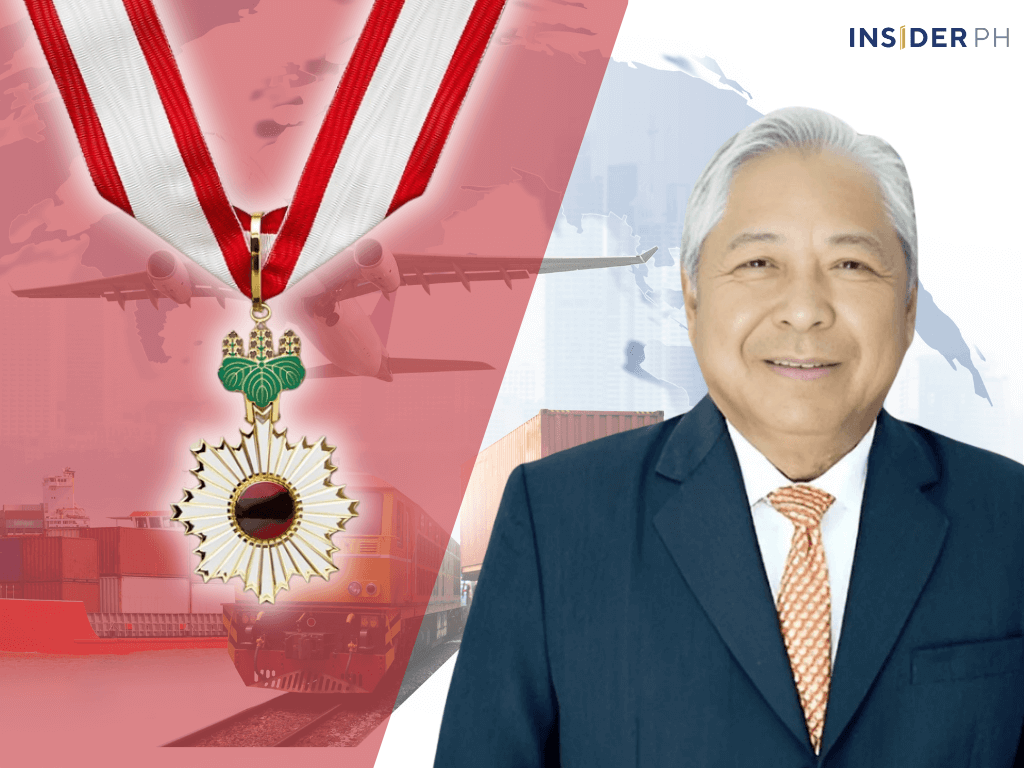
At the conferment ceremony hosted by Japanese Ambassador Endo Kazuya last month, Bautista framed the honor as a shared achievement reflecting the “enduring friendship between Japan and the Philippines.”
Why it matters
The award comes as the Philippines accelerates transport modernization, much of it financed through Japan’s Official Development Assistance and technical expertise. It also coincides with the 70th anniversary of diplomatic relations between the two countries.
Driving connectivity
Bautista, a former president of Philippine Airlines, said his professional life has been guided by “connectivity,” viewing Japan not just as a market but as a strategic partner.
During his airline tenure, Philippine Airlines expanded routes beyond Tokyo to Osaka, Nagoya, Fukuoka, and Sapporo. Before the pandemic, these air links helped facilitate travel for over half a million Japanese tourists to the Philippines annually, supporting local economies and deepening people-to-people exchanges.

From skies to rail
As transportation secretary, Bautista oversaw the rollout of flagship rail and aviation projects supported by the Japan International Cooperation Agency.
These include the Metro Manila Subway Project and the North–South Commuter Railway, designed to decongest the capital and connect key economic zones across Luzon. He also secured investment approvals for 10 major projects across aviation, maritime, and rail, with a combined value exceeding P1.532 trillion.
The Japanese government, largely through JICA, extended loans cumulatively amounting to more than ¥1.379 trillion for these initiatives.
Japanese-backed projects also covered the MRT-3 Rehabilitation, LRT-1 Cavite Extension, LRT-2 East Extension, the Bohol–Panglao International Airport upgrade, and a new Communications, Navigation, Surveillance and Air Traffic Management system for the Civil Aviation Authority of the Philippines. Maritime cooperation extended to the Philippine Coast Guard’s capability improvement program.
Big picture
Bautista emphasized that Japanese technology and safety standards not only delivered infrastructure but also enabled knowledge transfer to Filipino engineers and planners.
Now serving as governor of the Management Association of the Philippines, he called for policy continuity to ensure long-term infrastructure goals remain insulated from political cycles.
He closed with a pledge to remain a lifelong advocate of Philippines-Japan cooperation, underscoring that the recognition “transcends personal recognition” and symbolizes a partnership rooted in mutual trust and shared progress. — Daxim L. Lucas | Ed: Corrie S. Narisma