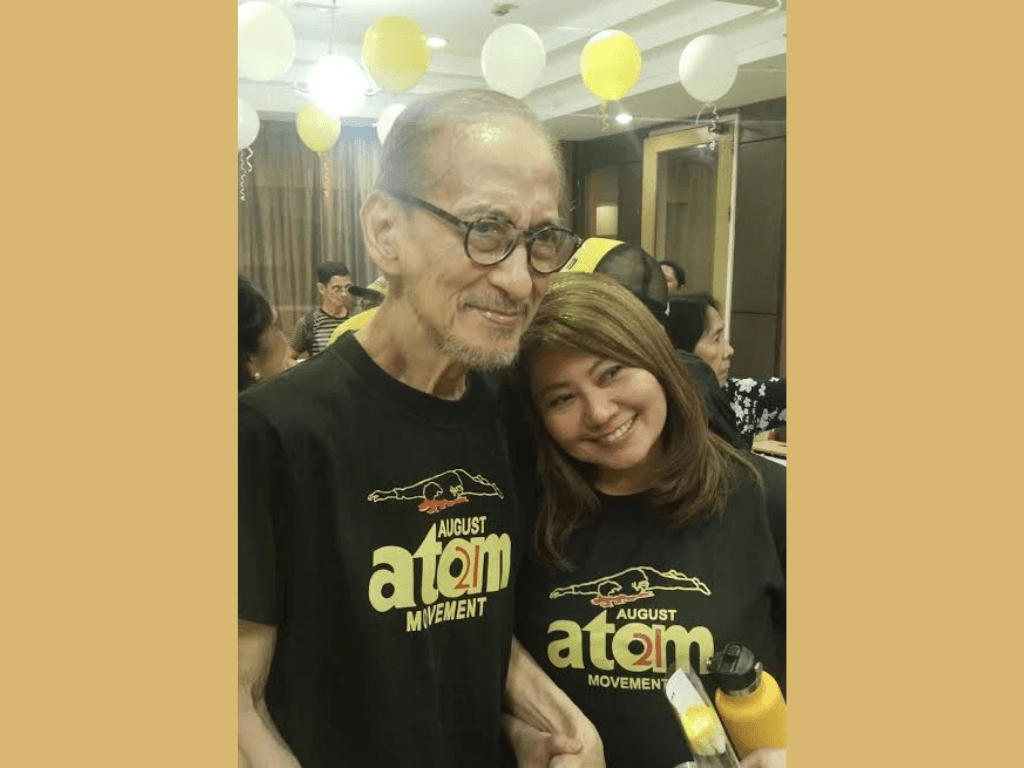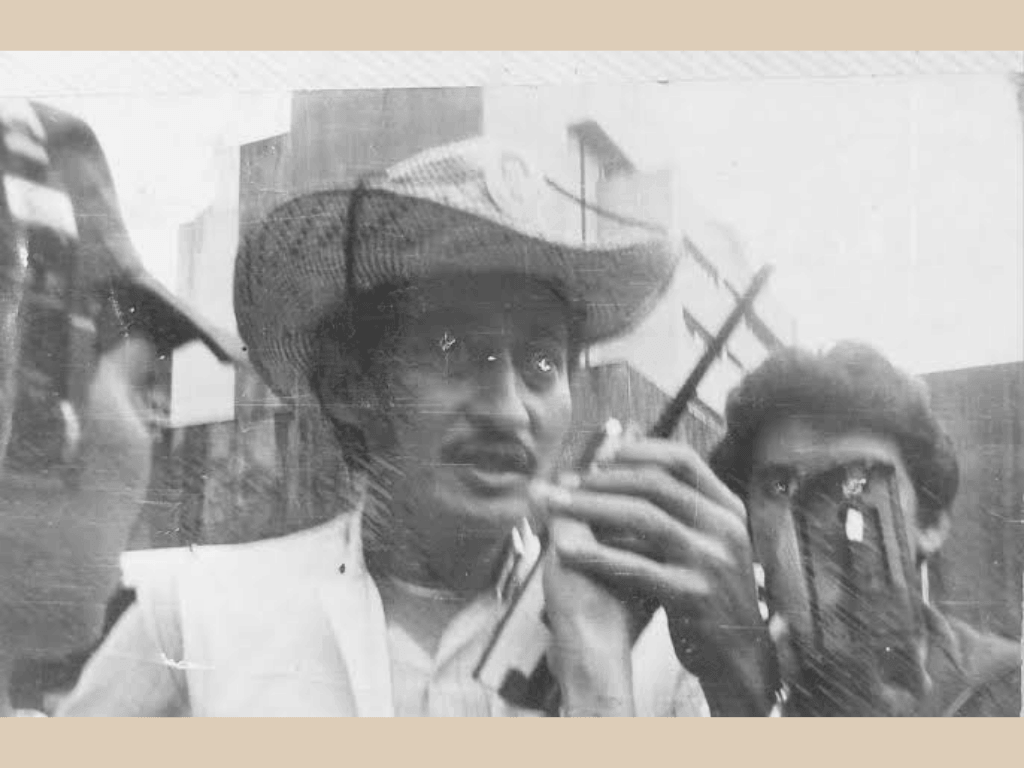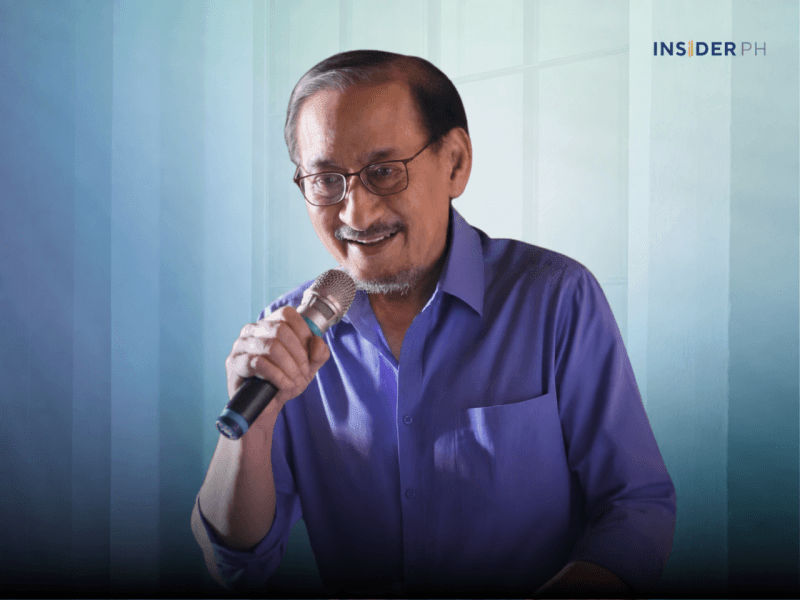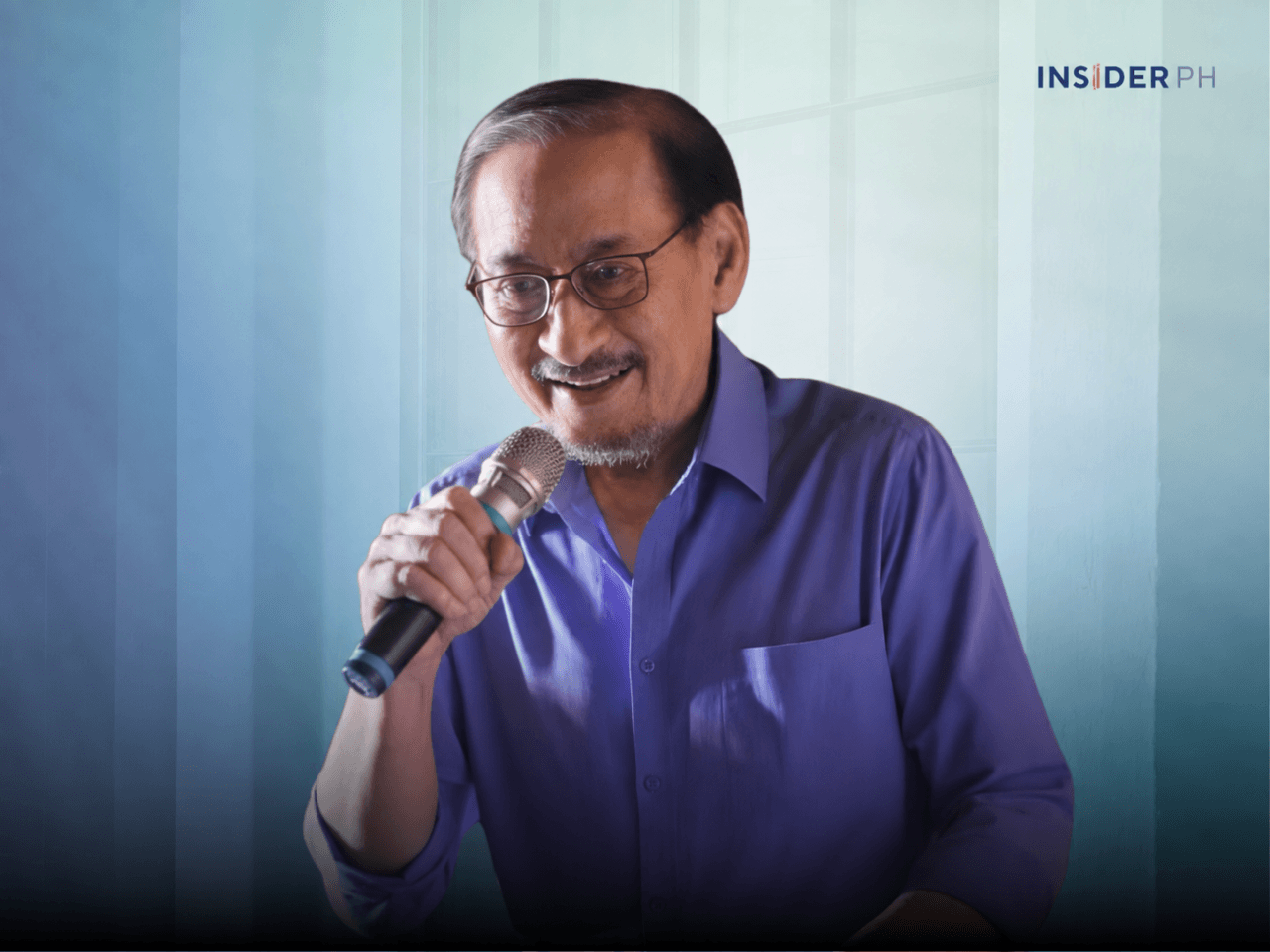
Reli, who died on July 8, 2026, at age 86, was perhaps best known for his pivotal role in getting his classmate Joseph “Erap” Estrada elected president in 1998 through the proliferation of Erap jokes and the publication of ERAPtion: How to Speak English Without Really Trial; his involvement as a street parliamentarian in the August Twenty-One Movement, formed following the assassination of Ninoy Aquino; and his significant role in the 1986 EDSA Revolution.
“The way you led ATOM is admirable and constantly inspirational…” said Mae S. Lagubday on Facebook. “You led with humility and are a true inspiration and you always led with respect.”
But the public relations expert and political strategist—unbeknownst to many—was also an advertising industry pioneer and trailblazer who had a brief and unusual foray into aviation.
While getting a feel for the luxurious back seat as “Happy Birthday” was being sung, Reli muttered, “Too much,” as if to say the surprise present was overly generous and that he was undeserving. But he certainly deserved it, considering his many professional achievements and successes.

Cinema audio advertising pioneer
As confirmed by Visitacion R. de la Torre in her book Advertising in the Philippines, German is recognized as having conceptualized and produced the first cinema audio advertising in the country, adding a new medium to television, radio, print, and billboard advertising.
German, who was then with the Gokongweis’ Consolidated Foods Corp., recounts: “I just played a jingle and in due time, I had thirty-five movie houses contracted on an exclusive basis.”
With First United Bank as its first client to use cinema audio ads, which ran at the Rizal, Magallanes, State, and Avenue theaters in 1970, German claimed that the medium proved profitable in its infancy—until, for some unexpected reason, it was banned.
Reli’s other ‘ad-ventures’
Yet this was but the start of German’s “ad-ventures,” as he would move on to found advertising agency Nation-Ad Philippines, serving as its president and general manager.
“He had the original Nation-Ad, then a Nation-Ad 2 to handle competing clients,” shared a former agency executive and accounts director.
Nation-Ad serviced clients in the FMCG (fast-moving consumer goods), tobacco, and liquor industries, with Destileria Limtuaco & Co., the country’s oldest distillery, among its top clients. Its fourth-generation owner and head, Julius Limpe, would turn to Nation-Ad whenever he faced an issue concerning one of his brands.

The former Nation-Ad executive recalls being called to a meeting by Limpe to address the flagging sales of Maria Clara Sangria, one of Limtuaco’s major products.
The Nation-Ad team conducted a field study, approaching a bartender for feedback and enlisting her as a consultant. Her candid input formed the basis of a new nationwide advertising campaign that was as unusual as it was effective: encouraging consumers to serve Maria Clara Sangria with loads of ice. The campaign also led to an updated brand identity aimed at a younger audience.
Pleased with Nation-Ad’s work, Limtuaco tapped the agency to launch a new product—Wine Cooler. Dubbed “a sparkling blend of white wine and natural fruits” and “an original sparkling punch,” the product was conceived to solve another internal company problem: Limpe had previously purchased a large quantity of small glass bottles from overseas at a steep discount but was at a loss as to what to do with them.
Using a youthful, music video-like commercial, the Wine Cooler campaign featured Jaime Garchitorena and Jam Morales, popular young performers in the 1980s, as well as an upbeat jingle, clearly targeting a defined demographic.
“Advertising is like a kiss,” German once said with naughtiness. “What you get out of it depends on … what you put into it.”
Airport chief
Months after the 1986 EDSA Revolt, word spread that President Corazon Aquino had grown displeased with acting Manila International Airport general manager Romeo Santos, who had become embroiled in controversies and was facing mounting estafa cases.
As the administration scouted for a replacement, German, who had previously served as officer-in-charge of the Bureau of National and Foreign Information, was reportedly being considered for the post.
“President Aquino had a closed-door conference with Santos and German yesterday at Malacañang,” The Inquirer reported at the time.
Whether German’s ATOM ties figured in his selection—and why he chose to accept the post—remain unclear. But the advertising and public relations man was eventually sworn in as head of what would become the Ninoy Aquino International Airport.
German’s stint as airport chief was brief—he was relieved of his post in April 1988 but had already tendered his resignation a year earlier—and was not without difficulties.
Apart from backlash resulting from German’s appointment of 39 ATOM members to key posts, Emil P. Jurado, who ironically co-authored ERAPtion, wrote a stinging op-ed piece criticizing German’s management of the airport, declaring that “What MIA Manager Reli German is doing to the airport terminal would be funny if it were not fast becoming a tragedy.”
Jurado questioned German’s policies on airport traffic and on guests welcoming arriving passengers, which he said had created confusion. “Why can’t German just leave things alone at the airport?” he wrote.
Acknowledging in a congressional hearing that NAIA was beset with problems such as graft and corruption, extortion, luggage pilferage, and even stinking toilets, German would find himself entangled in an issue over the multimillion-peso contract to build a new domestic terminal, involving competing design proposals—an earlier one by architect Ruperto Gaite and another one submitted by J.T. Mañosa.
In 1987, German also had to apologize to members of the airport press corps, particularly Nixon Kua and Butch Quejada, over their illegal arrest and detention by members of the airport police.
Political strategist and crisis manager
Upon returning to the private sector, German turned his attention back to advertising and public relations, his areas of expertise, and organized Agents PR. He also returned to political strategy, handling clients from all sides of the political fence.
In the fallout following the 2005 “Hello Garci” scandal involving Gloria Macapagal Arroyo, German was hired by Executive Secretary Ed Ermita to join her crisis management team.
“Our role is to make comments, assess the situation and determine what we can do,” German said. “I think my being able to look and assess … issues and situations from a PR standpoint and outside the Palace … is my contribution to the administration’s communications efforts.”
He later became campaign strategist of the Arroyo-aligned Team Unity senatorial slate, promising “no song and dance” during sorties.
As his buddy Erap famously quipped: “Weather, weather lang.”
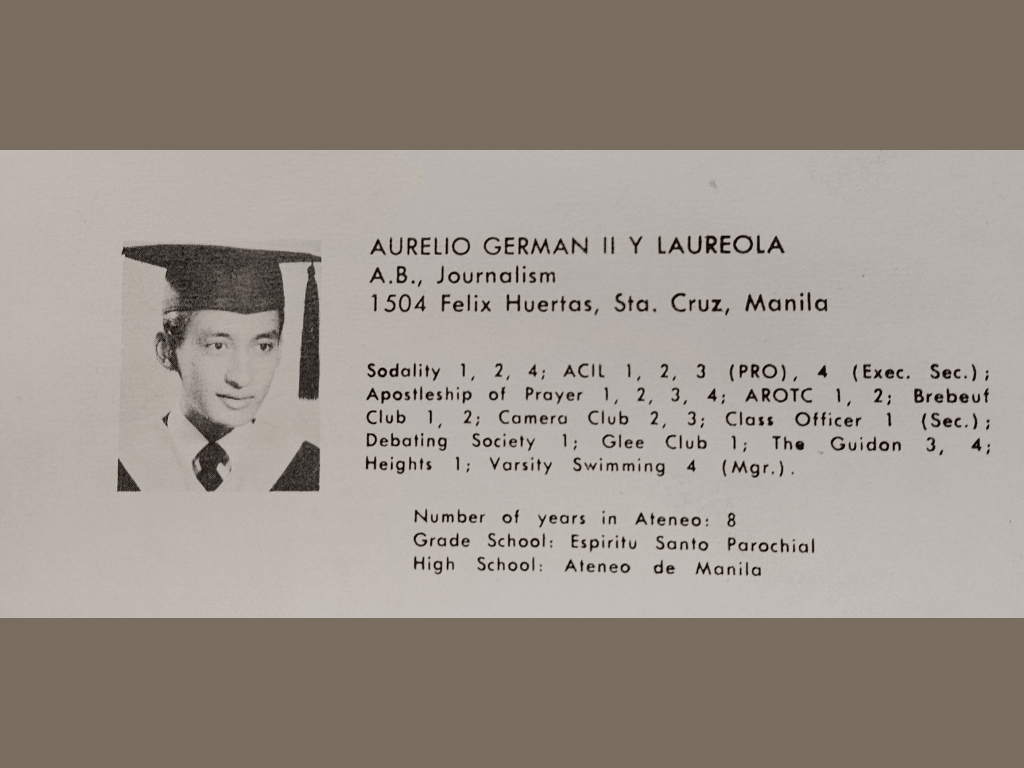
Aurelio German Jr. was born on Nov. 25, 1939, to Aurelio German Sr. of Biñan, Laguna, and Elisa German neé Laurelola of Sta. Cruz Manila.
A product of the Ateneo de Manila University, among Reli’s high school batchmates, aside from Erap, were Foreign Affairs Secretary Domingo Siazon, BSP Governor Paeng Buenaventura, and columnist Horacio Paredes.
In college, graduating with an AB Journalism degree, Reli was active in the Ateneo Catechetical Instructors League or ACIL. Serving as the organization’s executive secretary, Reli joined 10 other “street-preachers” —including Siazon—to spread the word of God in both English and Filipino. With the approval of Rufino Cardinal Santos, the group utilized a Morris Minor van from funds donated by Rep. Sergio Osmeña.
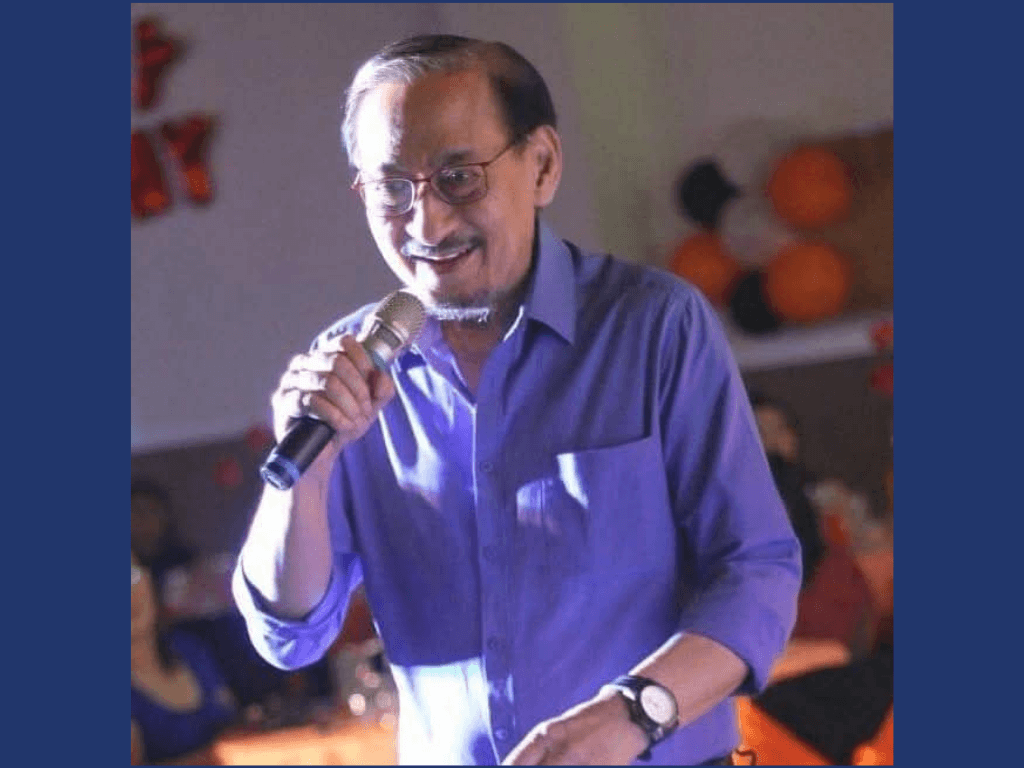
On Dec. 8, 1964, Reli—the king of dad jokes and unabashed crooner who had no qualms taking the mic—married Josephine “Bunny” Suzara. They had five children.
“For as long as the dreams & aspirations of the EDSA Revolution are unfulfilled, [we] have to move. Rally. Protest.” - Reli German.
—Ed: Corrie S. Narisma

Features Reporter