This stemmed from Vasquez’s unilateral decision to indict Juico in connection with the aborted Garchitorena land deal. By then, Juico had already voluntarily resigned as the controversy escalated and had been succeeded by Miriam Defensor Santiago.
Garchitorena land deal
The issue arose in 1989 when Juico was alerted to how Sharp International had tried to bamboozle the government into acquiring the largely undeveloped, 1,888-hectare Garchitorena estate in Camarines Sur for P60.7 million, although its original purchase price was P3 million.
Upon learning of this, Juico was said to have ordered an immediate halt to payment. Confident of his non-involvement, he subsequently called on the National Bureau of Investigation (NBI) to conduct a thorough investigation “up to my level no matter who gets hurt.”
The group of congressmen said the Ombudsman—who had elevated Juico’s case to the Sandiganbayan even after two internal investigating panels had cleared Juico—“should not make Congress an excuse for his action.”
According to Sen. Rene Saguisag, Vasquez "grievously erred” when he based his decision on the alleged recommendations of the Senate Blue Ribbon Committee and the House Committee on Agrarian Reform.
For his part, KBL Representative Rodolfo Albano declared, “how a matter as basic as this escapes Ombudsman Vasquez's attention surprises me,” as he pointed to a June 29, 1989 newspaper headline stating, “Congress Probers Exculpate Juico.”
Exoneration and acquittal
After eventually being acquitted by the Sandiganbayan in 1992, Juico received a stream of congratulatory messages — led by Fidel V. Ramos and Corazon Aquino, no less.
“Finally, after three years, you got your vindication that I was certain you would get,” Ramos said.
“I never for a moment had a doubt about your innocence,” said Aquino.
At last, Juico, who had earlier expressed optimism that an acceptable agrarian reform bill would be passed, could breathe a sigh of relief.
Said Juico in a televised interview in August 1987: “I think what we will have is a happy compromise which will take into account all of the competing interests and anxieties…I’m very optimistic about this. I think we can appeal to their sense of patriotism and justice.”
In Pro-Poor Land Reform: A Critique, published in 2007, Saturnino Borras Jr. of the Erasmus University Rotterdam wrote:
“Personally close to President Aquino, Juico was unwilling to provoke either the landlords or the military, and so he refused to subject any private landholdings to compulsory acquisition. He focused instead on distributing public lands and rice and corn lands, the landlords of which were less politically influential.”
Borras Jr, also claimed that onerous leaseback contracts with multinational firms in Mindanao received blessings under Juico’s watch.
Philippine sports leadership
In 1996, with the controversy behind him, Juico — whose death last Oct. 31 at 78 was announced by his son Vincent — became chair of the Philippine Sports Commission (PSC).
Before formally assuming his post, Juico gave a glimpse of his agenda for the PSC.
“I do not see our task as courting the approval of everyone at every turn…Decisions will be made after consultation (but not to the point of overdeliberation) with the parties concerned.”
“Housekeeping alone, by his reckoning, would entail a lot of undoing to clear up the mess of the successive leadership changes in the commission,” wrote Manny Angeles, quoting Juico.
In 1996, President Ramos had to intervene in a dispute between the leaders of the PSC and the Amateur Boxing Association of the Philippines (ABAP).
"This does not need to become an 'internationalized issue,'" Ramos said as he ordered PSC chair Juico and ABAP president Manny Lopez to stop bickering in the media, while instructing Executive Secretary Ruben Torres to arrange a meeting between them.
The feud arose over cuts in the allowances of amateur boxers, who pointed a finger at the PSC for allegedly ignoring their call for increases.
With his brief two-year tenure as PSC chair nearing its end alongside Ramos’s term, Juico was able to reflect on his achievements and shortcomings. Wrote Aldrin Cardona in March 1998:
“So little time for so much work, but what comes more vividly in Philip Ella Juico's mind before he steps down as head of the country's sports policy-making body are his regrets for not being able to achieve most of his dreams for Philippine sports than what he has contributed to its development.”
"The PSC was taken hostage by the times for a moment, and it was only then when it was realized that there was a need to professionalize the agency, give it some direction, and introduce and breed the culture of excellence within the organization," Juico said.
"We did not remiss in our prime duty, sports development, but we should have implemented the Pinoy Sports Club program right from the start," Juico continued, referring to his complementary programs for the country's traditional school-based sports system, providing opportunities and venues to all sectors.
Expressing his desire to push for mass-based sports, Juico further told Angeles, "Dati kasi, medyo concentrated tayo sa elite sports, to the point na napabayaan natin ang mass-based sports. Kulang sa L, walang oomph, walang pizzas. Ang kailangan lang siguro, konting packaging.”
Juico later told Manolo R. Inigo in 2005 that he “submitted a masterplan for sports that included preparation for and participation in the Olympic, Asian, Southeast Asian Games and World Championships.” Having also submitted this to the NEDA, Juico claimed that the plan was scrapped when a new administration took over.
"We can save money by following this master plan," said Juico of his program.
Juico would later also emerge as a whistleblower against University of Life president Henri Khan in a P20-million estafa case, accusing the latter of forging his signature to illegally withdraw funds from the PSC escrow account with BPI.
In a separate case in 2009, the Supreme Court upheld a ruling holding Khan and fellow executive Manuel Luis Sanchez personally liable for more than P22.55 million in damages arising from the mismanagement of the University of Life.
Broadcast executive
As vice-chair of IBC Channel 13, Juico played a key role in the station’s joint coverage of the PBA games with NBN-4 in the early 2000s. Of the partnership, he said at the time that both stations had the equipment and the luxury of airtime "which past broadcast outfits did not have."
"As far as equipment and air-time are concerned, everything is under control,” Juico said, with P700 million having been committed for this purpose.
Business school dean
Following a brief stint as head of Araneta-controlled promotions firm Uniprom, Inc., Juico was appointed Dean of the DLSU Graduate School of Business in 2003, drawing on his 18 years of experience as a professor of management.
Under his leadership, the MBA in Sports and Recreation Management at the DLSU PSI-GSB was launched, underscoring “the theories and principles of competitive sports and its relation to leadership, management and value formation in the workplace.”
"Every year, millions of pesos are allocated to the country's sports sector. That's why we thought of offering a course that will equip managers with the skills and knowledge to help propel Philippine sports to greater heights by employing innovative, tried and tested management principles,” Juico said.
In January 2003, Juico received the Corazon Cojuangco-Aquino Distinguished Professional Chair in Business Management. Said DLSU in a statement:
“Juico's impressive track record and wide spectrum of expertise in business and development management, agrarian and rural development, strategic planning, sports development and journalism made him the ideal candidate to receive the administrative chair.”
"I am happy to learn that my friend, Philip Juico, will be the first holder of the Corazon Aquino Chair in Business Management," Mrs. Aquino said in her speech. "He has always been very supportive of everything that Ninoy and I stood for, and I wish the DLSU Graduate School of Business success in its noble objective of developing sensitive and compassionate businessmen and managers who exemplify humanistic values."
Beyond government
A TOYM awardee for government service in 1987, Juico earned his AB (History-Political Science) and BSC (Accounting) degrees from De La Salle. He received his MBM from the Asian Institute of Management and his Doctor of Business Administration, with distinction, from De La Salle. His first job out of college was at Banco Filipino as a management trainee.
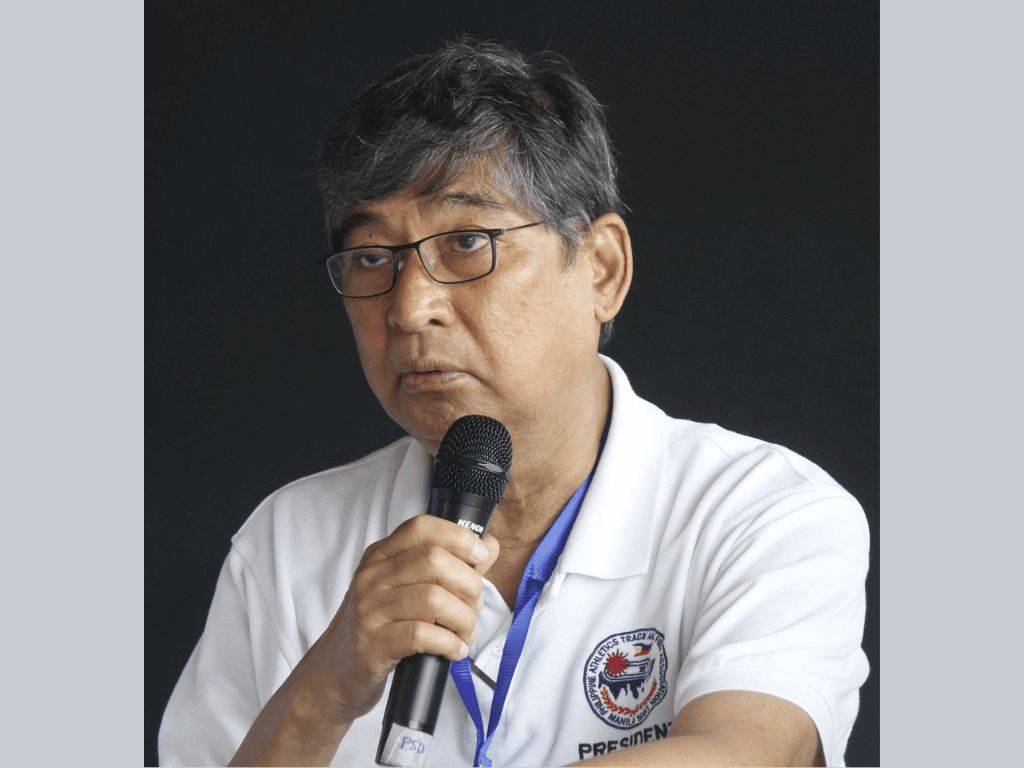
Juico sat on the boards of Landbank, San Miguel Corp., and MERALCO. In 2014, he was named president of the Philippine Athletics Track and Field Association (PATAFA), a post he held until 2022. It was during his term that PATAFA became involved in a public dispute with pole vaulter EJ Obiena.
A globetrotter’s son
Philip Ella Juico was born on Dec. 14, 1947, to Felipe Juico and Maria Liwayway Ella. Felipe, a pillar of the local travel industry who was dubbed a globetrotter, was, before World War II, co-founder and later president and manager of the Philippine Travel Bureau — “Authorized Booking Agents–Steamship-Airlines–Railways–Hotels.”
In the early 1960s, Felipe Juico moved his family to a 13-bedroom mansion on a sprawling 8,000-sqm lot along Roosevelt Avenue, Quezon City, designed by National Artist Pablo Antonio. It was acquired in 2016 by the Azucars of New San Jose Builders.
Philip, also known as Popoy, married Margie Penson, who served as Cory's appointments secretary and later chair of the PCSO under Noynoy Aquino. She edited the book Cory: An Intimate Portrait.
Once active members of the Ligaya ng Panginoon, they have four children – Dinggay, Vincent, Joseph, and Mayen.
“Loyalty to country is best expressed, not by mere flag-waving alone, but by putting the country’s interest first in all respects and being accountable for its resources–financial, natural, territorial.” — Philip Ella Juico. —Ed: Corrie S. Narisma
Features Reporter