Insider Spotlight
Most of tycoon and former politician Manuel Villar Jr.’s listed companies, worth about P320 billion, are still suspended from trading on the Philippine Stock Exchange because of overdue financial filings.
The suspensions cover six of seven Villar companies spanning real estate and retail, leaving thousands of investors unable to trade their shares for nearly three months.
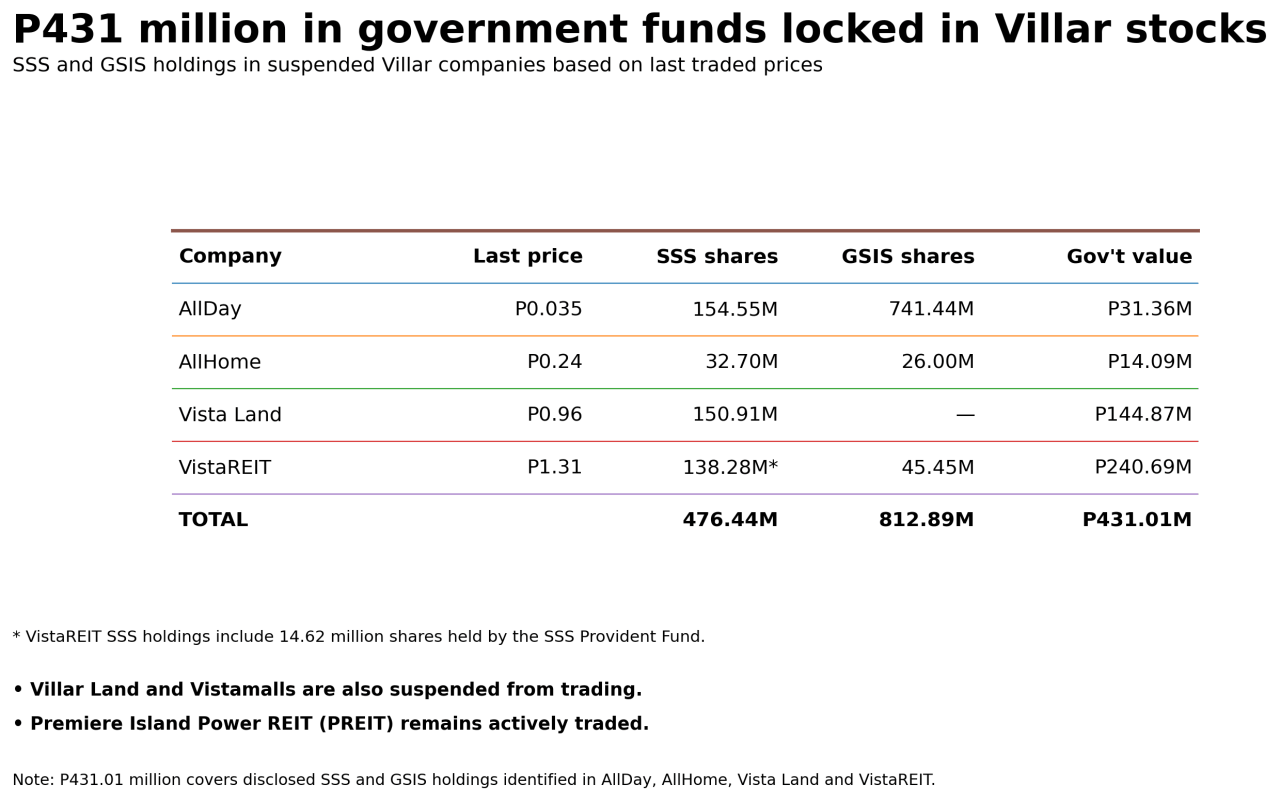
Among those investors are government pension funds Social Security System (SSS) and Government Service Insurance System (GSIS).
The missing filings have left stockholders with zero visibility on how these companies are performing, including where they are making or losing money.
Even without these crucial updates, visible changes are unfolding across an empire whose ties extend into politics, with two of Villar’s children now sitting senators.
Villar stores change hands
The clearest signs of this overhaul are showing up on the storefronts of the Villar Group’s retail empire.
Several AllDay Marts Inc. and AllHome Corp. outlets have closed down, with rivals led by the Sy-backed SM Group, Gokongwei-led Robinsons Retail Holdings Inc. and Lucio Co’s Puregold Price Club Inc. moving into former locations.
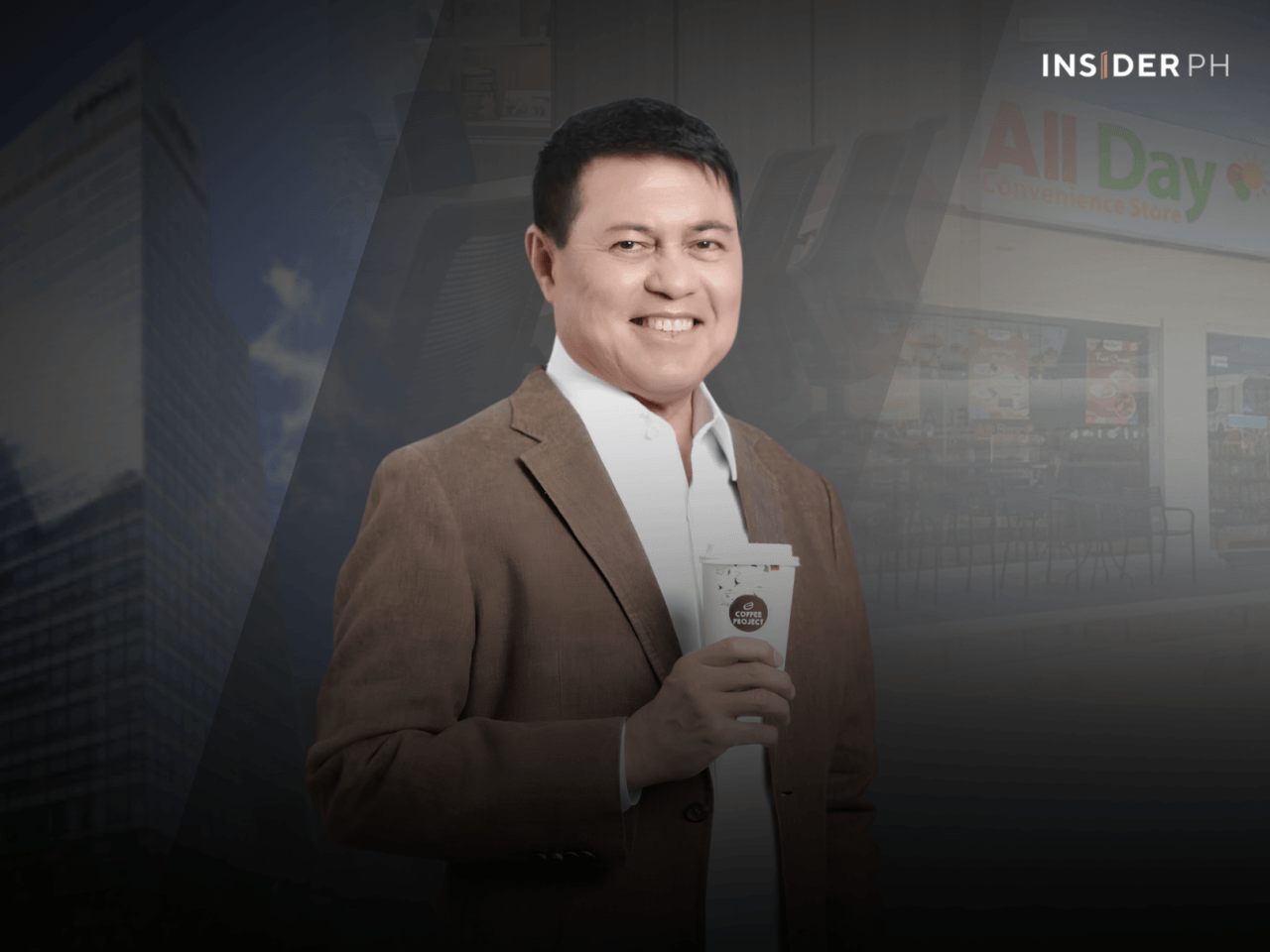
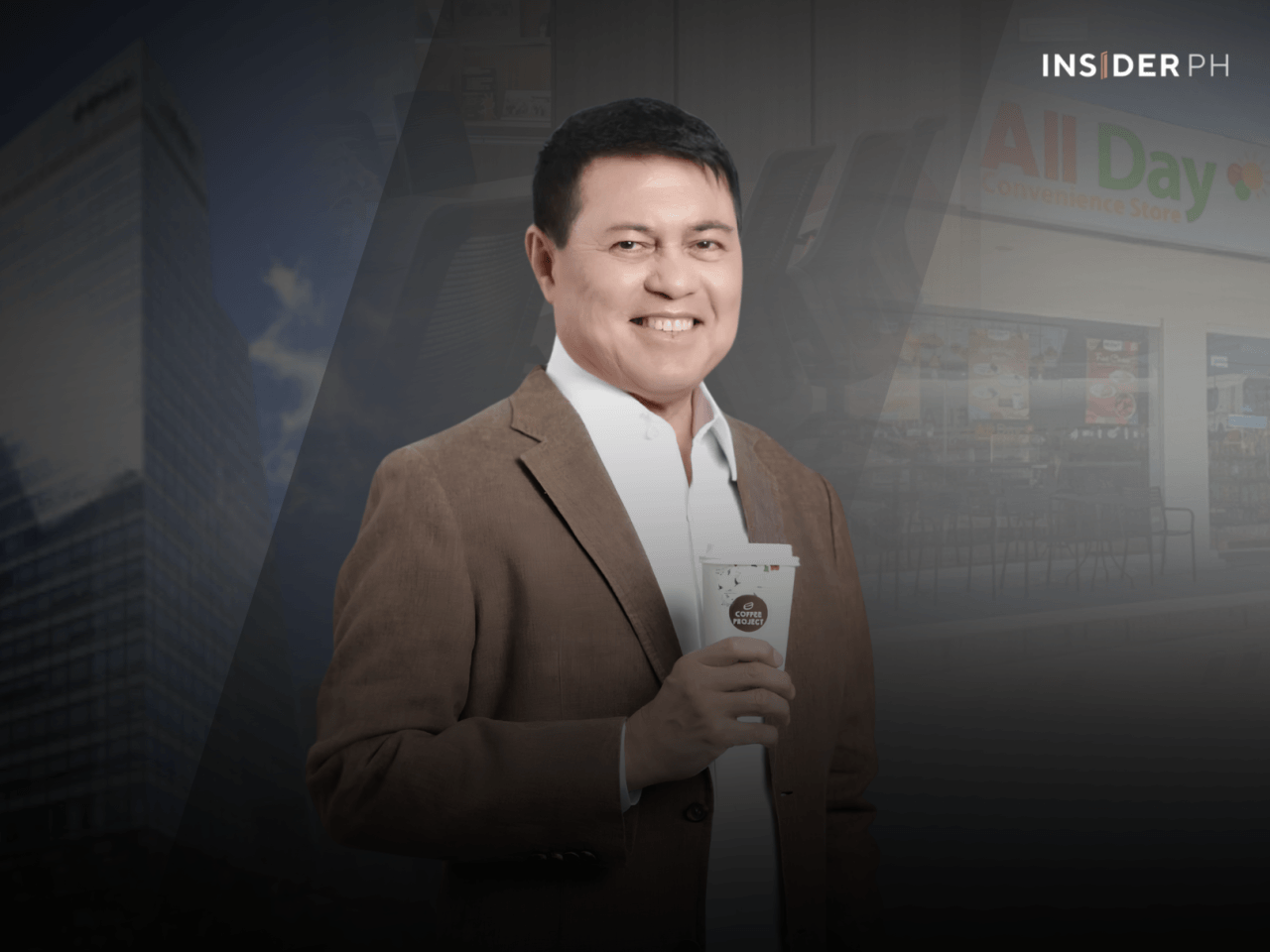
The group’s largest AllDay location in Libis, which also housed AllHome and Coffee Project, was shuttered after the operator failed to renew its lease.
The site will be replaced by RRHI’s Shopwise, which is returning to the location after nearly a decade.
A company insider said RRHI is also taking over sites in the group’s malls such as Evia Lifestyle Center in Las Piñas, Vista Mall Taguig and SOMO in Cavite.
The Villar Group declined to comment during the ongoing restructuring, which means investors won’t have a clearer view until after streamlining moves are concluded.
Market expert’s view
This also marks a retreat from a retail strategy built around the Villar real estate ecosystem and a bet that Filipinos would be willing to pay more for convenience.
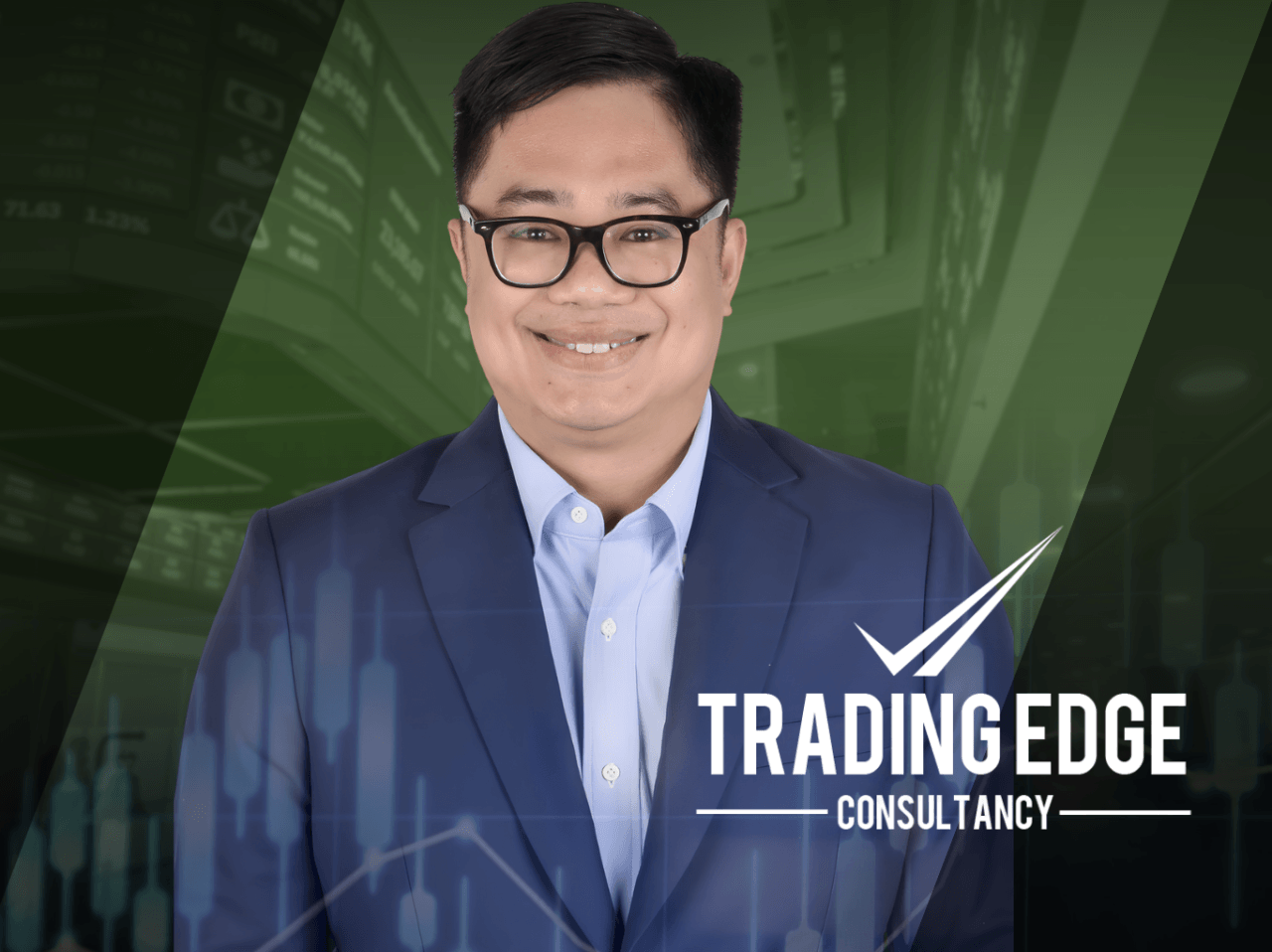
Ron Acoba, chief investment strategist at Trading Edge Consultancy, said AllDay supermarkets actually introduced new concepts to the market, including a “paluto” format where customers could buy ingredients and have meals cooked inside the store.
Some branches also offered longer operating hours, with several running 24/7.
“What eventually killed it was pricing. They were pricing their goods at 15-20 percent higher than other groceries,” he told InsiderPH. “They will have to adjust their strategy.”
Villar bet Filipinos would get richer
Villar himself defended the group’s upmarket strategy in a 2022 interview as he announced plans to exit mass housing, the group’s primary earnings engine that helped fuel his rise from humble beginnings to become one of the country’s richest tycoons.
Just before the presidential elections that would propel Ferdinand Marcos Jr. to power, Villar said the Philippines was close to moving into an upper middle-income economy.
“We are moving up,” he said in a report published by the Philippine Daily Inquirer.
Villar was right about the direction of the economy.
The Philippines eventually achieved upper middle-income status in 2026, but that milestone did not translate into the stronger spending power the group was betting on.
Trouble beneath the surface
Even before their stocks were suspended, Villar’s businesses were showing signs of strain.
Late rental payments and multi-billion peso store inventories swelling to well above industry norms were showing up in the group’s financial records.
Another market insider told InsiderPH he advised Villar in the early days of his retail expansion to leave the business to experienced operators because it was outside the group’s core expertise, but he pursed this strategy anyway.
The lesson: this model can thrive when the economy is strong, but its interconnected businesses can also magnify pressures when growth slows sharply.
An empire pulls back
After years of expanding into businesses that could feed off its vast property footprint, the Villar Group is now moving in the opposite direction.
Outside retail, the Villar Group built PrimeWater Infrastructure Corp. around serving its housing communities, eventually creating the country’s third-largest water concessionaire.
But the business became increasingly exposed to a combination of commercial and political pressures.
Last year, Villar decided to sell PrimeWater to the Co family behind Puregold for an estimated P30 billion, with much of that valuation tied to debt.
Villar Land Corp. is also battling a criminal complaint over alleged market manipulation and misleading disclosures after reporting P1.33 trillion in assets last year.
The figure was later cut to P35.7 billion after its external auditor pushed back.
No way out for investors
Meanwhile, public investors have been hit by both the inability to trade their shares and steep declines in value, with AllDay and AllHome down 94 percent and 98 percent, respectively, from their IPO prices.
Shares held by GSIS and SSS have suffered significant declines as well, with their holdings now valued at about P431 million based on the last traded prices on June 1, 2026.
SSS accounts for about P339.3 million, including shares held through its Provident Fund, while GSIS holds about P91.7 million.
His other stocks were also down significantly over the past 12 months, mirroring the broader slump across the Philippine Stock Exchange.
What’s next?
The Villar Group is implementing its biggest restructuring after years of aggressive expansion.
The changes are as much about repairing the businesses as they are about raising cash, signaling a more pragmatic approach to what stays and what it’s willing to let go.
The question isn't whether the Villar empire will survive, but how much of it will remain after the overhaul.

Miguel R. Camus has been a reporter covering various domestic business topics since 2009.