Insider Spotlight
The country remains among the most vulnerable globally to typhoons, flooding, and rising sea levels, disruptions that increasingly threaten critical infrastructure and economic stability.
Against this backdrop, the country’s largest integrated telco is reframing climate action not only as environmental stewardship, but as essential risk management for digital connectivity.
Why it matters
Reliable telecommunications are critical during disasters, supporting emergency response, business continuity, and community recovery.
Climate-proofing networks ensure services remain available when they are most needed.
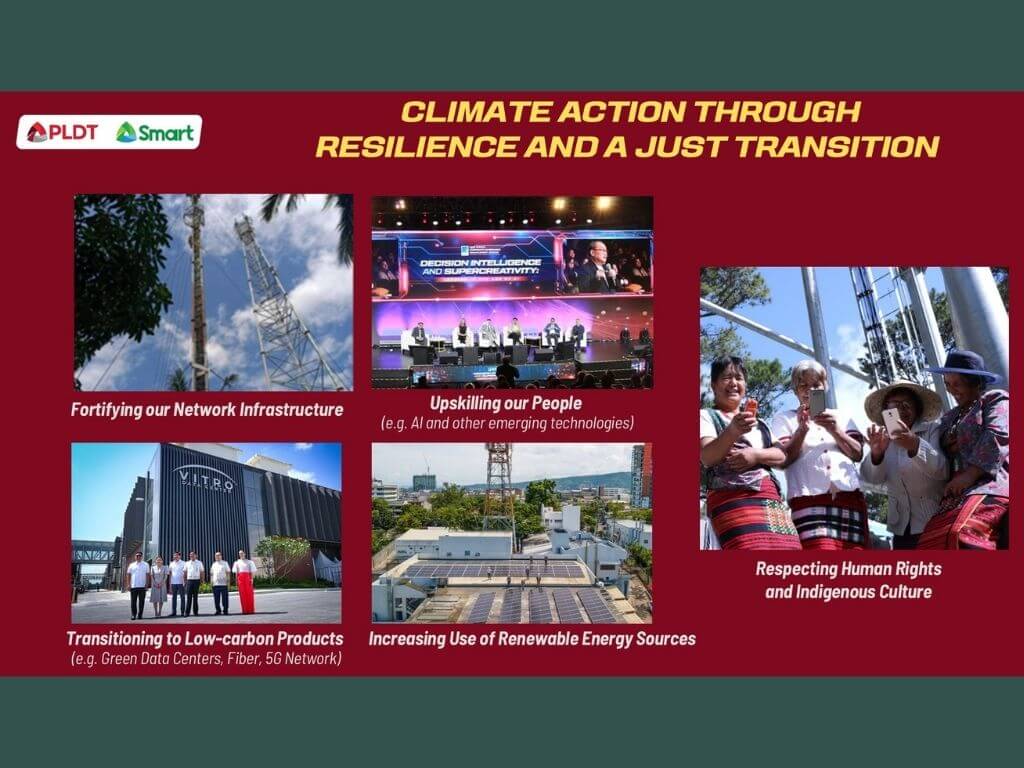
PLDT and Smart say they are fortifying both fixed and wireless infrastructure to withstand stronger and more frequent climate events.
This involves building cell sites in typhoon-prone areas to tolerate winds exceeding 300 kilometers per hour, elevating generator sets in flood-exposed locations, and designing key facilities such as cable landing stations to deflect storm surges and tsunamis.
What they’re doing
“Cell sites in the path of typhoons are being built to withstand over 300 kilometers per hour winds. In areas exposed to flood risk, we elevate gensets to higher floors,” Melissa Vergel de Dios, PLDT and Smart chief sustainability officer, said in a press release on Dec. 12, 2025.
“Our cable landing station in La Union is shaped like a bullet to deflect water from possible storm surges and tsunamis,” she added.
At the same time, the group is greening its operations to cut greenhouse gas emissions.
PLDT and Smart are expanding partnerships with renewable energy suppliers, prioritizing high-consumption sites such as major offices in Makati City and data centers operated by ICT subsidiary ePLDT.
The bigger picture
Network modernization plays a dual role. Fiber optic upgrades and 5G expansion not only deliver faster speeds but also consume less energy and generate fewer emissions per unit of data compared to older technologies.
This allows PLDT and Smart to scale capacity while shrinking their carbon footprint.
Beyond infrastructure, the telcos are preparing their workforce for a low-carbon, digital future by upskilling employees in green and emerging technologies, including AI. They are also embedding human rights and biodiversity safeguards into operations nationwide.
What’s next
PLDT and Smart’s approach supports the Philippines’ Nationally Determined Contribution Implementation Plan, particularly its focus on private sector participation, while aligning with the Paris Agreement and United Nations Sustainable Development Goals on climate action and partnerships.
For the telco group, building climate-resilient and greener networks is no longer optional, it is central to staying competitive, reliable, and relevant in a warming world. —Vanessa Hidalgo | Ed: Corrie S. Narisma