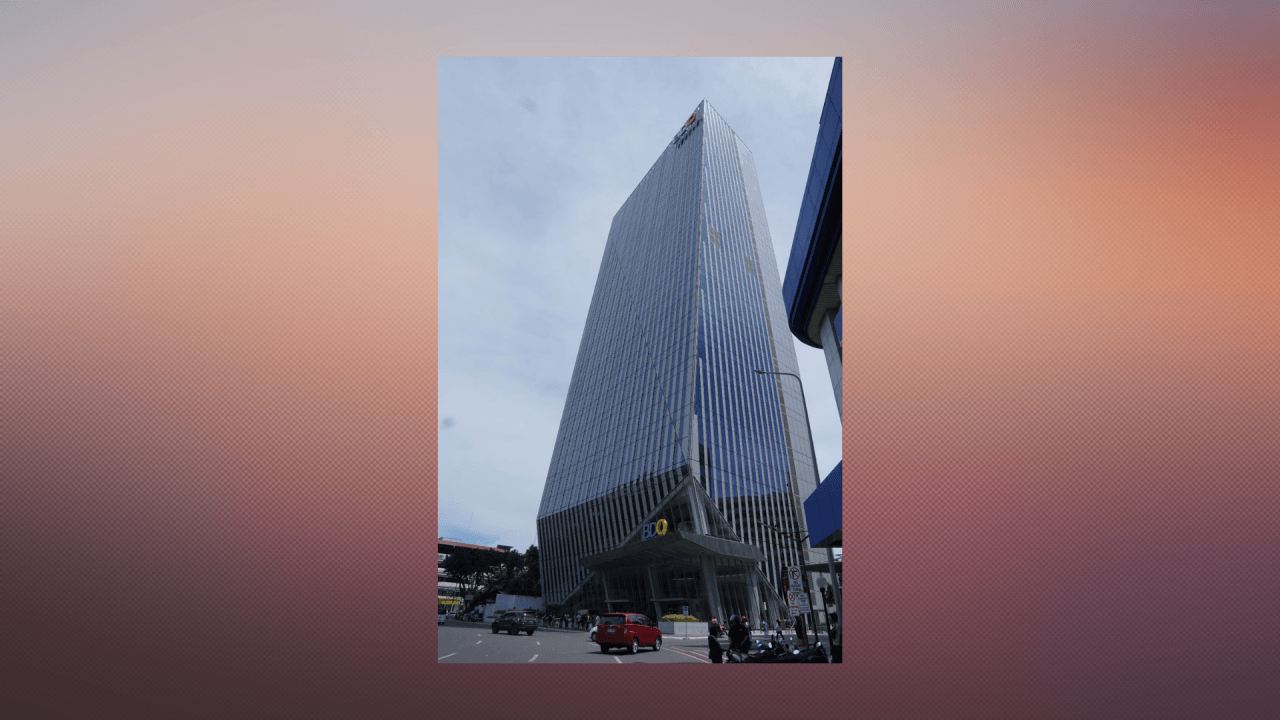
Federico Ocampo, senior vice president and head of investment management at BDO Trust and Investments Group, said this at an economic briefing held on May 26 at the newly opened BDO Corporate Center in Cebu City.
“The banking industry is very stable and liquid,” he said, adding that under the supervision of the Bangko Sentral ng Pilipinas (BSP), the sector remains on solid footing.
Low NPLs
Ocampo said BSP Governor Eli Remolona has consistently assured the public of the banking sector’s stability, noting that the non-performing loan (NPL) ratio remains below 3 percent.
This means problematic loans account for only a small portion of the banking industry’s total loan portfolio.
“And all of the banks were very careful in extending loans, even to the property sector when the economy was growing for 21 consecutive years,” he said.
A loan is generally considered NPL when the borrower has missed scheduled payments—either principal or interest—for 90 days or more.

Why it matters
Governments and investors watch NPL ratios closely to gauge the banking sector's health.
Ocampo said banks also continue to maintain substantial liquidity buffers, noting that about P1.8 trillion remains parked in BSP facilities, indicating that lenders still have ample reserves to support lending activities.
He said loan growth among major banks stayed positive in the first quarter. The big three banks posted loan growth of between 9 percent and 13 percent.
Financial behaviors, digital adoption
BDO leaders and experts gathered at the BDO Corporate Center to discuss business, banking, and economic developments affecting Cebu and the Visayas.
The discussion focuses on evolving financial behaviors, digital adoption, business efficiency, investments, protection, and accessibility.
Slowdown
Ocampo said the ongoing Middle East conflict, now in its third month, has contributed to slower economic growth and higher inflation following a 150-percent increase in fuel prices.
“The longer the conflict, the more painful for the Philippines, " he said, adding that the country would experience slower economic growth, rising inflation, additional monetary tightening and peso depreciation.
He added that the Philippine stock market would likely remain range-bound. “Hindi ’yan bubulusok (It’s not going to plunge)."
All about oil prices
It all boils down to the high prices of fuel due to the geo-political tension.
Higher oil prices lead to higher gasoline prices, which result in increased transport costs and higher prices of basic commodities. “The BSP eventually responded to rising inflation by raising interest rates,” he said.
“Apektado lahat ng investments. Babagsak ang stock market, tataas ang interest rates,hihina ang piso (All investments are affected. The stock market will decline, interest rates will rise, and the peso will weaken,” said Ocampo. — Ed: Corrie S. Narisma

Contributor