
Insider Spotlight
In a press statement, the bank said the financing facility will back Maynilad’s investments in water and wastewater infrastructure designed to improve service reliability across its concession area. The agreement also underscores CTBC Bank Philippines’ strategy of expanding its role in funding projects that provide essential public services.
Why it matters
Infrastructure financing remains a priority for Philippine banks as utilities accelerate investments to meet rising demand, improve operational efficiency, and comply with regulatory service targets. The latest deal strengthens CTBC Bank Philippines’ presence in corporate lending while supporting one of the country’s largest water service providers.
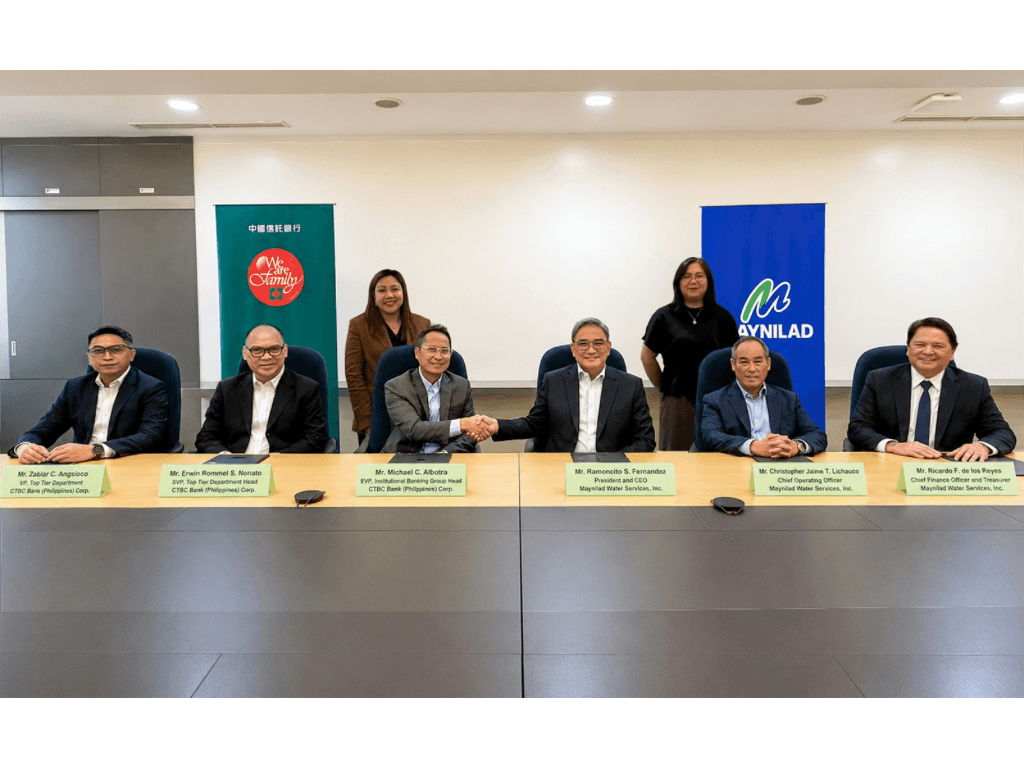
As of the end of the first quarter of 2026, CTBC Bank (Philippines) reported total assets of P91 billion and a loan portfolio of P54.9 billion. The bank posted a capital adequacy ratio of 16.1 percent and net income of P191.6 million, reflecting what it described as a solid financial position and capacity to finance long-term infrastructure and business expansion projects.
The numbers
Maynilad reported first-quarter 2026 revenue of P9.1 billion, up 6.2 percent from a year earlier, driven by higher billed water volumes and continued customer growth. Net income increased 10.3 percent year on year to P4 billion, resulting in a net profit margin of 43.9 percent.
Operational indicators also improved during the quarter. Non-revenue water declined to 30.7 percent from 36.2 percent a year earlier, while 24-hour water availability rose to 97.9 percent from 96.8 percent. Sewerage coverage increased to 26 percent and sanitation coverage reached 58 percent. The company spent P5.4 billion in capital expenditures during the quarter as part of its P163.3 billion investment program covering the 2023 to 2027 rate-rebasing period.
What’s next
The transaction highlights CTBC Bank Philippines’ continued focus on corporate and infrastructure financing while providing Maynilad with additional funding to sustain network expansion, improve water and wastewater services, and support long-term infrastructure investments across its concession area.
— Edited by Daxim L. Lucas