
ITC is the joint agency of the United Nations and World Trade Organization focused on helping small businesses become more competitive in global markets.
The partnership combines Grab’s flagship public-private partnership program, Grab Asenso: Digital Diskarte, with ITC’s Inclusive, Competitive and Responsible Digital Philippines program, or Digital PINAS.
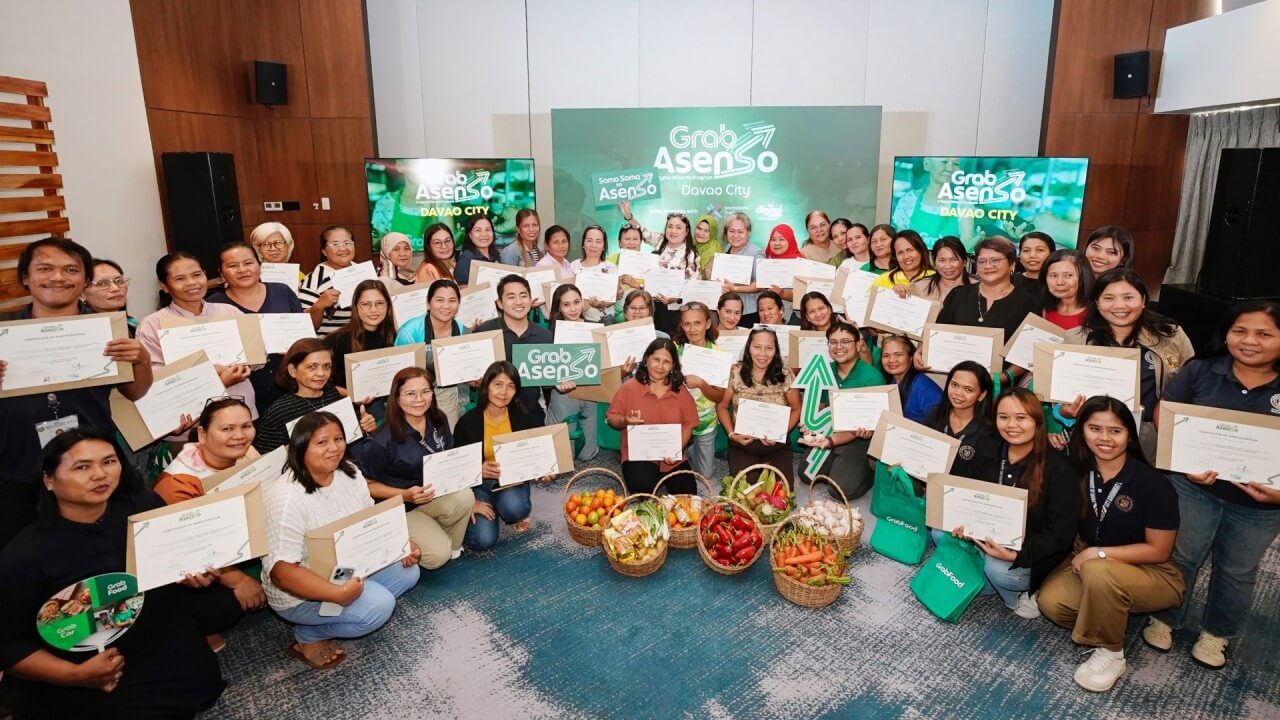
Under the pilot phase, ITC will bring its micro-business development expertise to Grab Asenso Learning Caravans in regional cities through the end of 2026. The program will cover Davao City, Cebu City, San Fernando and Puerto Princesa, among other areas.
“Our vision is to build an even more expansive digital road network that reaches more MSMEs across cities and communities nationwide,” Grab Philippines Chief Corporate Officer Sherielysse Bonifacio said.
She said the initiative aims to go beyond providing market access by giving entrepreneurs the skills and tools they need to participate in the digital economy and pursue sustainable growth.
AI, digital tools
The partnership will focus on two areas: expert-led masterclasses for MSMEs and a monitoring framework designed to determine whether the skills learned by participants produce measurable business results.
Training sessions will follow Digital PINAS’ hands-on approach to helping entrepreneurs bring their businesses online.
Core modules will cover setting up and optimizing digital business profiles and online presence, developing branding and marketing strategies using creative platforms, and tapping AI tools to improve business operations.
Training may also cover e-commerce, financial management, responsible technology adoption and export readiness, depending on the needs of participating MSMEs in each city.
Women farmer-entrepreneurs from the Rural Improvement Club Davao City Federation Inc., for instance, have participated in sessions covering AI fundamentals for small businesses, branding strategy, product photography and digital business profile optimization.
Grab trainers are also conducting refresher courses on tools such as Merchant AI Assistant, a 24/7 digital copilot designed to help merchants with day-to-day business tasks.
Merchants are also being trained on Tap and Scan to Pay, which allows businesses to accept cashless payments through QR codes and cards.

Tracking business impact
Beyond teaching entrepreneurs how to use new technologies, Grab and ITC plan to determine whether those skills actually improve business performance.
The partners will jointly monitor changes in participating merchants’ business practices, technology adoption and performance through assessments, check-ins, surveys and adoption data.
The findings will be used to refine the program and provide insights into the impact of MSME digitalization in the Philippines.
Camille Roy, ITC country program manager, said digital transformation has become essential for small businesses seeking to enter new markets, create livelihoods and become more resilient to disruptions ranging from typhoons to market swings.
“Digital PINAS was built on the commitment to reduce digital barriers and equip MSMEs, particularly those in underserved and underconnected communities, with the skills and support they need to become more competitive and sustainable,” Roy said.
She said the partnership would combine Grab’s platform and digital tools with ITC’s community-based training to reach entrepreneurs where they already conduct business.
Wider digital inclusion
Digital PINAS is funded by the United Nations Sustainable Development Goals Fund, with contributions from the European Union, and seeks to expand digital inclusion opportunities for Filipino MSMEs.
The program is implemented by ITC, the International Labour Organization and United Nations Development Programme in partnership with government agencies led by the Department of Information and Communications Technology.
Through the partnership, Grab and ITC aim to use the pilot not only to improve entrepreneurs’ digital capabilities but also to generate evidence on whether AI and other technologies can deliver tangible growth for small businesses. —Ed: Corrie S. Narisma