
This is the right moment to say it plainly: the BSP’s independence is under ambient pressure, and Filipinos should pay attention.
What we seem to have forgotten
The institutional memory behind the BSP’s founding is not ancient history. The Philippine debt crisis of the 1980s, the Dewey Dee collapse of 1981, and the bank runs that followed were not abstract policy failures. They were the consequences of a financial system that had no credible, autonomous authority to impose discipline on reckless lending, political borrowing, and crony-directed capital flows.
Congress drew the right lesson. In 1993, it replaced the old Central Bank of the Philippines — structurally captured, institutionally weak — with the BSP, designed from the outset with operational independence, legal authority, and a modern policy framework.
That was a hard-won reform. And yet, three decades later, there is a strain of commentary and political signaling that treats the BSP’s independence as an inconvenience to be managed rather than a safeguard to be defended.
What independence actually does
The critics rarely say they want a politically controlled central bank. They are subtler than that. The attack usually comes dressed as accountability, or as democratic oversight, or as frustration with technocratic detachment from real economic pain. All of that is a misdirection.
Central bank independence does not mean an unelected institution answering to no one. It means monetary policy decisions — on inflation, on interest rates, on financial system stability — are made on the basis of economic evidence rather than electoral convenience. It means a government facing a budget crunch cannot simply direct the central bank to print the difference. It means a politically connected bank cannot lean on its relationships to escape supervisory sanction.
These are not technicalities. These are the practical mechanisms that protect ordinary Filipinos from the consequences of short-term political thinking applied to long-term economic problems.
The BSP’s track record over the last three-odd decades makes the case better than any argument. The Philippine banking system is materially stronger today than it was before the BSP’s founding — better capitalized, better governed, better regulated.
That institutional strength is why the Philippines navigated the 1997 East Asian financial crisis, the 2008 global financial crisis, and the Covid pandemic without the kind of systemic banking collapses that devastated other emerging economies.
The inflation-targeting framework, for all its imperfections, has kept price expectations from becoming permanently unanchored even during commodity shocks and supply disruptions. That is not luck. It is credibility, earned over years of consistent, evidence-driven policy.
The global warning sign
The Philippines is not operating in a vacuum. Right now, in the United States, the world is watching what happens when a president decides that the Federal Reserve’s independence is negotiable.
President Donald Trump’s attempt to remove Federal Reserve Governor Lisa Cook triggered an unprecedented legal confrontation that reached the US Supreme Court. The court, in a 5-4 ruling, allowed Cook to remain in office — preserving, for now, the Fed’s institutional autonomy while broader legal questions remain unresolved.
That episode should alarm anyone who understands what central bank independence actually protects. If it can be tested in Washington, it can be tested anywhere. Institutional safeguards that seem permanent rarely are. They erode gradually, through precedent-setting pressure, through the appointment of compliant officials, through the slow normalization of political interference dressed up as legitimate oversight.
The Philippines has been through this before. The lesson of the 1980s is not just that crises are painful. It is that captured institutions make crises worse.
The quiet work that goes unnoticed
Beyond defending against crisis, the BSP has been doing something arguably harder: building an inclusive financial system in a country where millions were historically locked out of formal banking.
Digital payments, once a fringe novelty, are now infrastructure. Regulations that opened the door to fintech innovation without abandoning consumer protection made that possible. So did the BSP’s financial inclusion agenda — making it easier to open transaction accounts, extending financial education to communities that banks never reached.
None of this generates the kind of dramatic headlines that financial crises produce. That is precisely the point. Quiet institutional competence, sustained over decades, is what resilience actually looks like.
What the BSP’s anniversary should prompt
This is not a moment for self-congratulation. It is a moment for clarity.
The BSP’s independence is not self-reinforcing. It depends on political leaders who respect it, lawmakers who defend it, and a public that understands why it matters. When media commentary persistently frames the BSP’s autonomy as elitist, opaque, or insufficiently responsive to public pressure, it chips away at that understanding — and creates the political conditions for exactly the kind of interference the institution was built to resist.
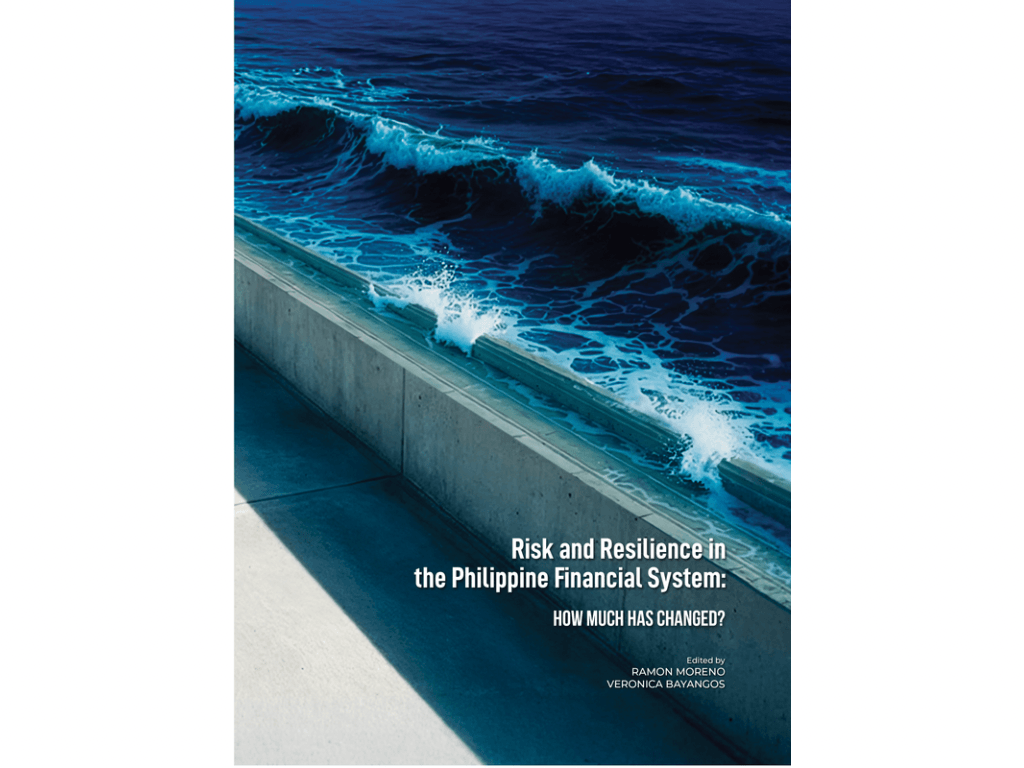
The crises documented in Risk and Resilience in the Philippine Financial System: How Much Has Changed (the latest BSP book that is being launched today… go read it) did not happen because policymakers were indifferent or stupid. They happened because the institutions in place were not strong enough to withstand the pressure applied to them.
Thirty-three years later, the BSP is a stronger institution. The question is whether the country is still serious about keeping it that way. —Daxim L. Lucas | Ed: Corrie S. Narisma