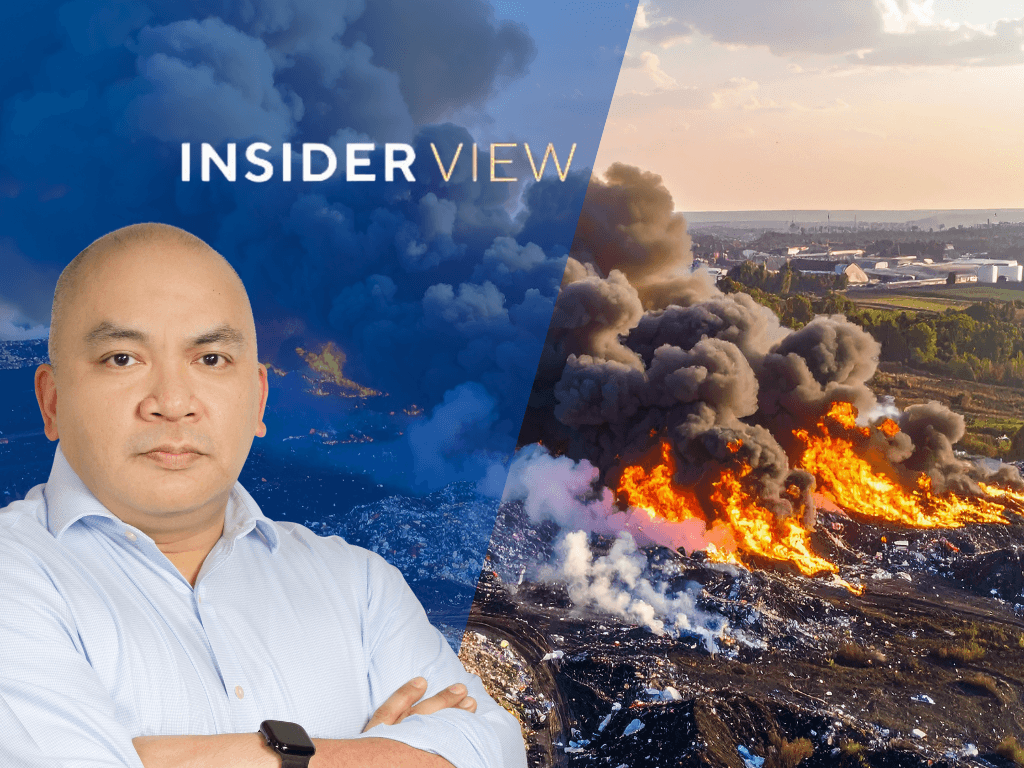
And sadly for the critics of San Miguel Corp., their attempts to assign accountability to the conglomerate fall flat in the face of the facts of the issue, including decisions issued by no less than the Department of Environment and Natural Resources (DENR).
Major facility
The Navotas Sanitary Landfill Facility was not a small, temporary dumpsite. It was, in fact, a sprawling 41-hectare operation that, at its peak, absorbed about 10,000 metric tons of waste daily. Because of this, it was one of Metro Manila’s primary disposal hubs for over 20 years.
Its size alone meant that a significant responsibility was carried by the operator, Phileco, on its shoulders. In particular, it was incumbent upon the firm to manage the buildup of methane, which is a key risk for a facility such as this. More importantly, the law required this of them.
Under the Ecological Solid Waste Management Act of 2000 and Phileco’s environmental compliance certificate, the firm was obligated to implement a so-called Safe Closure and Rehabilitation Plan (SCRP) once it ceased operations. This was a safeguard meant to prevent the buildup of methane that caused the fire that began three weeks ago.
Phileco’s expired franchise
As early as May 2023, Phileco was made aware that the Navotas City government decided not to renew its franchise. Its authority to operate formally expired on Aug. 25, 2025, along with its environmental permit.
That meant that the firm should have made preparations to wind down its operations since then.
This was not a case of regulators pulling the plug on the operation overnight. In fact, the DENR allowed a controlled transition. Waste intake was reduced—from 10,000 metric tons a day to 1,200 metric tons—precisely to give Phileco time to implement the SCRP. A December 2025 deadline was set for full closure.
But by the time that deadline passed, the closure work was nowhere near completion. Only a small portion of the landfill had been covered with soil. More importantly, gas ventilation systems which were critical for preventing methane buildup were reportedly missing.
Enter expropriation
This is where San Miguel Corp. comes into the picture. The conglomerate is building a massive new airport just north of Metro Manila and one part of the plan calls for it to build a coastal highway that will extend from the northernmost end of Roxas Boulevard to Bulakan, Bulacan where the sprawling “aerocity” is rising.
This highway will cut through the landfill and, for this purpose, the property was expropriated by the government.
By February 2026, when San Miguel Aerocity Inc. (SMAI) enforced its writ of possession over the property, Phileco was already in breach of its closure obligations. The company had failed to meet a government-supervised shutdown timeline months before any transition of physical control took place.
Records show that the Bulacan airport unit of the conglomerate waited nearly three years—from June 2023 to February 2026—before enforcing its legal right to the property.
That delay was meant to allow Metro Manila to adjust to the loss of a major landfill and giving Phileco time to wind down operations properly.
Even at the point of entry, SMAI committed to a six-month grace period for Phileco to complete the SCRP. That commitment was recognized by the court, in effect, giving Phileco given additional time on top of an already extended transition.
Phileco walks away
On the same day SMAI took possession in February 2026, the operator abandoned the site without completing the closure plan. It later attempted to withdraw its own SCRP—an effort that regulators rejected. DENR has since reiterated that Phileco remains legally responsible for implementing the plan.
There was no construction activity on the site when the fire broke out in April. SMAI had been in possession for less than two months and had not begun development. The waste mass that generated the methane had accumulated over two decades of Phileco’s operations. The safeguards that should have managed that risk—soil cover, gas collection systems, proper sealing—were incomplete.
Landfill operations do not end when trucks stop coming in. The more critical phase begins after closure, when Phileco should have stabilized the site and managed long-term environmental risks. That obligation is embedded in law and in the basic principles of environmental stewardship, and does not disappear with expired permits or a change in land ownership.
Of course, at this point, everyone’s priority is to extinguish the flames that have caused some areas of Metro Manila to be covered by smog on bad days. But once the last embers are put out, once the finger pointing begins (it has already begun, in fact, with San Miguel’s usual critics pointing fingers at the conglomerate), one must not lose sight of these facts.
Assigning accountability is important. But it should be done with all these established facts in mind.

Senior Reporter