Insider Spotlight
Energy is now a core driver of profitability and operational stability for large-scale retail. Ayala Malls’ approach shows how renewable sourcing and efficiency can move beyond compliance into long-term value creation.
The big picture
As of 2025, 98 percent of Ayala Malls are powered by renewable energy, with 31 malls sourcing electricity through accredited suppliers backed by International Renewable Energy Certificates. This transition is no longer experimental but a portfolio-wide standard.
That shift is expected to generate up to P180 million in annual savings, cushioning the impact of volatile power prices while maintaining tenant and consumer experience.
What they’re saying
“Renewable procurement is only one part of our energy framework,” Paul Birkett, chief operating officer of Ayala Malls, said in a press statement on April 28, 2026.
“We take a diversified approach, combining clean power sourcing with on-site generation to improve resilience, manage risk, and support stable, long-term energy performance across our malls,” Birkett added.

By the numbers
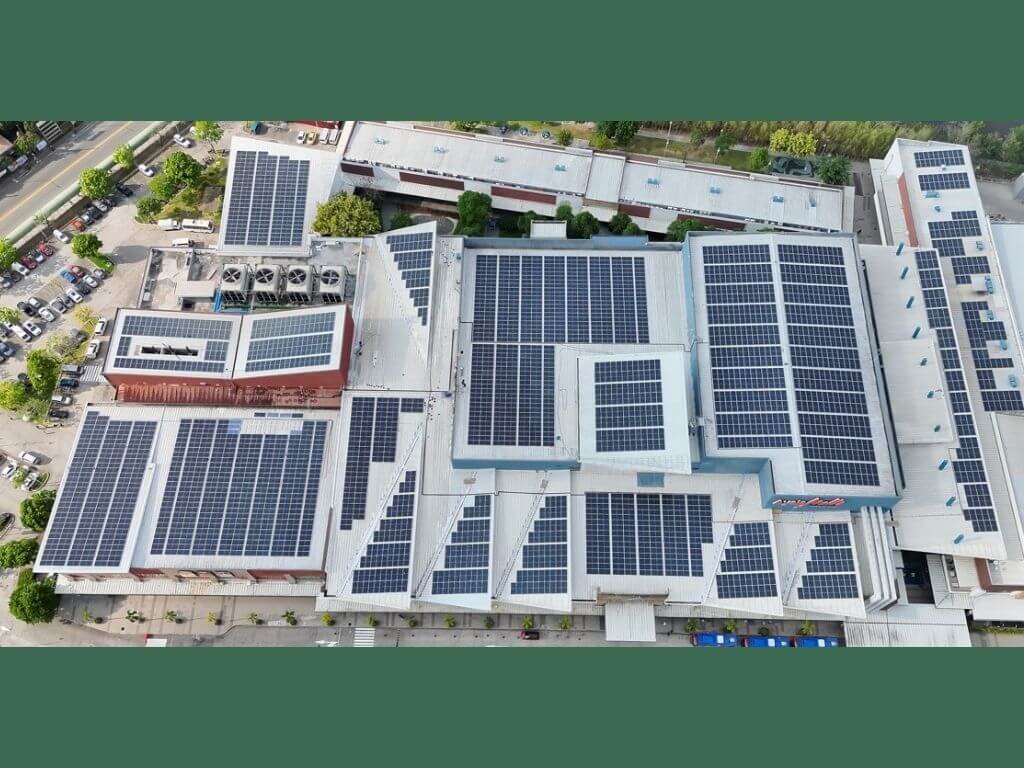
On-site solar is expanding alongside procurement. Thirteen malls now host solar rooftops totaling 15.3 megawatts peak, with another 19 malls in the pipeline that could add roughly 20 MWp more capacity.
This distributed model reduces reliance on centralized grids, improving reliability in an increasingly volatile operating environment.
Between the lines
Even as total electricity use rose 8 percent year-on-year due to expansion and higher occupancy, efficiency measures kept energy intensity steady at 76.6 kWh per square meter. LED upgrades, smart controls, and high-efficiency systems helped cut common area consumption.
Zoom out
Sustainability is also being embedded earlier. New developments are required to pursue green certifications, integrate recycled materials, and assess solar and water reuse systems at the design stage.
The bottom line
“Sustainability is integral to how we operate as a business,” Birkett said. “Through responsible infrastructure, energy-efficient systems, and consistent operating standards, we create environments where tenants perform better, communities stay engaged, and our assets remain resilient and competitive over the long term.” —Vanessa Hidalgo | Ed: Corrie S. Narisma