The project marks the organization’s first river deployment in the country and forms part of its broader expansion across the Manila Bay region, one of Southeast Asia’s major plastic leakage hotspots.
The initiative falls under The Ocean Cleanup’s global 30 Cities Program, which aims to reduce river-borne plastic pollution by up to one-third worldwide by the end of the decade.
Why it matters
The Philippines remains a significant contributor to ocean plastic waste, with an estimated 20,000 to 33,000 tons entering the seas each year. Within the Manila Bay region alone, annual emissions are projected at 3,500 to 4,400 tons, based on The Ocean Cleanup’s Smart River Survey.
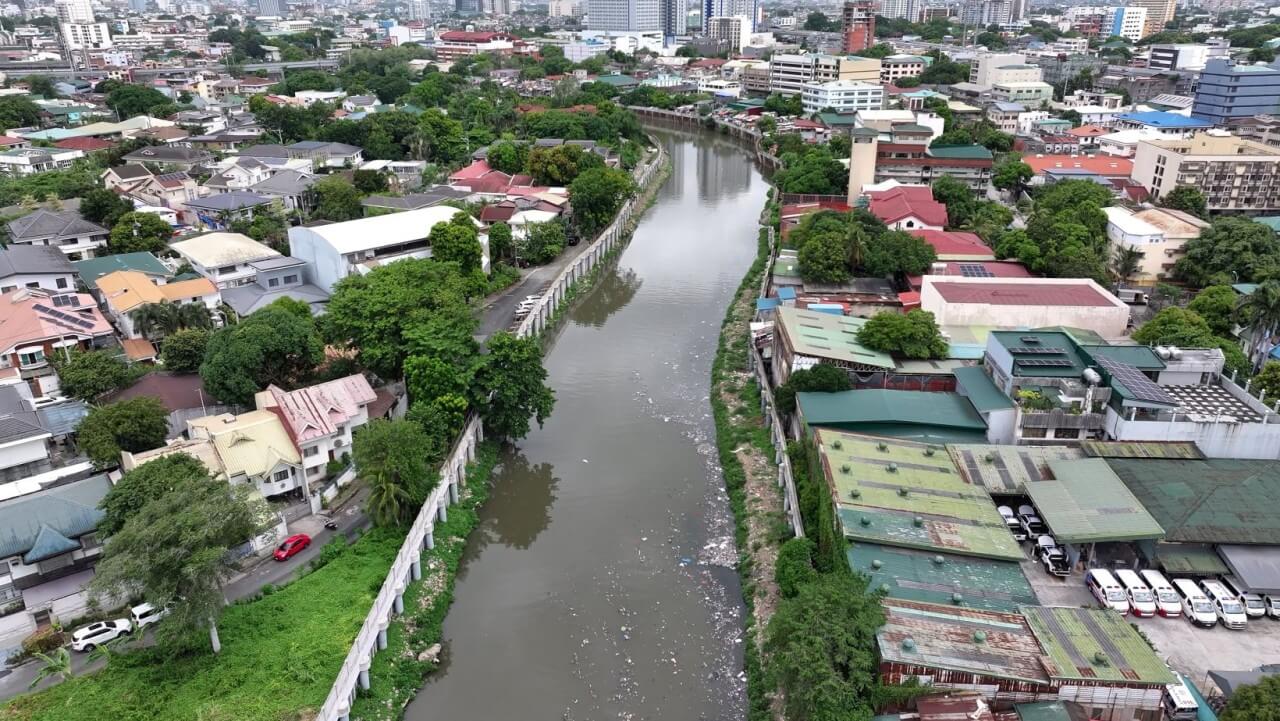
The Meycauayan River is a key contributor, with 370 to 540 tons of plastic waste estimated to flow into Manila Bay annually. The deployment of the Interceptor barrier is expected to significantly reduce this volume by capturing waste before it reaches open waters.
Rivers are among the primary pathways of ocean plastic. The Ocean Cleanup estimates that just 1,000 rivers globally account for around 80% of total marine plastic pollution, highlighting the importance of upstream interventions.
How it works
The Interceptor is a passive system designed to collect floating debris using natural river currents, enabling continuous waste capture without disrupting navigation. In Meycauayan, the new barrier will replace an existing trash trap and enhance the river’s waste interception capacity, The Ocean Cleanup said in a statement.
The project is being implemented in partnership with the City of Meycauayan, with support from its City Environment and Natural Resources Office (CENRO).
“This milestone brings us one step closer to building tangible solutions toward cleaner rivers and healthier communities in the Manila Bay region,” said Boyan Slat, founder and CEO of The Ocean Cleanup.
Mayor Henry R. Villarica said in the same statement that the collaboration strengthens the city’s long-running rehabilitation efforts.
“This partnership strengthens our capacity to accelerate meaningful, lasting change. We are fully committed to rehabilitating our river for the health, dignity, and future of our community,” he said.
The bigger picture
The initiative also reflects The Ocean Cleanup’s growing network of partnerships in the Philippines. Key stakeholders include the Embassy of the Philippines in the Netherlands, the Embassy of the Kingdom of the Netherlands in the Philippines, and Energies PH as marine renewable energy advisors.
Beyond the initial deployment, the organization plans to expand collaboration with local government units and partners to support research, awareness campaigns, and improvements in waste management systems.
The goal is to build a more comprehensive approach to tackling plastic pollution—combining technology, policy, and community engagement to prevent waste from reaching the ocean. —Ed: Corrie S. Narisma