The electricity sector offers guidance. As president and CEO of National Power Corp. from 1994 to 1998, I led the unbundling of the NPC tariff and petitioned for the distribution tariff, anchored through Executive Order 473.
The logic was simple: you cannot fix what you cannot see. Unbundling generation, transmission, distribution, and system losses enabled policymakers, regulators, and consumers to see exactly where prices rose and which actions were needed. Blame could no longer hide behind vague numbers.
Transparency gap
That same discipline is precisely what the fuel sector still lacks. The end-to-end pricing chain for petroleum products—crude benchmarks, MOPS differentials, freight, insurance, exchange rate movements, company margins, biofuel blending costs, and taxes—is well understood in theory.
The Supreme Court has already upheld fuel cost unbundling. Oil companies reportedly submit regularly detailed cost reports to the Department of Energy (DOE).
What remains missing is the institutional will to enforce granular, real-time public disclosure—and to act decisively on the data.
Aggregate inventory figures obscure uneven regional realities on the ground.
Supply vulnerability
Beyond transparency, the deeper structural gap is shock absorption. The Philippines has no meaningful strategic petroleum reserve.
When supply disruptions strike, the government is left scrambling—negotiating storage with private oil companies for fuel it has already purchased, operating within dangerously thin replenishment buffers.
Although I was not directly involved in the oil deregulation law, I knew that one of the government’s main concerns at the time was the lack of storage facilities. This remains a sovereign vulnerability that transparency alone cannot fix.
Financing the shock
The solution lies in financial architecture, not just better monitoring. The banking and amortization facility—channeling government financing through Development Bank of the Philippines (DBP) or Land Bank to spread the cost of supply shocks over 15 years via a modest per-liter levy—directly addresses this gap.
This is not a novel idea invented in a crisis. It draws from the same logic applied in the electricity sector: when a supply shock is too large and too sudden to absorb at the point of impact, the cost must be distributed intelligently over time.
Consumers pay marginally more over a longer period rather than catastrophically more in a single crisis window.
Policy, not theory
These are not radical departures from existing policy. Unbundling has legal backing. Government financing facilities already exist. The frameworks are already in place.
What the current crisis exposes is not a shortage of tools, but a shortage of institutional resolve to deploy them in an integrated, coherent way.
The Philippines has navigated energy crises before and built durable policy architecture in their aftermath. Policymakers must now act decisively—move beyond commentary and implement structural reforms to address the current crisis.
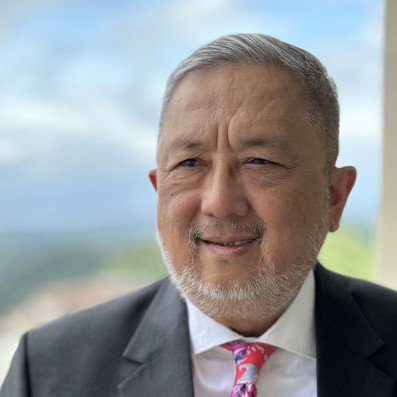
A power industry expert with over 40 years in experience as chief executive officer in firms ranging from banking, power, and advisory services.