It started on a Wednesday afternoon, just as the business day was winding down, when social media posts criticizing Cebu Pacific began gaining traction.
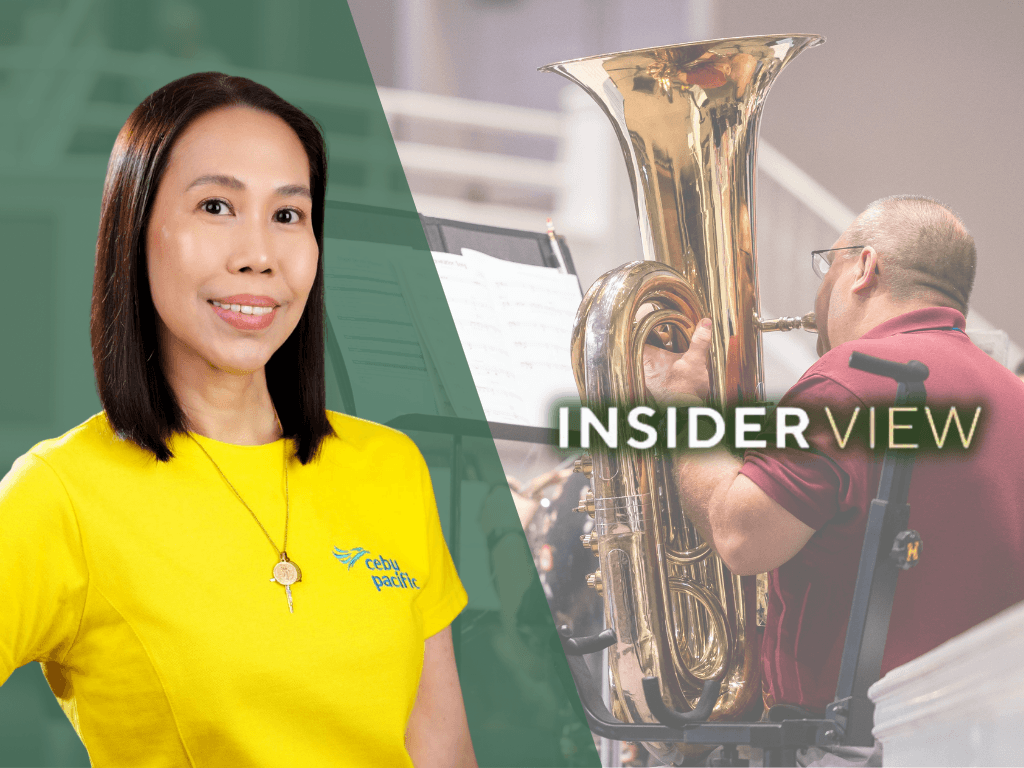
A group of musicians traveling with violins, violas, and a tuba encountered issues at the check-in counter regarding what could be carried onboard and what needed to be checked in. The passengers were members of the Manila Symphony Orchestra (MSO), one of Asia’s oldest orchestras and the Philippines’ longest-surviving artistic institution.
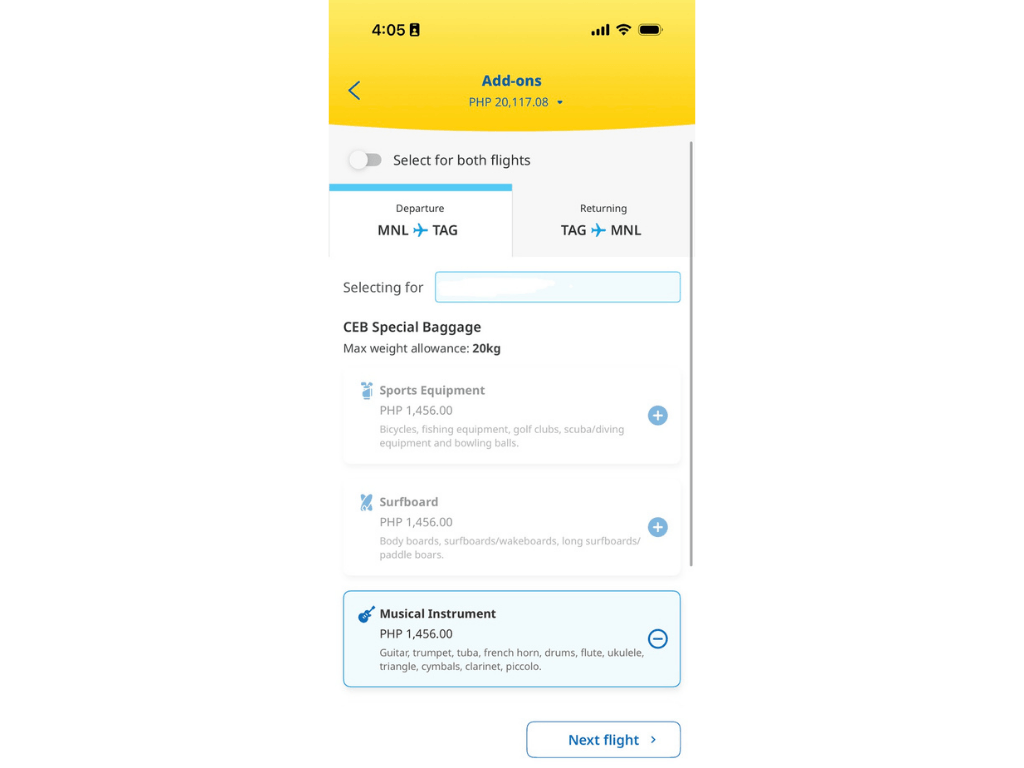
The orchestra had not booked Musical Instrument baggage allowance. Several violin cases exceeded cabin baggage limits, yet the passengers insisted on bringing them onboard. A 39-kilogram tuba had been booked under the airline’s oversized baggage service, even though items of that weight are required to be transported via cargo. No special arrangements had been made in advance, nor were any reflected in the booking records.
Despite these constraints, airport staff worked with the group to find practical solutions.
The violin cases were checked through free of charge. The tuba was accepted despite exceeding standard check-in limitations. Every musician boarded the flight, and every instrument traveled with them. No passenger or instrument was left behind.
Yet after the accommodation was made, social media posts surfaced criticizing the airline.
The optics were immediate and familiar: a large airline versus classically trained musicians.
Brand reputation: defending without escalating
So how do you defend the airline in a moment like this?
The first principle is simple: reinforce the brand and highlight its policies.
The objective is not to disgrace the orchestra. It is to clarify the policy, provide context, and demonstrate that the response on the ground was reasonable, consistent, and safety driven.
Traveling as an orchestra is fundamentally different from typical leisure travel. Musical instruments are not ordinary baggage. They are often fragile, valuable, and inseparable from a musician’s profession.
The response, therefore, must prioritize clarity and education.
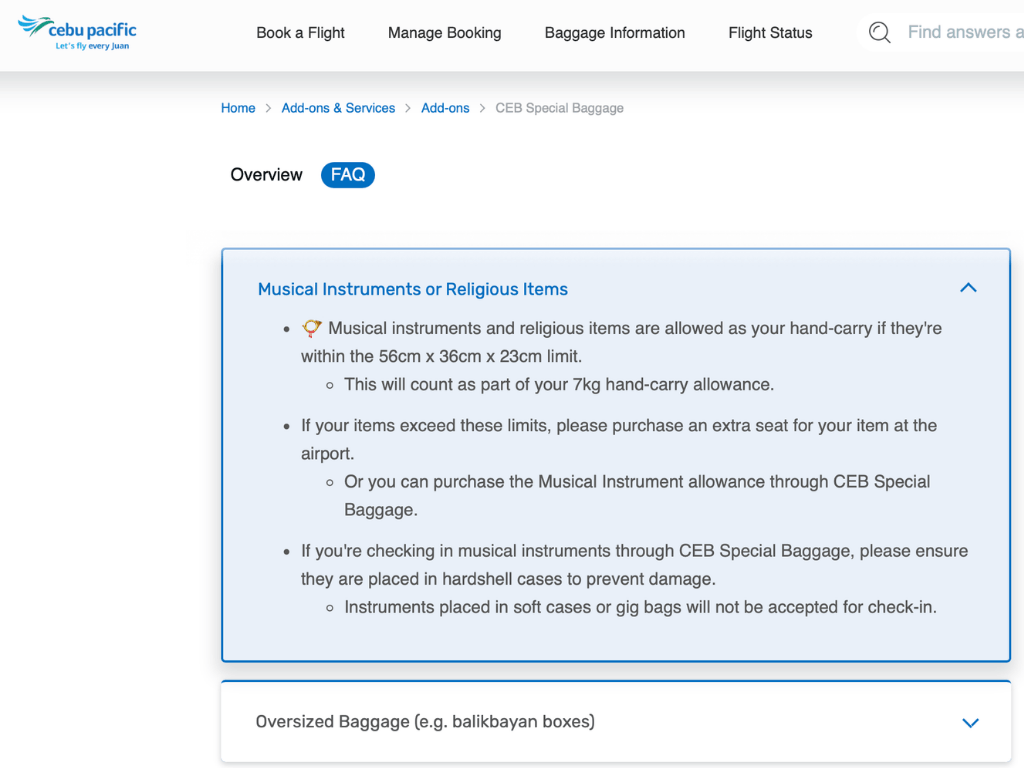
The airline maintains specific policies for transporting special items such as musical instruments.
If an instrument fits within cabin baggage limits, it may be carried onboard. If a precious instrument—such as an 80-year-old violin—is too delicate or important to be checked in, passengers may purchase an additional seat to secure it in the cabin. If an item exceeds weight limitations, cargo services are the appropriate channel.
These are not arbitrary rules. They are established aviation standards designed to ensure safety, operational efficiency, and the protection of passengers and property. The key is preparation: coordinating with the airline in advance, understanding requirements, and making the necessary arrangements before arriving at the airport.
To manage media, provide facts, context, and a clear account of what was offered and implemented on the ground.
Internally, alignment is equally critical. Customer care teams must be engaged, passenger concerns addressed, and policy explanations consistently reinforced.
In moments like these, brands must also resist the vortex of online hate. Protecting a brand is not about winning an argument. It is about amplifying policies when attention is highest to maintain trust.
Flying commercial? There is no room for entitlement
The reality is flying is not for everybody. Commercial air travel is not a casual experience. It is a highly regulated system that allows people to move safely across countries and continents in a matter of hours.
In many ways, an unnatural act: placing hundreds of strangers inside a confined cabin and transporting them thousands of feet above the ground.
There are procedures for check-in, baggage, boarding, security screening, and weight compliance. These rules are not optional. They apply to everyone.
In aviation, there is no room for entitlement because nearly every protocol is grounded in one principle: safety. The rules exist because consistency is what makes safe, large-scale air travel possible.
So, what does the size and weight of a violin case have to do with safety? More than many people realize.
Every item brought into the cabin must fit within designated storage spaces and be properly secured during taxi, takeoff, turbulence, and landing. Oversized items can obstruct aisles, block access to emergency equipment, or interfere with evacuation pathways.
During unexpected turbulence, unsecured or improperly stowed items can shift and become hazards. Cabin baggage limits are operational safeguards grounded in decades of aviation experience.
As passengers, the responsibility is straightforward: understand the rules, prepare accordingly, and comply.
Once onboard, we all become part of something remarkable—a system that defies gravity and connects people across vast distances in a matter of hours.
Cebu Pacific has long supported musicians and the broader creative community, not only through operational flexibility where possible, but also through a genuine appreciation of how music and art shape the travel experience.
In fact, it is one of the few airlines that regularly refreshes its onboard music library to reflect contemporary and local sounds, ensuring that the journey begins the moment passengers settle into their seats.
If you're flying Cebu Pacific, there is a good chance you'll do it while listening to BTS, Dua Lipa, or Taylor Swift playing through the cabin speakers.
That small detail shows something larger: how we value inflight experience and that includes good music.
— Edited by Daxim L. Lucas
Carmina Reyes-Romero is a communications leader with more than two decades of experience spanning journalism, corporate communications, crisis management, and reputation building, she currently serves as Director for Corporate Communications at Cebu Pacific, where she leads strategic communications and brand stewardship for the Philippines’ largest airline.
Her career includes leadership roles at Reuters, AFX-Asia, and ABS-CBN, where she managed news operations and produced award-winning current affairs programs and documentaries. She specializes in media relations, executive communications, stakeholder engagement, and crisis response. She holds a Journalism degree from the University of Santo Tomas and completed a Leadership and Management Development Program at the Ateneo Graduate School of Business. She is also a proud Swiftie.